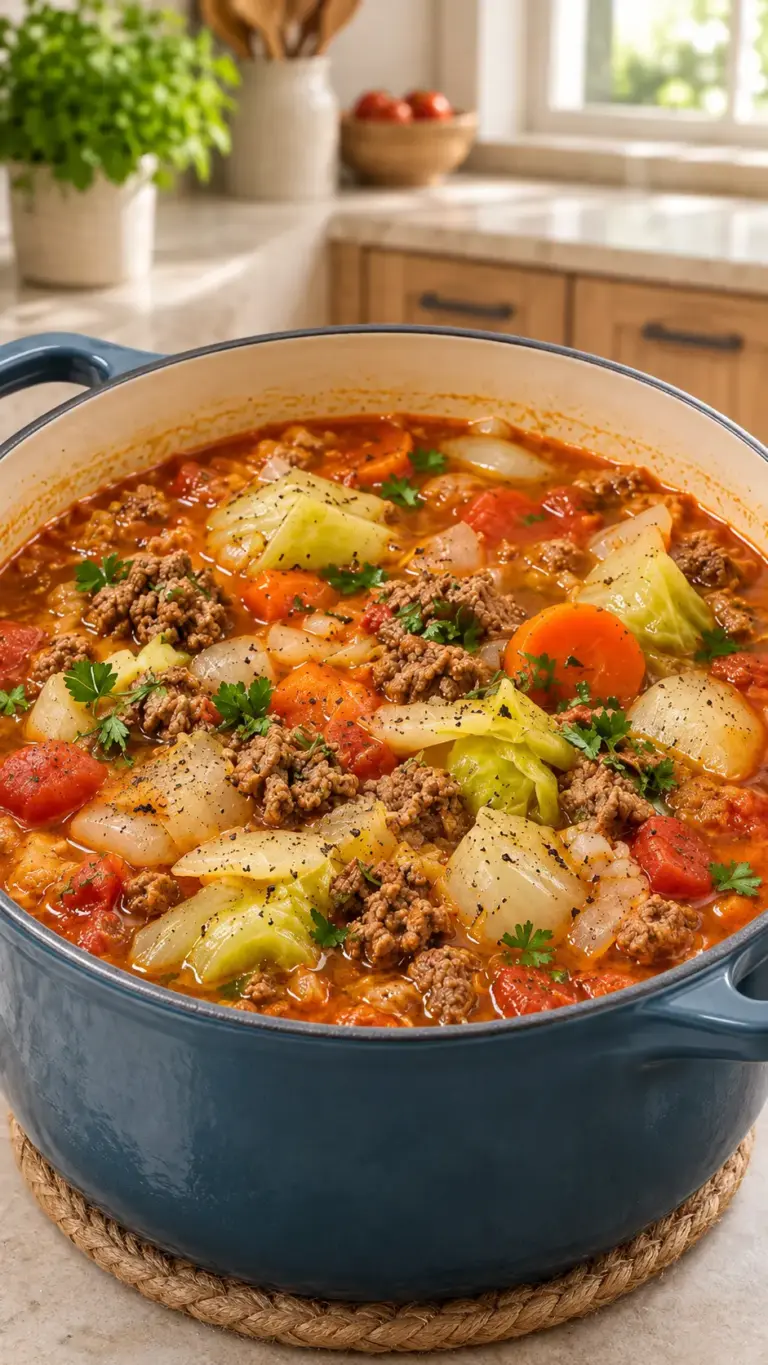
Easy Cabbage Roll Soup
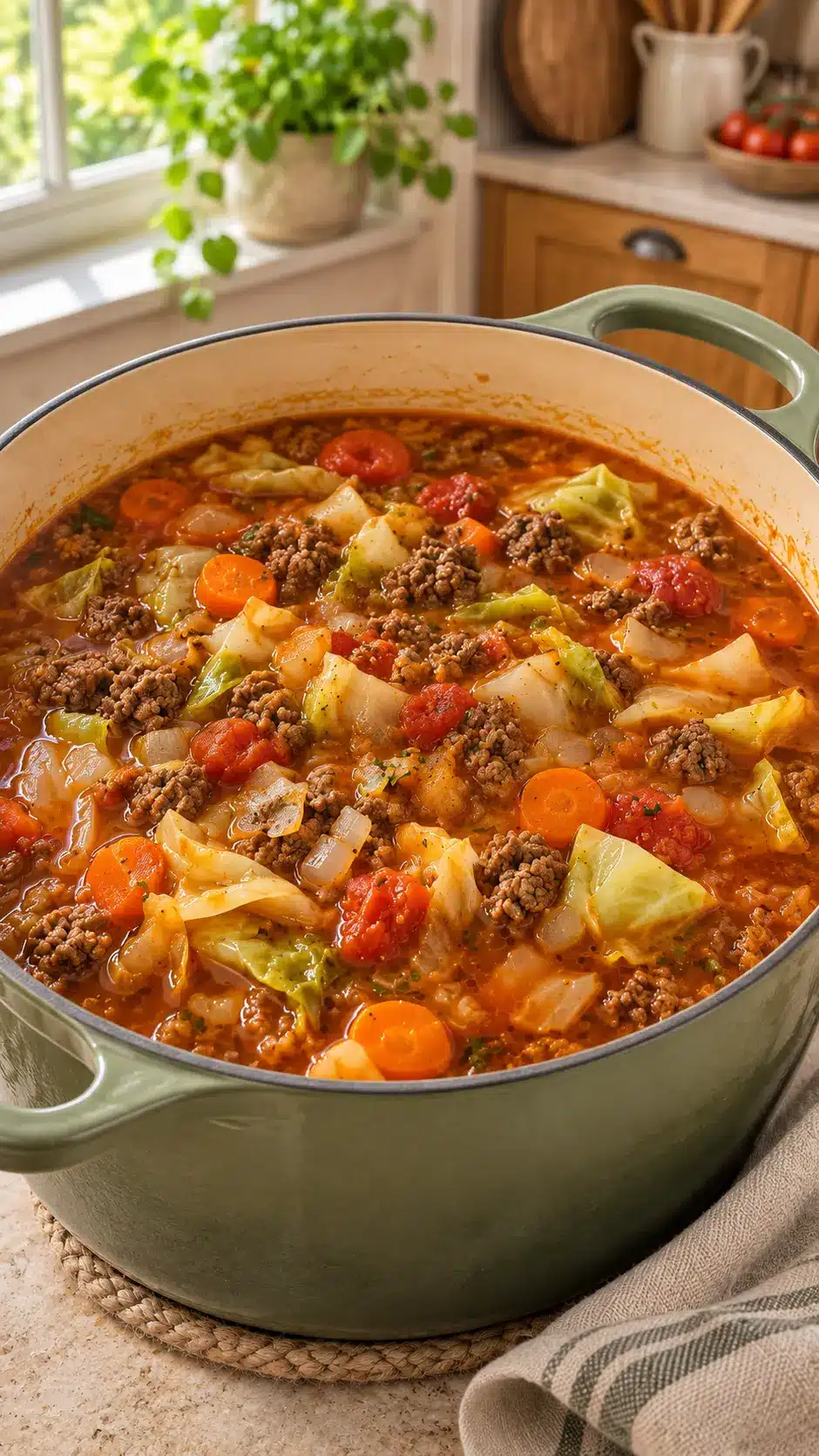
Finding the time to prepare a wholesome and comforting meal after a long, exhausting workday can feel like an impossible challenge for many busy American households. We often crave the rich, nostalgic flavors of traditional comfort food, yet the hours required to roll individual cabbage leaves can deter even the most enthusiastic home cooks. This is precisely why introducing the Easy Cabbage Roll Soup Recipe to your weekly meal rotation will completely transform how you approach evening cooking.
By breaking down the beloved elements of classic stuffed cabbage into a streamlined, pot-simmered format, this dish delivers all the rustic satisfaction without any tedious kitchen labor. It stands as a shining example of a quick preparation that brings together tender vegetables, savory meats, and a richly seasoned tomato broth in a fraction of the traditional time. Whether you are looking to feed a hungry family dinner crowd on a chilly autumn evening or simply need a nourishing bowl of goodness, this recipe answers the call.
Join me in the kitchen as we explore every nuance of creating this delightful dish, ensuring your culinary efforts yield restaurant-quality results right at home. From choosing the finest fresh ingredients to mastering the gentle simmer that melds every flavor together, you will soon discover why this comforting meal deserves a permanent spot in your recipe box. Let us embark on this flavorful journey together and elevate your weeknight cooking routine.
Discover more delicious recipes and everyday cooking tips at MindaPos!
The history and tradition behind Easy Cabbage Roll Soup Recipe
The culinary roots of cabbage rolls run deep across Eastern European, Scandinavian, and Middle Eastern cultures, where cooks traditionally wrapped tender leaves around seasoned meats and grains. These labor-intensive dishes were historically crafted for special family gatherings, harvest celebrations, and harsh winter months when sturdy root vegetables and preserved cabbages sustained communities. Over generations, immigrants brought these cherished recipes to the United States, adapting traditional methods to fit American kitchens while keeping their rich cultural heritage alive.
As modern lifestyles grew faster, home cooks sought ways to recreate these complex, slow-cooked flavor profiles without spending hours standing at the kitchen counter. Deconstructing the classic stuffed cabbage roll into a convenient soup format emerged as a brilliant culinary innovation that respected the original ingredients while modernizing the method. By combining ground beef, rice, tomatoes, and cabbage in a single cooking vessel, resourceful cooks captured the exact taste profile of the classic dish with significantly less effort.
This evolution turned a once-formidable holiday centerpiece into an approachable, everyday family dinner that fits seamlessly into busy American schedules. The comforting aroma of simmering tomatoes, garlic, and earthy cabbage immediately evokes memories of grandmother’s kitchen, bridging the gap between old-world tradition and contemporary convenience. Today, embracing the Easy Cabbage Roll Soup Recipe allows us to honor culinary history while enjoying a practical meal that warms both body and soul.
The enduring popularity of this deconstructed approach also speaks to the adaptability of home cooking traditions across the United States. As local farmers markets and supermarkets began offering diverse cabbages, heirloom tomatoes, and sustainably sourced ingredients year-round, home cooks eagerly experimented with the flavor balance. This continuous refinement ensures that every pot of soup tells a story of cultural persistence, adaptation, and the universal love for a hearty, steaming bowl of homemade broth.
Why you will love Easy Cabbage Roll Soup Recipe
- Incredible Flavor Harmony: The natural sweetness of sautéed onions and carrots blends seamlessly with the savory depth of browned beef and tangy crushed tomatoes.
- Effortless Preparation: Skip the tedious rolling, boiling, and wrapping of traditional cabbage rolls by tossing everything into a single pot for a stress-free cooking process.
- Budget-Friendly Ingredients: Utilizes accessible, affordable grocery staples like green cabbage, long-grain rice, and ground beef that won’t break the bank.
- Wholesome Nutrition: Serves as a healthy alternative packed with dietary fiber from the cabbage and carrots, lean protein, and essential vitamins.
- Wonderful Versatility: Easily adapts to dietary preferences, allowing you to swap proteins, grains, or broths based on what you have in your pantry.
- One-Pot Cleanup: Minimizes dishwashing duties by cooking the entire meal in a single Dutch oven, making post-dinner cleanup wonderfully fast.
- Freezer Friendly: Holds its texture and taste remarkably well, making it an ideal candidate for meal prepping and freezing for busy future nights.
The kitchen secrets behind perfect flavor and texture
Achieving a truly exceptional bowl of soup relies heavily on proper temperature control during the initial browning phase. When you cook the ground beef and diced onions in a heavy-bottomed Dutch oven, allowing the meat to develop a deep, golden-brown crust creates essential umami flavors. This caramelization forms the flavorful foundation of the broth, ensuring that every spoonful carries a rich, savory depth rather than a flat, boiled taste.
The sequence in which you add your ingredients dictates the final texture of your vegetables and grains. Adding aromatic garlic and tomato paste just after browning the meat allows the raw garlic bite to soften and the tomato paste to darken slightly, releasing concentrated sugars and eliminating metallic notes. Introducing the tougher vegetables like cabbage and carrots early with the broth ensures they soften gently without turning into mush.
Managing the moisture balance throughout the simmering process is another critical technique for success. Because the uncooked long-grain rice absorbs a significant amount of liquid as it cooks, keeping a watchful eye on the pot prevents the soup from turning into a thick casserole. Stirring occasionally and adding a splash of extra beef broth when needed maintains that classic, comforting soup consistency we all love.
Finally, allowing the completed soup to rest off the heat for a few minutes before serving lets the internal temperatures stabilize and the flavors meld into a cohesive masterpiece. A final adjustment of salt and black pepper just before ladling into bowls wakes up every individual component. By paying attention to these small culinary details, you elevate a simple weeknight soup into a gourmet quality experience.
How to choose the best ingredients for gourmet results
Selecting the right head of green cabbage is the single most important step in creating a stellar soup. Look for a firm, heavy head with tightly packed, glossy leaves that feel crisp and display a vibrant pale green color without any brown spots or wilting edges. Shopping at your local farmers market or selecting fresh produce at regional supermarkets like Kroger or Publix ensures you get crisp, seasonal vegetables that release maximum sweetness as they simmer.
The quality of your protein and aromatics directly influences the overarching flavor profile of the broth. Opt for lean ground beef to keep the soup from becoming excessively greasy, or seek out sustainably sourced ingredients from local butchers when possible for superior taste. Fresh yellow onions and firm, bright orange carrots picked during peak season will provide an aromatic sweetness that artificial flavor enhancers simply cannot replicate.
When selecting canned tomatoes and broths, reading labels helps you maintain control over the salt and acidity levels in your dish. Choose high-quality crushed tomatoes and low-sodium beef broth so you can personally regulate the seasoning throughout the cooking process. Incorporating fresh herbs like dried oregano and premium paprika adds layers of warmth that tie the entire ingredient profile together harmoniously.
Visiting your neighborhood grocery store, whether it is Walmart or a specialized local grocer, allows you to pick up pantry staples like long-grain white rice and olive oil with ease. Fresh ingredients combined with pantry essentials create a reliable canvas for cooking. By investing a little extra care into gathering premium produce and quality meats, you guarantee that your final meal tastes remarkably fresh and deeply satisfying.
Ingredient variations and dietary adaptations
To transform this comforting soup into a plant-based fasting or vegan version, simply omit the ground beef and replace it with hearty brown lentils or canned kidney beans. Substitute the beef broth with a rich vegetable stock and sauté your aromatics in olive oil, ensuring a deeply satisfying, meat-free meal that still delivers incredible texture and robust flavors.
Creating a gluten-free version is remarkably straightforward because the traditional recipe already relies on naturally gluten-free ingredients like rice, vegetables, and beef. Just double-check your packaged beef broth and spices to ensure no gluten-containing anti-caking agents or flavor additives were used during commercial processing, keeping the dish completely safe for sensitive diners.
If you are following a low-carb or keto lifestyle, you can easily omit the long-grain rice entirely or substitute it with finely riced cauliflower added during the final ten minutes of simmering. This adjustment drastically reduces the carbohydrate content while preserving the thick, comforting mouthfeel and classic flavor profile of the original dish.
Adapting the recipe for a dairy-free household requires virtually no changes, as the foundational recipe contains no milk, butter, or cheese. However, if you enjoy a creamy finish without dairy, stirring in a splash of rich coconut milk or topping individual bowls with a dollop of dairy-free sour cream provides luxurious richness without compromising your dietary goals.
When you find yourself missing a key seasoning such as paprika or dried oregano, you can easily improvise with pantry substitutes like chili powder, Italian seasoning, or a pinch of crushed red pepper flakes for heat. If brown sugar is missing, a small spoonful of honey, maple syrup, or even plain white sugar will balance the natural acidity of the crushed tomatoes effectively.
The best sides and drinks to serve with this dish
- Crisp Garden Salad: A refreshing blend of mixed greens, cucumber slices, and a tangy lemon vinaigrette cuts through the rich, savory broth and adds a delightful crunch.
- Warm Crusty Bread: A freshly baked artisan sourdough baguette slathered with salted butter is perfect for soaking up every last drop of the flavorful tomato broth.
- Creamy Mashed Potatoes: Serving a modest scoop of buttery mashed potatoes right in the bottom of the soup bowl offers an extra layer of old-world comfort.
- Zesty Pickled Vegetables: A side dish of crunchy dill pickles, pickled red onions, or fermented sauerkraut provides a sharp, cleansing contrast to the hearty soup.
- Chilled Chardonnay: A crisp, medium-bodied white wine with subtle apple and oak notes balances the acidity of the tomatoes and enhances the savory beef flavors.
- Refreshing Iced Tea: A tall glass of freshly brewed unsweetened iced tea with a lemon wedge offers a clean, cooling beverage pairing for a casual family lunch.
Refrigerating, freezing, and reheating correctly
- Refrigerator Storage: Transfer completely cooled soup into airtight glass or plastic containers and seal tightly before placing them in the refrigerator for up to four days.
- Freezer Preparation: Allow the soup to cool down to room temperature, then divide it into heavy-duty freezer-safe bags or containers, leaving a little headspace for liquid expansion.
- Optimal Shelf Life: Stored properly in the freezer, this dish maintains its vibrant flavor and wholesome texture for up to three months without degradation.
- Step-by-Step Reheating: Thaw frozen soup overnight in the refrigerator, then gently warm it on the stovetop over medium-low heat, stirring occasionally and adding a splash of broth to restore its original consistency.
Nutrition information and preparation times
- Calories: 320 kcal per serving
- Protein: 18 g
- Fat: 12 g
- Carbohydrates: 36 g
| Parameter | Value |
|---|---|
| Prep time | 15 min |
| Cook time | 35 min |
| Total time | 50 min |
| Difficulty | Easy |
| Servings | 8 servings |
Ingredients
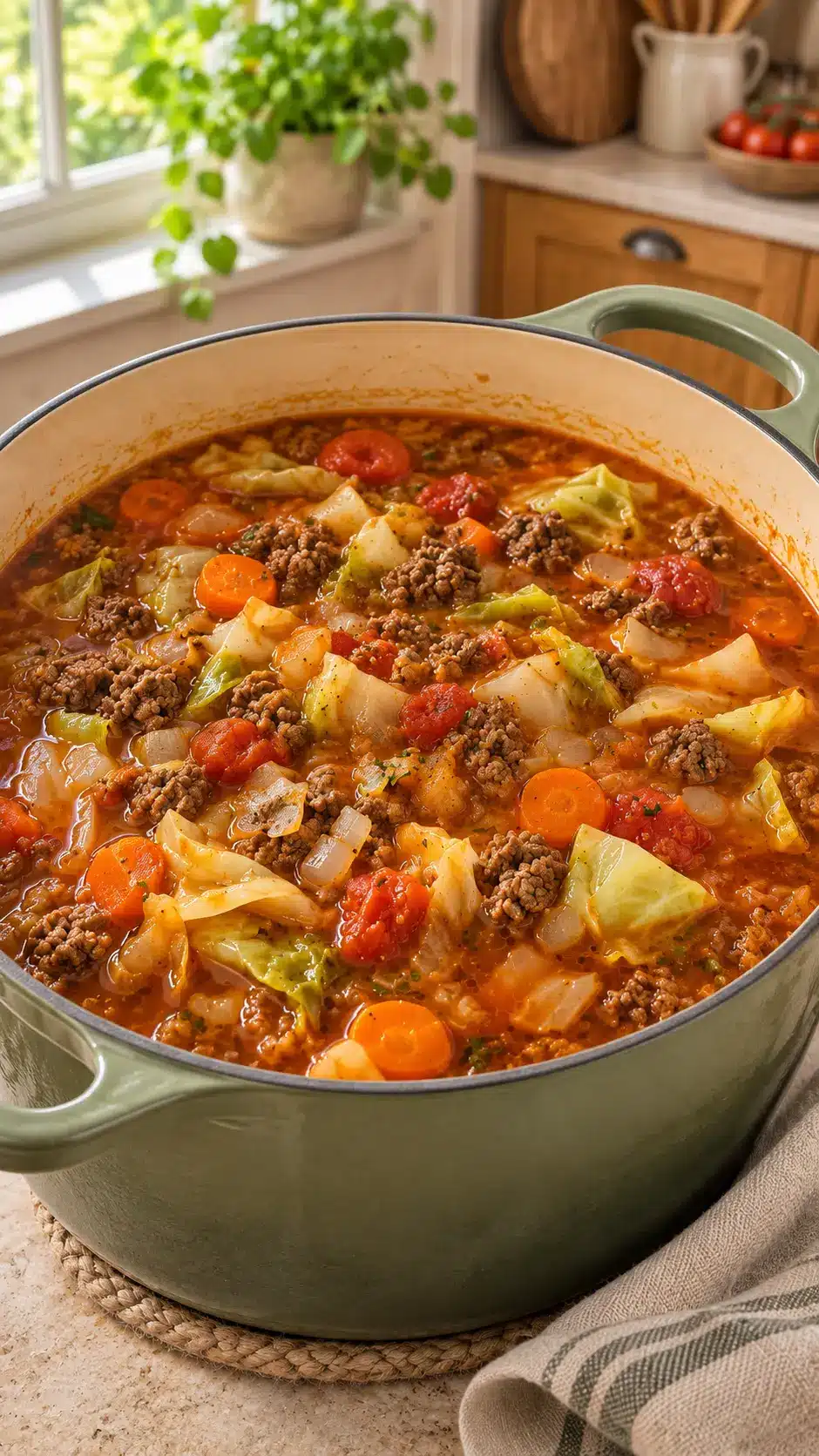
For the soup base and vegetables
- 1 lb lean ground beef
- ½ large green cabbage, chopped
- 2 carrots, sliced
- 1 onion, diced
- 3 garlic cloves, minced
- ½ cup uncooked long-grain rice
For the broth and seasonings
- 1 can (28 oz) crushed tomatoes
- 5 cups beef broth
- 2 tbsp tomato paste
- 1 tbsp olive oil
- 1 tsp paprika
- 1 tsp dried oregano
- 1 tsp brown sugar
- salt and freshly ground black pepper, to taste
A step-by-step guide to a successful recipe
Step 1: Heating the cooking vessel
Begin by placing a large, heavy-bottomed Dutch oven over medium heat on your stovetop. Add the tablespoon of olive oil and swirl the pan to coat the bottom evenly as it warms. You will know the oil is ready when it shimmers slightly and flows loosely across the metal surface.
Maintaining a moderate heat level at this stage is crucial to prevent the oil from smoking or burning before you introduce the aromatics. Take a moment to ensure all your nearby ingredients are measured and prepped, as the initial cooking steps move quite quickly. This proactive organization sets a calm and controlled tone for the entire cooking process.
As the pot radiates steady warmth, you can anticipate the wonderful culinary transformation about to take place. The choice of a heavy Dutch oven ensures heat distributes evenly, preventing hot spots that might scorch your ingredients. Listen closely for a gentle hiss as the first ingredients touch the warm oil.
Step 2: Browning the meat and onions
Add the diced onion and lean ground beef directly into the warmed Dutch oven. Use a wooden spoon to break the meat into small crumbles, distributing the onions evenly throughout the beef. Allow the mixture to cook undisturbed for a few minutes so the meat can develop a rich, golden-brown sear on the bottom.
As the meat browns, the onions will turn translucent and release their natural sugars into the pan juices. Continue stirring occasionally, ensuring no large clumps of meat remain and that the onions soften without burning. Once the beef is thoroughly cooked through and no pink remains, carefully drain off any excess grease from the pot.
This browning phase is the primary architect of flavor in your finished soup, so do not rush it. The aroma of savory beef mixing with sweet, sweating onions will quickly fill your kitchen, signaling that the foundation of the dish is developing properly. Keep your heat at medium to maintain a steady, controlled sizzle.
Step 3: Integrating garlic and tomato paste
Toss the minced garlic cloves and the tomato paste directly into the cooked beef and onion mixture. Stir continuously with your wooden spoon for approximately one minute, making sure the paste coats the meat evenly. The bright red tomato paste will darken slightly as it toasts in the residual oils.
Be extremely vigilant during this minute, as minced garlic burns very quickly and can impart a bitter taste if neglected. The moment you inhale a fragrant, toasted garlic aroma mingling with concentrated tomatoes, you are ready for the next step. This brief cooking step eliminates the raw edge of the garlic and deepens the tomato flavor.
The mixture will now look thick, glossy, and deeply colored across the bottom of the Dutch oven. This technique, often called blooming the tomato paste, unlocks complex umami notes that elevate the dish far beyond a simple boiled soup. Enjoy this sensory peak as your kitchen transforms into a comforting culinary haven.
Step 4: Adding vegetables and liquids
Add the chopped green cabbage, sliced carrots, crushed tomatoes, beef broth, paprika, dried oregano, and brown sugar into the Dutch oven. Stir everything thoroughly, scraping up any delicious browned bits stuck to the bottom of the pot with your wooden spoon. The liquid will rise around the colorful vegetables, creating a vibrant, crowded pot.
Do not worry if the pot looks remarkably full of cabbage at this stage, as the leafy greens will shrink down significantly as they simmer. Ensure that the liquid is well distributed so every piece of vegetable is kissed by the seasoned broth. Take a moment to admire the rich red and green color contrast in the pot.
Bringing all these elements together marks the transition from individual ingredients to a cohesive soup base. The spices will immediately begin releasing their essential oils into the surrounding liquid, creating a complex and inviting aroma. Adjust your burner heat slightly higher to encourage the pot to transition toward a simmer.
Step 5: Reaching a gentle boil
Increase the heat slightly under your covered or uncovered Dutch oven until the liquid begins to bubble around the edges. Watch for small bubbles breaking the surface steadily, indicating that the soup has reached a gentle boil. Avoid letting it rage into a violent, splashing boil, which can break down the vegetables too rapidly.
Stir the soup once or twice during this heating phase to ensure even temperature distribution throughout the deep pot. You will notice the cabbage leaves beginning to soften and relax into the liquid as the temperature rises. This is an exciting visual cue that the cooking process is progressing precisely as intended.
Once that active bubble is established across the surface of the soup, you are ready to introduce the grain component. Pay close attention to the visual cues of the bubbling liquid to ensure you transition smoothly to the simmering stage without delay. Control is the secret to professional-grade home cooking.
Step 6: Simmering with rice
Stir in the half cup of uncooked long-grain rice, ensuring the grains settle beneath the liquid rather than clinging to the upper walls of the pot. Place the lid securely on the Dutch oven and reduce the heat to low. Allow the soup to simmer gently for twenty-five to thirty minutes undisturbed.
During this simmering window, the rice will absorb flavorful broth while expanding to tender perfection, and the cabbage will become melt-in-your-mouth soft. Avoid lifting the lid too frequently, as you want to trap the heat and steam necessary to cook the grains evenly. The gentle bubbling sound from beneath the lid should remain soft and rhythmic.
As time passes, the kitchen will fill with an irresistible, homey aroma that makes waiting for dinner the hardest part of the process. Test a piece of carrot and a grain of rice near the end of the time window to confirm they have reached your preferred tenderness. The soup will naturally thicken as the rice releases its starches.
Step 7: Adjusting consistency and broth
Remove the lid and stir the soup, observing its texture and thickness after the rice has finished cooking. If the soup appears too thick because the rice absorbed a large volume of liquid, pour in an extra splash of warm beef broth. Stir well and let it warm through for another two minutes.
Check that the cabbage is completely tender and that the individual grains of rice are fully cooked through without being mushy. This balancing step ensures your soup maintains its luxurious, spoonable consistency rather than transforming into a heavy stew. Customizing the liquid level at this point guarantees a perfect dining experience.
Take pride in how the starches and broths have harmonized into a velvety base that coats your spoon beautifully. The visual appeal of the vibrant carrots and tender cabbage suspended in rich tomato broth is truly rewarding. You are now just moments away from serving time.
Step 8: Final seasoning and serving
Taste a small spoonful of the hot soup and season with additional salt and freshly ground black pepper according to your personal preference. Give the pot one final, thorough stir to distribute the seasonings evenly throughout all the ingredients. Turn off the heat and let the soup rest uncovered for three to five minutes.
Ladle the steaming, aromatic soup generously into deep bowls, ensuring each portion receives an even distribution of beef, rice, and tender vegetables. Serve immediately while piping hot alongside your favorite rustic bread or side salad. Enjoy the comforting warmth and rich flavors of your homemade creation with family and friends.
This satisfying final step brings your culinary labor to a triumphant and delicious conclusion. Watching your household gather around the table to enjoy the comforting bowls you prepared is the ultimate reward for any home cook. Savor every single spoonful of your homemade success.
What to do when the dish does not turn out as planned
If you taste your soup and discover it is unpleasantly salty, do not panic, as this common kitchen mishap is easily remedied. You can dilute the salinity by stirring in an extra cup of unsweetened beef broth, or by adding more chopped cabbage and uncooked rice to absorb the excess sodium. Alternatively, dropping in a peeled, raw potato for ten minutes while simmering can draw out surplus salt before you discard it.
Should your soup turn out too dry because the rice absorbed more liquid than anticipated during simmering, the fix is straightforward. Simply pour in an additional cup of warm beef broth or water, stir gently, and let the pot heat through for five minutes. This restores the desired saucy, comforting consistency without compromising the flavor balance.
When the soup or mixture appears overly watery and lacks body, you can easily rectify the texture. Allow the uncovered pot to simmer gently over medium-low heat for an extra ten minutes so excess moisture can evaporate naturally. If you need a faster fix, whisking a teaspoon of tomato paste into a splash of warm broth and stirring it in will add body and richness.
If the finished dish tastes disappointingly bland, it usually indicates a lack of proper seasoning or acidity. Wake up the flavors by stirring in a small splash of apple cider vinegar or lemon juice to brighten the tomato base, followed by another pinch of salt and black pepper. A tiny pinch of garlic powder or smoked paprika can also provide that missing depth of flavor instantly.
Frequently asked questions about Easy Cabbage Roll Soup Recipe
Can I use brown rice or white rice in this soup recipe?
You can use either white or brown rice, but keep in mind that brown rice requires a longer cooking time and additional liquid. If you prefer to use brown rice, cook it separately before stirring it into the soup near the end, or adjust your simmering time and broth quantity accordingly to prevent crunchy grains.
Is it possible to make this recipe in a slow cooker?
Yes, you can easily adapt this recipe for a slow cooker by browning the beef and onions on the stovetop first. Transfer the browned meat, raw vegetables, crushed tomatoes, seasonings, and broth to your slow cooker, leaving the rice out until the last hour of cooking to prevent it from becoming mushy.
Can I freeze leftovers of this cabbage roll soup?
This soup freezes wonderfully for up to three months when stored in airtight containers or freezer bags. Keep in mind that rice tends to soften further during the freezing and thawing process, so you may want to slightly undercook the rice initially if you plan to freeze large batches.
What type of cabbage works best for this recipe?
Standard green cabbage is the traditional and most reliable choice for this recipe because it holds its structure well during simmering while turning wonderfully tender. You can also experiment with Napa cabbage or Savoy cabbage if you prefer a more delicate texture and milder flavor profile.
How do I prevent the rice from absorbing all the broth?
Rice naturally absorbs liquid as it cooks, but you can manage this by cooking the soup with the lid partially on and adding an extra splash of beef broth right before serving. If you plan on storing leftovers for several days, cooking the rice separately and adding it to individual bowls is another great strategy.
Can I substitute ground turkey or chicken for the beef?
You can easily substitute lean ground turkey or ground chicken for the beef if you prefer a lighter protein option. Because poultry is leaner, consider adding an extra tablespoon of olive oil when sautéing the meat to ensure the soup retains a rich, satisfying mouthfeel.
Easy Cabbage Roll Soup

A cozy, flavorful soup inspired by classic cabbage rolls, combining tender cabbage, ground beef, carrots, rice, and tomatoes in one satisfying pot.
- 1 lb lean ground beef
- 2 carrots, sliced
- 1 onion, diced
- 3 garlic cloves, minced
- 1 can (28 oz) crushed tomatoes
- 5 cups beef broth
- 2 tbsp tomato paste
- 1 tbsp olive oil
- 1 tsp paprika
- 1 tsp dried oregano
- 1 tsp brown sugar
- Salt and pepper, to taste
- 1Heat olive oil in a large Dutch oven over medium heat.
- 2Add the ground beef and diced onion, cooking until the beef is browned and fully cooked through, breaking the meat into small crumbles. Drain any excess fat.
- 3Add the minced garlic and tomato paste, stirring constantly for 1 minute until fragrant.
- 4Stir in the chopped cabbage, sliced carrots, crushed tomatoes, beef broth, paprika, dried oregano, and brown sugar.
- 5Bring the mixture to a gentle boil over medium-high heat.
- 6Stir in the uncooked long-grain rice, reduce the heat to low, cover the pot, and simmer for 25 to 30 minutes until the rice and vegetables are tender.
- 7Add extra beef broth if the soup becomes too thick during cooking.
- 8Season with salt and pepper to taste, then serve hot.
Keywords: cabbage roll soup, easy soup recipe, ground beef soup, comfort food, one pot dinner