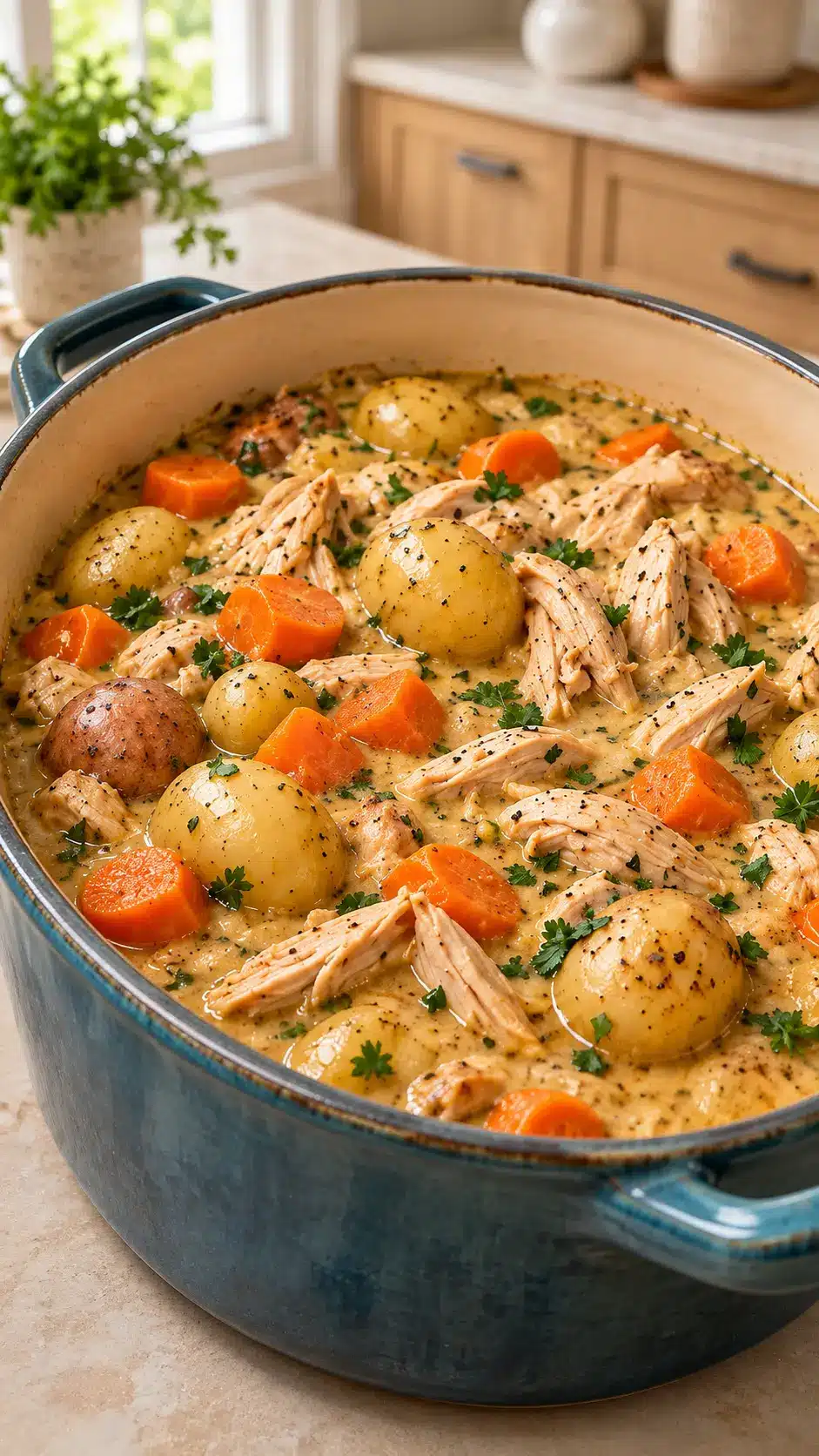
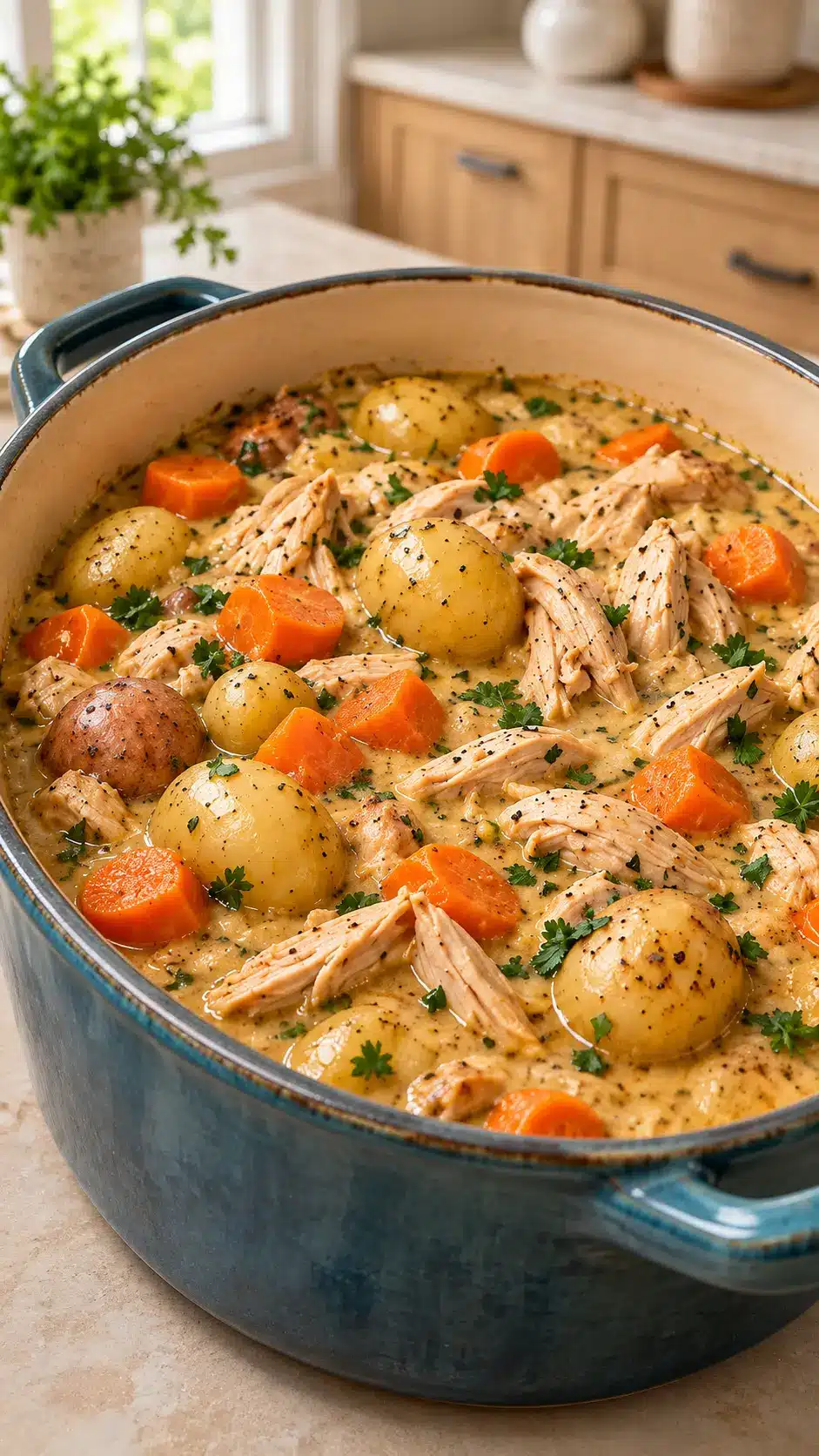
Creamy Chicken and Baby Potato Stew
There comes a time during every busy week when the daily rush settles and we crave a meal that wraps us in warmth and total contentment. As home cooks, we constantly search for a reliable family dinner that satisfies hungry appetites without demanding hours of complex preparation in the kitchen. Juggling work, school schedules, and evening errands leaves little room for elaborate culinary experiments, yet nobody wants to settle for bland or uninspired food.
That is precisely why mastering a comforting, soul-soothing recipe transforms your weeknight routine from a stressful chore into a cherished gathering around the dinner table. When you combine tender poultry, earthy root vegetables, and a velvety broth infused with fragrant herbs, you create a harmonious dish that brings everyone running to the kitchen. It is an approachable masterpiece that proves you do not need professional credentials to serve a meal filled with depth and love.
Let us dive into the wonderful world of home-style cooking and explore how to craft the ultimate creamy chicken and potato stew right in your own kitchen. Whether you are cooking for your immediate household or hosting a cozy Sunday supper for close friends, this dish delivers unmatched satisfaction in every single spoonful. Prepare your favorite Dutch oven, sharpen your chef knife, and get ready to create a masterpiece that will become an instant favorite in your recipe rotation.
Discover more delicious recipes and everyday cooking tips at MindaPos!
The history and tradition behind creamy chicken and potato stew
The culinary roots of hearty stews stretch back thousands of years, evolving from primitive ceramic pots hung over open fires into the refined comfort foods we cherish today. Across European and early American households, combining available meats with starchy tubers and root vegetables was the ultimate strategy for survival and nourishment. Tougher cuts of meat and seasonal garden yields benefited immensely from slow, gentle simmering, which tenderized fibers and melded diverse flavors into a unified broth.
In early American history, pioneer kitchens relied heavily on iron pots suspended in hearths, where ingredients like poultry, potatoes, and onions cooked slowly throughout the day. This method ensured that nothing went to waste, extracting every ounce of flavor from bones and vegetables while providing high-calorie sustenance for hardworking families. As kitchen technology progressed from hearths to wood-burning stoves and eventually to modern gas and electric ranges, the core philosophy of the stew remained stubbornly rooted in comfort and resourcefulness.
The addition of rich dairy elements, such as heavy cream or butter-thickened roux, gained prominence as domestic dairy farming expanded and refrigeration improved storage capabilities. This European culinary influence transformed rustic broths into luxurious, velvety sauces that coated the tongue and elevated humble ingredients to gourmet status. Families began passing down these treasured proportions through generations, writing them on faded index cards and adapting them to match regional preferences across the United States.
Today, enjoying a traditional creamy chicken and potato stew connects us to centuries of domestic heritage and the universal human desire to gather over a nourishing pot of food. It represents the pinnacle of home hospitality, where simple techniques yield profound emotional and physical comfort. By honoring these traditional roots while utilizing modern kitchen efficiencies, contemporary home cooks keep a rich culinary legacy alive and thriving.
Why you will love creamy chicken and potato stew
- Perfect Flavor Balance: The natural sweetness of tender carrots and onions marries seamlessly with savory chicken broth, aromatic herbs, and rich cream for an exceptionally well-rounded flavor profile.
- Incredible Comfort: Velvety textures and warm aromatics provide instant emotional and physical relief after a long, tiring day, making it the ultimate comfort food for any season.
- Quick Preparation: Despite tasting like it simmered for hours, this delicious meal comes together efficiently, fitting easily into a busy weeknight schedule without sacrificing quality.
- Wholesome Nutrition: Packed with lean protein, fiber-rich vegetables, and essential vitamins, this dish serves as a healthy alternative to heavy, processed convenience foods.
- Versatile Ingredients: Easily adaptable to whatever seasonal produce you find at local farmers markets or your neighborhood grocery store like Kroger or Walmart.
- One-Pot Convenience: Utilizing a single Dutch oven minimizes kitchen clutter and makes the after-dinner cleanup process wonderfully fast and manageable.
- Crowd-Pleasing Appeal: Even picky eaters and hungry children adore the tender meat, buttery potatoes, and mild, savory sauce, ensuring empty plates all around the table.
The kitchen secrets behind perfect flavor and texture
Achieving culinary excellence in a dish like creamy chicken and potato stew relies heavily on understanding fundamental heat control and ingredient sequencing. When you melt butter in a heavy-bottomed Dutch oven over medium heat, you establish a thermal foundation that gently cooks aromatics without scorching them. Allowing the diced onions and sliced carrots to sweat patiently releases their natural sugars, building a complex flavor base that water alone could never replicate.
The introduction of all-purpose flour directly into the sautéed vegetable and butter mixture creates a traditional culinary base known as a blond roux. Thoroughly cooking this flour for a minute or two eliminates the raw taste of starch and allows the fats to coat the protein molecules. When you slowly whisk in the chicken broth, this cooked flour acts as a suspension agent, preventing lumps and ensuring a smooth, cohesive body for your broth.
Ingredient density and size consistency play a vital role in ensuring that everything cooks evenly throughout the simmering process. Halving baby potatoes so they share a uniform surface area allows them to absorb savory liquids at the same rate as the surrounding carrots and poultry. Maintaining a gentle, controlled simmer rather than a violent boil prevents the chicken proteins from seizing up and turning rubbery while protecting the potatoes from disintegrating into mush.
Finally, the timing of dairy incorporation is a critical science that separates a professional result from a curdled disappointment. Heavy cream contains milk fats that can destabilize and separate if subjected to prolonged, aggressive boiling under high heat conditions. By stirring the cream in toward the end of the cooking process and keeping the heat at a gentle simmer, you preserve its luxurious emulsion and silky mouthfeel.
How to choose the best ingredients for gourmet results
Sourcing exceptional components is the secret to elevating a rustic home-style dish into a truly gourmet experience that impresses guests and family alike. When visiting your local supermarket or exploring neighborhood farmers markets, prioritize vibrant colors, firm textures, and clean aromas. Fresh ingredients make all the difference, transforming a simple weeknight dinner into an extraordinary sensory experience through pure, unadulterated flavors.
When selecting your poultry at stores like Walmart or Kroger, look for boneless, skinless chicken breasts that appear plump, moist, and pale pink without excessive liquid in the packaging. Ethically raised or sustainably sourced ingredients often exhibit superior moisture retention and clean flavor, ensuring your shredded meat remains tender rather than stringy. Freshness is paramount, so always check expiration dates and inspect the meat for a clean, neutral scent before purchasing.
For the potato component, baby red or Yukon Gold potatoes offer a wonderful balance of waxy moisture and buttery starch that holds its shape during simmering. Examine the skins to ensure they are smooth, taut, and free of green discoloration or sprouting, which indicates improper storage or age. Supporting local produce vendors during harvest seasons guarantees you access to crisp carrots and aromatic onions packed with natural sugars and robust earthiness.
Do not overlook the pantry staples that tie the entire flavor profile together, such as high-quality unsalted butter, aromatic dried thyme, and fragrant fresh parsley. Using real heavy cream rather than light cream or milk guarantees that rich, velvety texture that defines the ultimate creamy chicken and potato stew. Every deliberate choice you make at the grocery store echoes directly in the final depth and elegance of your meal.
Ingredient variations and dietary adaptations
Adapting this classic recipe to fit diverse dietary restrictions or pantry limitations is surprisingly simple with a few thoughtful ingredient swaps and adjustments. If you are preparing a plant-based fasting or vegan version, substitute the chicken with firm pressed tofu or canned chickpeas, use vegetable broth instead of poultry stock, and replace heavy cream with full-fat coconut milk or cashew cream alongside olive oil for the butter.
For individuals avoiding gluten, modifying the recipe requires only a minor tweak to the thickening agent used in the initial roux stage. Swap the standard all-purpose wheat flour for an equal amount of cornstarch slurried in cold water, or use a certified gluten-free all-purpose flour blend to achieve that same velvety sauce consistency without wheat proteins.
To create a low-carb or keto version suitable for specialized nutritional goals, you can replace the starchy baby potatoes with cubed turnips, radishes, or cauliflower florets. Radishes, in particular, mellow out remarkably when simmered in a savory broth, losing their sharp bite and mimicking the tender texture of traditional potatoes while keeping carbohydrate counts impressively low.
Navigating a dairy-free lifestyle does not mean missing out on rich, comforting textures, thanks to modern culinary alternatives available in most grocery stores today. Substitute the butter with high-quality extra virgin olive oil or avocado oil, and use unsweetened almond milk blended with a tablespoon of olive oil or canned coconut cream to mimic the luxurious body of heavy cream.
If you happen to find yourself missing a key seasoning like fresh thyme or rosemary, pantry flexibility saves the day without compromising the dish’s integrity. You can easily substitute Italian seasoning blend, poultry seasoning, or even dried oregano and basil, keeping in mind that dried herbs are more potent and should be used in slightly smaller quantities than fresh counterparts.
The best sides and drinks to serve with this dish
- Crisp Garden Salad: Toss fresh mixed greens with thinly sliced cucumbers, radishes, and a bright lemon vinaigrette to cut through the rich, savory flavors of the stew.
- Crusty French Bread: Serve warm, freshly baked sourdough or a rustic baguette with salted butter to mop up every last drop of the velvety herb-infused broth.
- Garlicky Green Beans: Sauté fresh local green beans in olive oil with minced garlic and a squeeze of fresh lemon juice for a vibrant, crunchy vegetable side dish.
- Chilled Chardonnay: Pour a glass of crisp, oaked Chardonnay with buttery notes and crisp acidity that mirrors and elevates the creamy profile of the poultry.
- Refreshing Iced Tea: Offer a tall glass of freshly brewed Southern-style iced tea with a slice of lemon for a non-alcoholic beverage option that refreshes the palate.
- Zesty Pickled Vegetables: Provide a small bowl of crisp pickled red onions or dill cucumber pickles to introduce a sharp, acidic contrast to the rich and hearty meal.
Refrigerating, freezing, and reheating correctly
- Refrigerator Storage: Transfer cooled leftovers into airtight glass or BPA-free plastic containers and store them safely in the refrigerator for up to 3 to 4 days.
- Freezer Preparation: While dairy-heavy stews can sometimes separate when frozen, you can successfully freeze the base mixture before adding cream, or freeze fully cooked portions in heavy-duty freezer bags for up to 2 months.
- Optimal Shelf Life: For peak flavor, freshness, and optimal textural integrity of the potatoes and chicken, consume refrigerated leftovers within 72 hours of initial preparation.
- Reheating Method: Warm individual portions gently on the stovetop over medium-low heat, stirring frequently and splashing in a tablespoon of chicken broth or milk to restore the silky sauce consistency without scorching.
Nutrition information and preparation times
- Calories: 480 kcal
- Protein: 32 g
- Fat: 22 g
- Carbohydrates: 38 g
| Parameter | Value |
|---|---|
| Prep time | 15 min |
| Cook time | 35 min |
| Total time | 50 min |
| Difficulty | Easy |
| Servings | 6 servings |
Ingredients
For the main mixture
- 1½ lbs boneless skinless chicken breasts
- 1½ lbs baby potatoes, halved
- 3 carrots, sliced
- 1 medium onion, diced
- 3 garlic cloves, minced
- 3 cups chicken broth
- 1 cup heavy cream, at room temperature
- 2 tbsp butter
- 2 tbsp all-purpose flour
- 1 tsp dried thyme
- ½ tsp rosemary
- ½ tsp black pepper
- salt to taste
- fresh parsley, chopped for garnish
A step-by-step guide to a successful recipe
Step 1: Melting the butter and building the heat
Place a large, heavy-bottomed Dutch oven over medium heat on your stovetop and allow the metal to warm evenly for a couple of minutes. Add the two tablespoons of unsalted butter, watching closely as it melts, foams, and releases a rich, nutty aroma across your kitchen. Swirl the melted butter around the base of the pot to coat the bottom thoroughly, setting the stage for the flavorful vegetable foundation.
Controlling your burner temperature during this initial phase is crucial to prevent the butter solids from burning and turning bitter before the vegetables even hit the pan. You want a steady, moderate heat level that gently sizzles the fat without smoking. This attentive approach ensures a clean, sweet flavor profile that forms the backbone of your culinary creation.
Once the butter is fully melted and bubbling gently, you are ready to introduce your first round of aromatics. Do not rush this step, as taking the time to properly preheat your cooking vessel guarantees even heat distribution throughout the entire cooking process. Listen for the gentle hiss of butter greeting fresh produce as you transition to the next phase.
Step 2: Sautéing onions and carrots
Add the diced yellow onion and sliced carrots directly into the melted butter, listening for an immediate, satisfying sizzle. Stir the vegetables continuously with a wooden spoon to ensure every piece is coated in the rich butter, then let them cook undisturbed for about 5 minutes. As they heat, the onions will turn translucent and release their savory moisture, while the carrots will begin to soften slightly at the edges.
Keep a watchful eye on the pan and stir occasionally to prevent any pieces of onion from browning too quickly or sticking to the bottom of the Dutch oven. You are looking for a tender-crisp texture and a sweet, aromatic fragrance filling your kitchen workspace. This gentle sweating process draws out natural sugars that balance the savory elements of the broth.
If you notice the heat is too high and the vegetables are coloring too fast, simply lower your burner setting slightly to maintain a gentle perspiration phase. Proper cooking of these foundational aromatics builds incredible depth of flavor that water or raw vegetables simply cannot replicate. Take pleasure in the vibrant orange and translucent white colors mingling together in the pot.
Step 3: Stirring in aromatics and flour
Sprinkle the minced garlic, all-purpose flour, dried thyme, and dried rosemary directly over the sautéed onions and carrots in the Dutch oven. Stir vigorously with your wooden spoon for about 60 to 90 seconds, ensuring the flour coats all the vegetables evenly and absorbs the remaining butter. You will notice the raw, starchy smell of flour transition into a toasty, aromatic perfume as it cooks.
This critical step eliminates the unpleasant raw flour taste and creates a proper culinary base that will thicken your broth without forming lumps. Be diligent about scraping the bottom of the pot with your spoon to catch any bits trying to adhere to the metal surface. The herbs will bloom in the warm fat, releasing essential oils that elevate the fragrance of the entire dish.
If the mixture appears entirely dry and threatens to scorch, do not panic; simply lower the heat and keep moving your spoon briskly. The garlic should become fragrant without turning brown or bitter, which ruins its delicate flavor contribution. Once the flour is thoroughly integrated and toasted, you are ready to introduce the liquid elements.
Step 4: Incorporating the chicken broth
Pour the three cups of chicken broth into the Dutch oven in a slow, steady stream while whisking or stirring vigorously with your wooden spoon. This gradual addition is the secret to preventing flour lumps, allowing the starch molecules to hydrate smoothly into a uniform liquid suspension. As the cool broth hits the warm pan, it will hiss gently and lift any caramelized bits from the bottom of the pot.
Continue stirring until the liquid is entirely incorporated and the mixture appears smooth, slightly opaque, and free of any flour pockets. Bring the liquid up to a gentle temperature increase, watching for small bubbles to form around the edges of the pot. The aroma of savory chicken stock combined with earthy herbs will immediately fill your kitchen.
Check the consistency of your liquid base, ensuring it feels cohesive and ready to receive the main protein and starch components. Taking your time during this emulsification stage guarantees a silky, professional-grade sauce texture once the stew finishes cooking. You have now established a rich, flavorful broth foundation for your ingredients.
Step 5: Adding chicken and potatoes
Gently nestle the boneless, skinless chicken breasts and the halved baby potatoes directly into the simmering broth mixture in the Dutch oven. Ensure that the potatoes and chicken are largely submerged in the liquid so they cook evenly throughout the braising process. The liquid level should rise around the proteins and tubers, creating a crowded yet harmonious pot.
Bring the contents of the pot back up to a gentle, rolling simmer, ensuring you do not crank the heat so high that the dairy-free broth boils aggressively. Once simmering bubbles appear across the surface, secure the lid tightly over the Dutch oven to trap heat and moisture inside. This covered environment creates a mini oven effect that tenderizes everything to perfection.
Resist the temptation to lift the lid constantly during the cooking process, as letting the steam escape prolongs the cooking time and alters internal temperatures. Trust your heat settings and let the Dutch oven work its magic while you tidy up your kitchen workspace. The ingredients are now melding their flavors in a warm, aromatic steam bath.
Step 6: Simmering until tender and safe
Allow the covered stew to simmer undisturbed for 20 to 25 minutes, maintaining that steady, gentle bubbling action beneath the lid. During this time, the starch in the baby potatoes will soften completely, and the chicken breasts will cook through thoroughly. You can test a potato piece with the tip of a sharp knife to ensure it yields effortlessly with no resistance.
Use a reliable digital meat thermometer to check the internal temperature of the thickest part of the chicken breasts to guarantee food safety. The poultry has reached perfection when the thermometer registers a safe 165°F without any pink flesh remaining inside. If the chicken needs an extra minute or two, recover the pot and let it finish cooking.
Carefully remove the lid, noting the cloud of fragrant steam that escapes and the rich, savory aromas filling your dining space. The broth will have thickened slightly from the starches released by the potatoes and the cooked flour roux. You are now ready to transform the chicken into its ultimate shredded form.
Step 7: Shredding the chicken
Using kitchen tongs or a slotted spoon, carefully lift the cooked chicken breasts out of the simmering stew and transfer them onto a clean cutting board. Take two sturdy forks and use them to pull the tender meat apart into bite-sized shreds, working quickly while the poultry is still warm. The meat should yield effortlessly to the forks, separating into juicy, delicate strands.
Return the freshly shredded chicken right back into the Dutch oven, letting it tumble back into the simmering broth and tender potato halves. Stir the pot gently to distribute the meat evenly throughout the vegetable mixture, ensuring every spoonful will contain a perfect balance of ingredients. The shredded texture allows the poultry to soak up the surrounding flavors like a sponge.
With the chicken back in the pot, your dish is just moments away from achieving its signature creamy finish and luxurious mouthfeel. Keep the heat on low so the ingredients remain warm while you prepare the final dairy addition. The visual appeal of the pot at this stage is truly mouthwatering and rewarding.
Step 8: Adding cream and final simmering
Pour the one cup of room-temperature heavy cream slowly into the stew while stirring gently with your wooden spoon. Allow the mixture to return to a gentle, uncovered simmer for about 5 minutes, letting the excess moisture evaporate slightly and the sauce thicken to a velvety coat. Do not let the pot boil aggressively after adding the cream, as high heat can cause dairy proteins to separate and curdle.
Watch the sauce transform into a rich, opaque, ivory blanket that clings invitingly to the back of your stirring spoon. Taste the broth carefully and season with additional black pepper and salt according to your personal preference. The flavors should be deeply savory, balanced, and remarkably comforting on the palate.
Turn off the heat burner and remove the Dutch oven from the hot element to halt the cooking process. Sprinkle a generous handful of freshly chopped parsley over the top of the stew for a vibrant pop of green color and fresh herbaceous flavor. Serve piping hot in warm bowls and enjoy the fruits of your culinary labor.
What to do when the dish does not turn out as planned
If you accidentally add too much salt while seasoning your dish, do not panic, as several kitchen remedies can rescue your meal effectively. You can neutralize excess sodium by adding a splash of unsalted chicken broth, dropping in an extra peeled, raw potato to absorb salt during a brief simmer, or stirring in a touch of heavy cream or unsalted butter. These adjustments dilute the salinity and restore harmony to your flavor profile without requiring you to start over.
Should your stew turn out too dry due to prolonged simmering or excessive heat, the fix is straightforward and requires only a bit of liquid replenishment. Simply pour in an additional half-cup of warm chicken broth or milk, stirring gently over low heat until the sauce reaches your desired consistency. Avoid adding unheated liquids straight from the refrigerator, as sudden temperature drops can shock the emulsion of the cream sauce.
If you find that your sauce or mixture is too watery and lacks that signature velvety coating, you can easily correct the consistency with a quick starch slurry. Whisk one tablespoon of all-purpose flour or cornstarch into two tablespoons of cold water until smooth, then stir this mixture into the simmering stew. Let it cook uncovered for 3 to 5 minutes until the starches activate and thicken the liquid to perfection.
When the dish tastes disappointingly bland, it usually indicates a lack of sufficient salt, acidity, or herbal aromatics to elevate the base components. Start by adding a pinch of salt to wake up the dormant flavors, followed by a squeeze of fresh lemon juice or a dash of white wine vinegar to brighten the heavy broth. Adjusting your dried herbs or adding fresh garlic powder can also provide that missing punch of gourmet quality.
Frequently Asked Questions about creamy chicken and potato stew
Can I use chicken thighs instead of chicken breasts?
Yes, boneless, skinless chicken thighs make a wonderful and juicy alternative to chicken breasts in this recipe. They offer extra natural moisture and rich flavor, though you should trim excess visible fat before simmering.
Can I make this recipe in a slow cooker?
You can easily adapt this dish for a slow cooker by sautéing the aromatics first, then placing everything except the heavy cream and flour into the slow cooker on low for 6 to 7 hours. Stir in the cream during the final thirty minutes of cooking.
Why did my cream sauce curdle?
Cream sauce typically curdles when subjected to a violent, high-heat boil after the dairy has been added, or if cold cream hits boiling broth too quickly. Always use room-temperature cream and keep the heat at a gentle, low simmer.
Can I freeze leftovers of this stew?
While you can freeze this stew, dairy-heavy cream sauces can sometimes separate or change texture slightly upon thawing and reheating. For best results, freeze the chicken and vegetable base before adding the cream, then stir fresh cream in upon reheating.
What are the best potatoes to use?
Baby red potatoes, Yukon Gold potatoes, or fingerling potatoes work exceptionally well because they hold their shape during simmering without turning into complete mush. Avoid overly starchy russet potatoes, as they tend to dissolve too quickly in liquids.
How do I know when the potatoes are fully cooked?
The potatoes are finished cooking when the tip of a sharp paring knife or a fork slides smoothly and effortlessly into the center of the largest piece without any firm resistance.
Creamy Chicken and Baby Potato Stew

Tender shredded chicken, baby potatoes, carrots, and herbs simmered in a rich and creamy broth. An easy, hearty dinner for the whole family.
- 1 1/2 lbs boneless skinless chicken breasts
- 1 1/2 lbs baby potatoes, halved
- 3 carrots, sliced
- 1 medium onion, diced
- 3 garlic cloves, minced
- 3 cups chicken broth
- 1 cup heavy cream
- 2 tbsp butter
- 2 tbsp all-purpose flour
- 1 tsp dried thyme
- 1/2 tsp rosemary
- 1/2 tsp black pepper
- salt to taste
- fresh parsley
- 1Melt butter in a large Dutch oven over medium heat.
- 2Add onion and carrots and sauté for 5 minutes.
- 3Stir in garlic, flour, thyme, and rosemary.
- 4Slowly add chicken broth while stirring.
- 5Add chicken breasts and potatoes, bring to a gentle simmer, and cover.
- 6Cook for 20-25 minutes, until potatoes are tender and chicken reaches 165°F.
- 7Remove chicken, shred it with two forks, and return it to the pot.
- 8Stir in heavy cream and simmer uncovered for 5 minutes until slightly thickened.
- 9Season to taste and garnish with fresh parsley.
Keywords: chicken stew, creamy chicken, baby potato stew, hearty dinner, chicken and potatoes