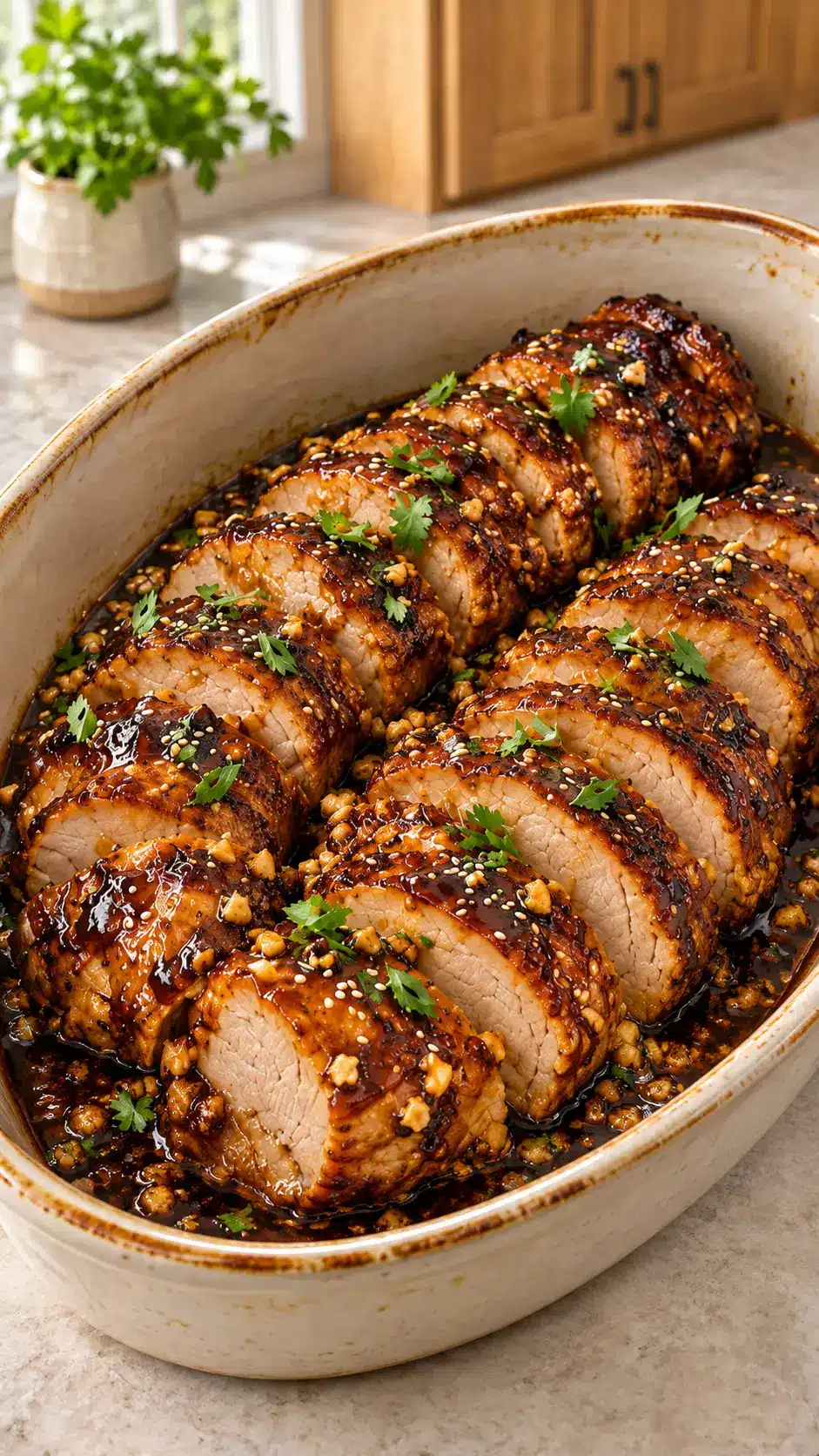
Sticky Honey Garlic Pork Tenderloin
Welcome to my home kitchen, where bringing people together around a flavorful table is my greatest joy. As Cristina Gabriela Dumitrescu, I know how exhausting weeknights can feel when you are staring into the refrigerator hoping for quick dinner inspiration. You want something incredible that satisfies the entire family, yet you do not have hours to spend chopping, measuring, and standing over a hot stove.
That is precisely why I created this recipe for Easy Sticky Honey Garlic Pork. It transforms humble pork tenderloin into a restaurant-quality centerpiece using basic pantry staples you likely already have on hand. The succulent pork soars under a shiny, caramelized glaze that strikes the ultimate balance between sweet honey, punchy garlic, and savory soy sauce.
Whether you need a quick preparation option after a demanding work day or a memorable main dish for weekend guests, this feast delivers maximum impact with minimal effort. It offers a wonderfully healthy alternative to takeout while still delivering that deep, cozy comfort we all crave. Let us jump into this step-by-step masterclass so you can master this irresistible dish tonight!
Discover more delicious recipes and everyday cooking tips at MindaPos!
The history and tradition behind Easy Sticky Honey Garlic Pork
The marriage of sweet honey and pungent garlic paired with pork has deep roots in Asian culinary traditions, particularly within Cantonese roast meat techniques. For generations, cooks across East Asia perfected glaze-building by balancing natural sugars with salty fermented soy sauces and aromatic root spices like ginger. These historic pan-searing and roasting methods focused on preserving meat moisture while creating an irresistible glossy shell on the exterior.
As these traditional recipes migrated into North American home kitchens during the mid-twentieth century, American cooks adapted them to suit local grocery availability and modern cast-iron skillet techniques. The expensive, multi-day marinating steps were streamlined into quick stove-to-oven methods tailored for busy households. Pork tenderloin, known as one of the leanest and most tender cuts available, quickly became the canvas of choice for these bold regional flavor combinations.
Throughout the modern American culinary landscape, sweet and savory glazed pork has secured a permanent spot on weeknight menu rotations. It represents the beautiful evolution of cross-cultural fusion cooking, where classic Western pan-roasting meets the complex flavor profiles of East Asian pan sauces. Today, home cooks rely on this harmony of honey, garlic, and soy sauce to elevate simple family meals into something truly special.
In contemporary cooking, recipes like Easy Sticky Honey Garlic Pork bridge the gap between traditional heritage techniques and modern nutritional goals. By using oven-safe cookware and quick stovetop reductions, families enjoy deep, complex flavors without spending hours tending a smoker or open grill. It remains a timeless tribute to how traditional cooking wisdom can seamlessly enrich our modern, fast-paced lifestyles.
Why you will love Easy Sticky Honey Garlic Pork
- Irresistible Sweet and Savory Balance: The rich combination of floral honey, pungent garlic, and umami-rich soy sauce creates a glaze that appeals to kids and adults alike.
- Lightning-Fast Skillet-to-Oven Execution: With a quick preparation phase and under twenty-five minutes of cooking time, you can have a full dinner on the table in under forty minutes.
- Lean and Wholesome Protein Base: Pork tenderloin provides an exceptionally lean, low calorie, and nutrient-dense protein foundation that keeps mealtime naturally nutritious.
- Minimal Cleanup Required: By searing and roasting the meat in a single oven-safe skillet, kitchen cleanup becomes virtually effortless after a busy evening.
- Budget-Friendly Gourmet Quality: Enjoy an upscale dining experience right at home using affordable, readily available grocery store staples.
- Versatile Side Dish Pairing: The rich, glossy glaze pairs effortlessly with steamed jasmine rice, roasted greens, mashed potatoes, or crisp garden salads.
- Fabulous Meal Prep Options: Leftover sliced tenderloin reheats beautifully while retaining its juicy texture and intense glossy glaze for lunch the next day.
- Simple Ingredients with Bold Results: Every single ingredient is easily recognizable, allowing you to produce restaurant-style meals without tricky culinary techniques.
The kitchen secrets behind perfect flavor and texture
Achieving absolute perfection with pork tenderloin comes down to understanding key chemical reactions that occur during high-heat searing and sauce reduction. Searing the exterior in a shimmering oven-safe skillet initiates the famous Maillard reaction. This chemical process transforms the natural proteins and sugars on the meat surface, creating a flavorful brown crust that locks in internal juices.
Temperature control is critical when working with honey-based glazes. Because natural honey contains simple sugars that burn easily above 300°F, half of the glaze is added during roasting while the remainder is reduced separately on the stove. This dual-phase application prevents bitter charred notes while ensuring a thick, glossy coat clings to every tender slice.
The addition of apple cider vinegar provides an essential acid element that cuts through the intense sweetness of brown sugar and honey. Acids break down surface proteins slightly while balancing the heavy umami of low-sodium soy sauce. This harmonious chemical contrast ensures the glaze feels light and vibrant on the palate rather than cloying or excessively heavy.
Relying on a cornstarch slurry provides controlled gelatinization during the final sauce reduction phase. As the cornstarch molecules heat up in the savory liquids, they expand and trap moisture, converting a thin liquid into a rich, velvety coating. This culinary step guarantees that your glaze sticks evenly to the pork tenderloin instead of running off onto the cutting board.
Finally, resting the pork tenderloin for at least three to five minutes post-roasting allows the muscle fibers to relax. During roasting, heat forces internal liquids toward the center of the meat; resting allows those flavorful juices to redistribute evenly throughout the tenderloin. Slicing too soon causes precious moisture to spill out, leaving you with dry meat instead of soft, juicy slices.
How to choose the best ingredients for gourmet results
Creating an extraordinary meal begins with selecting fresh ingredients at your local market or neighborhood supermarket like Kroger or Walmart. When shopping for pork tenderloin, look for cuts that display a deep reddish-pink color with minimal surface fat and zero pale or graying spots. Avoid pre-marinated or heavily seasoned vacuum-sealed packages, as these often contain hidden sodium fillers that interfere with controlling your glaze flavor.
Visiting a weekend market allows you to source local produce such as vibrant garlic heads, fresh ginger root, and crisp green cilantro. Freshly harvested garlic offers sweet, aromatic punch without the harsh, bitter notes found in pre-minced jarred alternatives. Grating fresh ginger root directly into your sauce releases volatile aromatic oils that elevate your dish from ordinary to true gourmet quality.
Selecting the right honey makes a noticeable difference in the final gloss and flavor profile of your sticky glaze. Opt for raw, sustainably sourced ingredients like wildflower or clover honey gathered by regional beekeepers. High-quality honey brings subtle floral notes that meld seamlessly with the molasses undertones of light brown sugar and the tang of cider vinegar.
Always choose low-sodium soy sauce when preparing reduced sauces to maintain complete control over the overall seasoning level. As the pan sauce simmers down and thickens, standard soy sauce can quickly concentrate into an unpleasantly salty glaze. Using low-sodium options ensures that the rich sweet, savory, and garlic aromas shine through without overwhelming your taste buds.
Ingredient variations and dietary adaptations
If you prefer a plant-based fasting or vegan variation, you can easily adapt this master recipe without sacrificing sticky flavor. Replace the pork tenderloin with thick slabs of extra-firm tofu, seitan steaks, or thick-sliced king oyster mushrooms. Swap the natural honey for pure maple syrup or raw agave nectar, and sear your plant proteins until golden brown before tossing them in the reduced glaze.
For those following a strict gluten-free diet, simple swaps ensure everyone can enjoy this delicious family dinner safely. Replace standard low-sodium soy sauce with certified gluten-free tamari or coconut aminos in equal proportions. Double-check your cornstarch brand to ensure it is processed in a gluten-free facility, creating a safe glaze with identical shine and thickness.
Adopting a low-carb or keto lifestyle requires only minor modifications to lower the overall sugar content. Replace the natural honey with a liquid sugar-free honey alternative made from monk fruit or erythritol. Substitute the brown sugar with a golden keto sweetener, and use a tiny pinch of xanthan gum instead of cornstarch to thicken your luscious glaze without added carbohydrates.
This recipe is naturally dairy-free since it uses olive oil for searing instead of butter. If you wish to enhance the richness even further while remaining dairy-free, you can swirl a small spoonful of refined coconut oil or extra-virgin olive oil into the glaze just before serving. This adds a beautiful sheen and luxurious mouthfeel without introducing any dairy solids.
If you find yourself missing key fresh ingredients on a busy weeknight, quick pantry substitutes can easily save the day. Dried ground ginger can step in for fresh grated ginger at a ratio of one-quarter teaspoon ground to one teaspoon fresh. If you lack apple cider vinegar, white rice vinegar or fresh lemon juice will provide the bright acidity needed to balance the sweet honey coating.
The best sides and drinks to serve with this dish
- Steamed Jasmine or Basmati Rice: Fluffy, aromatic white or brown rice acts like a sponge, soaking up every drop of the extra sticky garlic honey glaze.
- Roasted Garlic Mashed Potatoes: Creamy, buttery mashed potatoes provide a comforting, classic American backdrop that pairs wonderfully with sweet and savory pork.
- Charred Sesame Broccoli: Tender-crisp broccoli roasted with a touch of sesame oil adds vibrant color, fresh ingredients, and a delightful bitter-crunch element to balance the sweet meat.
- Crisp Asian Cucumber Salad: Thinly sliced cucumbers tossed in rice vinegar and toasted sesame oil offer a light, refreshing, low calorie contrast that cleanses the palate.
- Pinot Noir or Dry Riesling: A light-bodied Pinot Noir offers subtle berry notes that complement roasted pork, while a dry Riesling highlights the sweet honey and garlic glaze without overpowering it.
- Chilled Iced Green Tea or Citrus Herbal Infusion: Crisp, unsweetened iced green tea or a tart lemon-herbal infusion provides an invigorating non-alcoholic beverage pairing that balances the rich umami glaze.
Refrigerating, freezing, and reheating correctly
- Refrigeration Guidelines: Transfer fully cooled leftover pork and remaining glaze into clean, airtight containers. Store in the refrigerator at or below 40°F for up to four days to preserve optimum freshness and safety.
- Freezing Preparation: Allow the roasted pork to cool completely before slicing. Place the slices along with the extra glaze into heavy-duty freezer bags or airtight glass containers, removing as much air as possible. Label and freeze for up to three months.
- Safe Defrosting: Thaw frozen glazed pork slowly in the refrigerator overnight. Avoid thawing at room temperature on the counter to prevent unwanted bacterial growth and preserve proper meat texture.
- Step-by-Step Reheating: To keep the pork juicy during reheating, place sliced tenderloin in a covered skillet over medium-low heat with two tablespoons of water or chicken stock. Warm gently for five to seven minutes until internal temperature reaches 165°F, tossing slices in the warmed glaze to restore their signature shiny coat.
Nutrition information and preparation times
- Calories: approximately 310 kcal per serving
- Protein: approximately 34 grams
- Fat: approximately 8 grams
- Carbohydrates: approximately 24 grams
| Parameter | Value |
|---|---|
| Prep time | 15 min |
| Cook time | 25 min |
| Total time | 40 min |
| Difficulty | Easy |
| Servings | 6 servings |
Ingredients
For the pork tenderloin
- 2 pork tenderloins about 2 lbs total, trimmed of excess silver skin
- 1 tbsp olive oil
- ½ tsp black pepper freshly cracked
For the honey garlic glaze
- ⅓ cup honey raw organic preferred
- ¼ cup low-sodium soy sauce
- 4 garlic cloves minced
- 2 tbsp brown sugar packed light brown sugar
- 1 tbsp apple cider vinegar
- 1 tsp fresh grated ginger
- 1 tbsp cornstarch mixed with 2 tbsp water slurry prepared at room temperature
For garnish
- 1 tbsp sesame seeds toasted
- 2 tbsp fresh cilantro or parsley finely chopped
A step-by-step guide to a successful recipe
Step 1: Prep and Season the Pork
Begin by removing your two pork tenderloins from their refrigeration packaging about fifteen minutes before you plan to cook. Allowing the meat to adjust slightly toward room temperature ensures an even cook from the outer crust to the very center of the cut. Place the tenderloins on a clean plastic cutting board dedicated to raw proteins.
Examine the tenderloins for any silver skin, which is a tough, shiny connective tissue running along the outer muscle surface. Using a sharp utility or boning knife, carefully slip the blade beneath the silver skin and slice it away, angling the blade slightly upward so you do not waste any valuable meat. Pat the entire surface of the pork thoroughly dry using clean paper towels.
Removing excess exterior moisture is an absolute necessity if you want to achieve a deep, golden sear during pan frying. Once completely dry, season the tenderloins evenly on all sides with freshly cracked black pepper. Set the seasoned meat aside while you prepare your skillet and preheat your home oven to 400°F.
Step 2: Whisk the Honey Garlic Glaze
In a medium glass mixing bowl or liquid measuring cup, combine the raw organic honey, low-sodium soy sauce, packed light brown sugar, and apple cider vinegar. Add the four finely minced garlic cloves along with the freshly grated ginger root. Using a small wire whisk, beat the mixture vigorously until the brown sugar dissolves completely into the liquid.
Take a moment to inhale the intoxicating aroma of spicy ginger, sharp garlic, and rich honey blending together. The acidity from the apple cider vinegar naturally cuts through the dense sweetness of the raw honey and brown sugar. This ensures your sauce will bake into a balanced, complex glaze rather than a cloying syrup.
Set this prepared liquid glaze aside near your cooktop area for easy access during the fast-paced searing process. In a separate small dish, stir together the cornstarch and two tablespoons of room temperature water to form a smooth slurry. Set the cornstarch slurry aside to use later when thickening the remaining glaze on the stovetop.
Step 3: Sear the Tenderloins in the Skillet
Place a large, heavy oven-safe skillet—preferably cast iron or heavy stainless steel—over medium-high heat on your stovetop. Pour in one tablespoon of olive oil and swirl the pan to coat the entire bottom surface evenly. Allow the skillet to heat up until the oil begins to shimmer lightly but is not smoking heavily.
Carefully lay the seasoned pork tenderloins into the hot pan using long-handled kitchen tongs. You should hear an immediate, confident sizzling sound as the meat makes contact with the hot oil and metal. Allow the tenderloins to sear undisturbed for two to three minutes until a golden-brown crust forms on the bottom.
Using your tongs, rotate the tenderloins roughly one-quarter turn every two minutes, searing all sides thoroughly. Continue this process until every surface of the pork displays a gorgeous caramel-brown color, which takes about six to eight minutes total. Turn off the stovetop burner briefly while maintaining safety around the hot handle.
Step 4: Glaze and Transfer to the Oven
With the skillet still on the unheated burner, take your whisked honey garlic mixture and give it one quick final stir. Carefully pour exactly half of the sweet garlic liquid directly over the seared pork tenderloins in the hot pan. Reserve the remaining half of the liquid glaze in your bowl for the final stovetop reduction later.
The half-portion of sauce will sizzle wildly upon hitting the hot skillet, bubbling around the base of the meat and filling your kitchen with an incredible garlic-honey perfume. Use a heat-resistant silicone spoon or pastry brush to coat the tops and sides of the tenderloins with the bubbling pan liquids. This initial layer of sauce will bake directly into the outer crust of the meat during roasting.
Equip yourself with heavy, dry oven mitts and carefully pick up the hot skillet. Transfer the entire skillet onto the middle rack of your preheated 400°F oven. Close the oven door quickly to lock in ambient heat and start the roasting timer.
Step 5: Oven Roast to Tender Perfection
Roast the tenderloins uncovered in the hot oven for fifteen to twenty-two minutes, depending on the exact thickness of your pork cuts. As the meat bakes, the honey and soy glaze in the skillet will bubble aggressively, slowly reducing into a thick, sticky syrup around the base of the meat. Keep a close eye through the oven window to ensure the sugars do not scorch.
To guarantee gourmet quality and food safety, test the internal temperature of the pork using a digital instant-read meat thermometer. Insert the probe into the thickest section of the tenderloin without touching the bottom of the hot pan. The thermometer should register exactly 145°F for ideal juicy, tender results with a slight blush of pink in the center.
If the thermometer reads below 145°F, return the skillet to the oven for an additional two to three minutes before testing again. Once the target temperature is reached, immediately remove the heavy skillet from the oven using dry protective oven mitts. Set the hot skillet down safely onto a heat-proof trivet or unheated stove burner.
Step 6: Rest the Roasted Pork
Using clean kitchen tongs, lift the roasted tenderloins out of the hot skillet and transfer them onto a warm wooden cutting board. Do not skip this crucial resting period, as it is the secret to retaining ultimate juiciness throughout the meat. Leave the pork undisturbed on the cutting board for at least three to five minutes.
During these few minutes of rest, carryover cooking will push the internal temperature up slightly while muscle fibers relax. The delicious meat juices that were driven into the center by high oven heat will now redistribute evenly toward the outer edges. This step prevents all those flavorful juices from running out onto your board when you begin slicing.
While the tenderloins rest comfortably on the board, turn your full attention back to finishing the warm pan juices and reserved glaze. This clever timing ensures every element of your meal comes together hot and fresh at the exact same moment.
Step 7: Simmer and Thicken the Glaze
Set a small saucepan over medium heat on your stovetop and pour in the reserved half of your unbaked honey garlic mixture. Add any rich pan drippings left behind in the heavy roasting skillet to maximize savory pork flavor. Bring the liquid to a gentle, bubbling simmer over medium heat, stirring occasionally with a spatula.
Give your cornstarch slurry a quick re-stir to redistribute any settled starch, then pour it slowly into the simmering saucepan. Whisk continuously as the mixture bubbles and heats up over the flame. Within sixty to ninety seconds, the cornstarch will activate, transforming the thin liquid into a dark, glossy, incredibly sticky glaze.
Once the sauce coats the back of a spoon with a thick, shiny sheen, remove the saucepan immediately from the heat source. Taste the glaze carefully using a clean spoon, adjusting seasoning with an extra pinch of black pepper or splash of cider vinegar if desired. Keep the glaze warm until ready to plate.
Step 8: Slice, Coat, and Serve
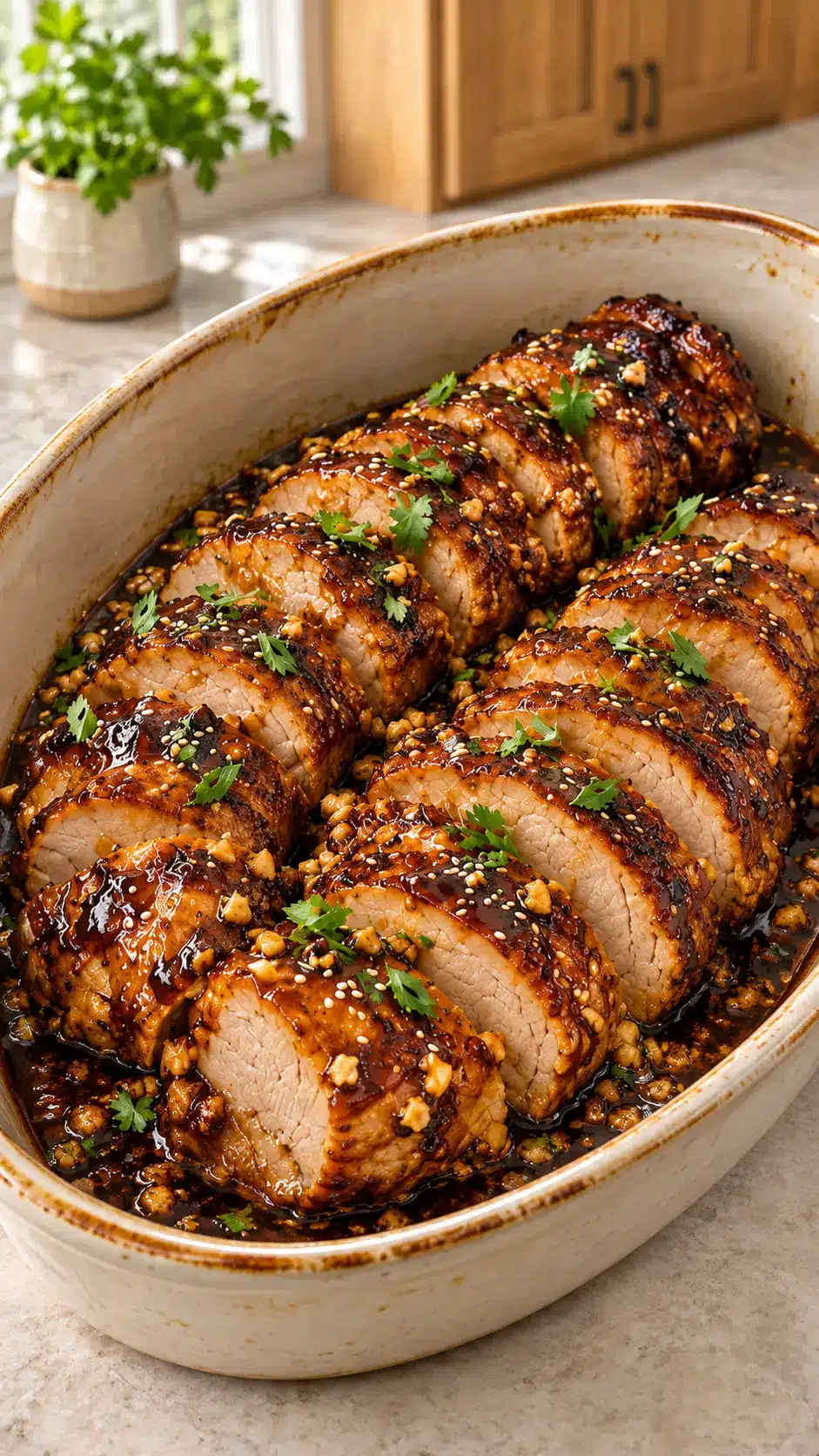
Using a sharp chef’s knife or slicing knife, cut the rested pork tenderloins crosswise into medallions roughly half an inch thick. You will notice how remarkably tender and juicy the interior remains beneath its golden, caramelized outer crust. Arrange the sliced pork medallions artfully across a warm serving platter or individual dining plates.
Generously spoon the thickened, shiny honey garlic glaze directly over the top of the warm sliced pork. Ensure every slice receives a luxurious coating of the sticky glaze so each bite packs incredible flavor. The glossy sheen across the pink, juicy meat creates an unbeatably appetizing presentation.
Finish the dish by sprinkling toasted sesame seeds and finely chopped fresh cilantro or parsley over the top for a pop of color and texture. Serve immediately alongside your favorite sides for an unforgettable, gourmet family dinner. Enjoy the amazing compliments from everyone at your dining table!
What to do when the dish does not turn out as planned
If your final glaze tastes overly salty, do not panic or discard your hard work. High sodium levels usually stem from using standard soy sauce instead of low-sodium options or letting the pan reduction simmer too long. You can quickly fix this by whisking in a tablespoon of unsalted chicken broth along with an extra drizzle of raw honey and a tiny squeeze of fresh lemon juice to soften the harsh saltiness.
If the pork turns out dry or overcooked due to an unexpected spike in oven temperature, you can easily salvage the meal with smart presentation. Slice the dry tenderloin into very thin medallions across the grain to shorten the muscle fibers. Submerge the thin slices directly into the warm, thickened glaze for three minutes before serving, allowing the meat to absorb moisture and sticky flavor.
If your sauce appears thin and watery rather than sticky and glossy, it simply needs a bit more reduction time or starch structure. Return the sauce to your stovetop and simmer it rapidly over medium-high heat for an extra two minutes to evaporate excess liquid. If it remains too runny, mix an extra half-teaspoon of cornstarch with one teaspoon of cold water and whisk it into the bubbling glaze until it thickens properly.
When the final dish tastes surprisingly flat or bland, the culinary issue is almost always a lack of balanced acidity or fresh aromatics. Stir a tiny splash of raw apple cider vinegar and a pinch of freshly grated ginger directly into your finished warm glaze. This immediate injection of bright acid and fresh root heat will instantly wake up the sweet honey and garlic notes.
Frequently asked questions about Easy Sticky Honey Garlic Pork
Can I use pork loin roast instead of pork tenderloin?
While both are lean cuts, pork loin is significantly larger, wider, and requires a much longer roasting time than pork tenderloin. If you substitute pork loin roast, you must adjust your oven time to roughly twenty-five to thirty-five minutes until the center reaches 145°F. We strongly recommend tenderloin for quick preparation and maximum tenderness.
How do I stop the honey glaze from burning in the skillet?
Honey burns quickly if exposed to direct, high dry heat for extended periods. To prevent scorching, sear the pork in olive oil first without any honey present. Pour only half the liquid glaze over the meat right before it enters the oven, reserving the rest to simmer safely into a thick glaze on the stovetop later.
Is it safe to eat pork cooked to 145°F with a light pink center?
Yes, according to USDA food safety standards, cooking whole cuts of pork to an internal temperature of 145°F followed by a three-minute rest is completely safe. This modern standard preserves internal juices and prevents the dry, tough texture traditionally associated with overcooked pork. Always verify temperature using a reliable digital meat thermometer.
Can I prepare this recipe ahead of time for busy weeknights?
Absolutely! You can trim the pork tenderloins and whisk the unbaked honey garlic sauce together up to twenty-four hours in advance. Store the pork and glaze in separate sealed containers in the refrigerator. When dinner time arrives, simply sear the meat, add half the glaze, and roast as directed for a fresh, fast meal.
What can I use if I do not have an oven-safe skillet?
If you do not own an oven-safe cast iron or stainless steel skillet, simply sear your pork tenderloins in a standard stovetop frying pan. After searing, transfer the tenderloins to a lightly oiled 9×13-inch glass or ceramic baking dish. Pour half of the sauce mixture over the pork in the baking dish and proceed with oven roasting as written.
Sticky Honey Garlic Pork Tenderloin
Tender slices of pork coated in a glossy sweet-and-savory honey garlic glaze, finished with sesame seeds and fresh herbs. A restaurant-style dinner that's surprisingly simple to make at home.
- 2 pork tenderloins (about 2 lbs total)
- 4 garlic cloves, minced
- 2 tbsp brown sugar
- 1 tbsp apple cider vinegar
- 1 tbsp olive oil
- 1 tsp fresh grated ginger
- 1 tbsp cornstarch mixed with 2 tbsp water
- 1 tbsp sesame seeds
- Fresh cilantro or parsley, chopped
- 1Preheat oven to 400°F.
- 2Pat the pork dry with paper towels and season with black pepper.
- 3Heat olive oil in an oven-safe skillet over medium-high heat and sear the pork for 2–3 minutes per side until golden brown.
- 4In a small bowl, whisk together the honey, low-sodium soy sauce, minced garlic, brown sugar, apple cider vinegar, and grated ginger.
- 5Pour half of the prepared sauce over the seared pork and transfer the skillet directly to the preheated oven.
- 6Roast for 15–22 minutes, or until the internal temperature of the pork reaches 145°F.
- 7Remove the pork from the oven and let it rest for at least 3 minutes before slicing.
- 8While the pork rests, pour the remaining sauce into a small saucepan, stir in the cornstarch and water mixture, and simmer over medium heat until thickened into a glossy glaze.
- 9Slice the pork tenderloin, spoon the warm glaze generously over the slices, and garnish with sesame seeds and fresh herbs.
Keywords: pork tenderloin, honey garlic pork, easy dinner, baked pork recipe, sticky pork