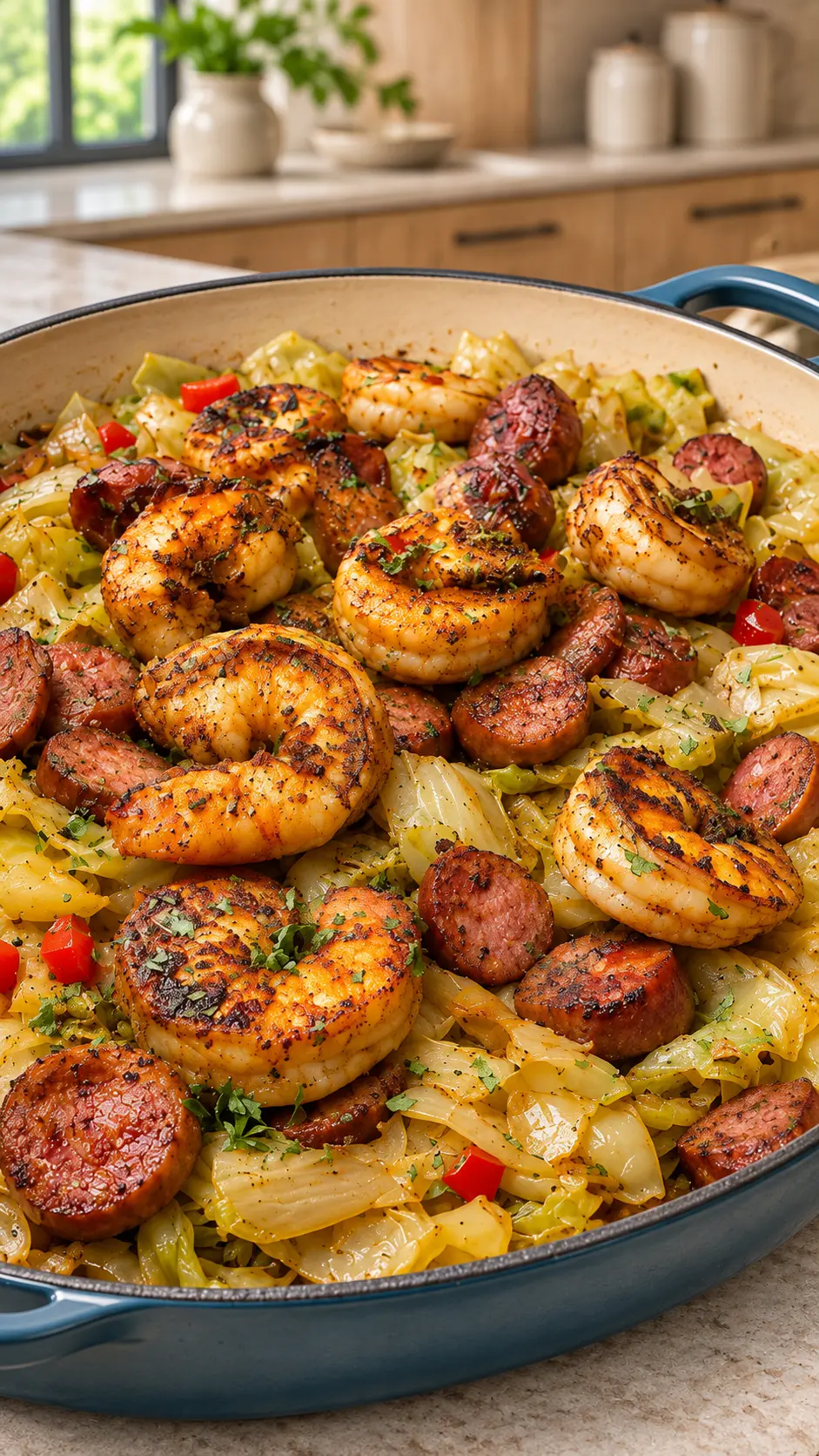
Cajun Shrimp and Sausage Cabbage Skillet
When the evening rush hits and everyone in the household is clamoring for something deeply satisfying, finding a meal that satisfies every craving without dirtying every dish in the kitchen can feel like an impossible puzzle. Weeknight cooking in American homes often demands a delicate balance between quick preparation and the kind of soul-warming comfort that makes sitting down together the best part of the day. Too often, we find ourselves choosing between fast, flavorless convenience foods and elaborate recipes that require hours of simmering and scrubbing. That is precisely why mastering a reliable, one-pan marvel like the Cajun shrimp and sausage skillet transforms ordinary weeknights into vibrant culinary celebrations.
This dynamic dish bridges the gap between effortless speed and bold, unforgettable flavor, bringing the spirited warmth of Southern cooking straight to your dinner table in under forty minutes. By combining succulent, spice-rubbed shrimp, smoky andouille sausage, and sweet tender cabbage with a symphony of aromatic vegetables, it delivers a wholesome, low calorie profile that never compromises on taste. Whether you are cooking for a bustling household or simply looking for a dependable family dinner that pleases both adventurous eaters and picky kids alike, this recipe stands out as a true weeknight hero.
As you gather your kitchen tools and preheat your favorite heavy-bottomed skillet, you are stepping into a rich tradition of rustic American comfort food that values both efficiency and exceptional taste. Let us dive into the culinary details, secrets, and techniques that will make this vibrant skillet a permanent fixture in your weekly meal rotation. Prepare to experience how a few simple, high-quality ingredients can come together in minutes to create a masterpiece of texture and aroma.
Discover more delicious recipes and everyday cooking tips at MindaPos!
The history and tradition behind Cajun shrimp and sausage skillet
The roots of this comforting dish run deep into the fertile, culturally rich soil of Louisiana, where Cajun and Creole culinary traditions have flourished for centuries. Early settlers and Acadians who arrived in the bayou adapted their rustic European cooking techniques to the abundant seafood, wild game, and native produce of the American South. In these communities, the skillet was not merely a cooking vessel, but the central heart of the kitchen where daily meals were coaxed into rich, layered expressions of heritage and survival.
Smoked sausage and shellfish have long formed an iconic pairing in Southern cuisine, born from the practical need to preserve meats through smoking while utilizing the endless bounty of nearby coastal waters and rivers. The introduction of the holy trinity of celery, onions, and bell peppers, along with robust spice blends featuring cayenne, paprika, and garlic, created a distinct flavor profile recognized around the world. Over generations, home cooks began experimenting with seasonal vegetables, swapping traditional rice or pasta for crisp, hearty cabbage to create lighter yet deeply satisfying variations.
As families migrated across the United States, carrying their beloved regional recipes from the Gulf Coast to suburban kitchens, these comforting meals evolved to fit modern American lifestyles. The traditional slow-cooked gumbo or jambalaya was streamlined into fast, single-skillet formats that could be executed effortlessly after a long workday. Today, the Cajun shrimp and sausage skillet represents this beautiful evolution, honoring historical flavors while embracing the fast-paced needs of contemporary home cooks.
In modern American kitchens, this dish also reflects a growing appreciation for meals that bridge the gap between indulgence and mindful eating. By utilizing nutrient-dense vegetables alongside lean proteins and bold spices, home cooks can serve a meal that feels like a gourmet celebration without heavy starches or excessive preparation times. It is a testament to the enduring power of traditional flavors to adapt, inspire, and bring people together across generations.
Why you will love Cajun shrimp and sausage skillet
- Bold Flavor Profile: The harmonious collision of smoky sausage, sweet bell peppers, and fiery Cajun spices creates an explosion of authentic Southern taste in every single bite.
- Lightning-Fast Cleanup: Because everything cooks in a single heavy-bottomed skillet, after-dinner cleanup takes mere minutes, freeing up your evening for relaxation.
- Speedy Preparation: With a total cooking time of just thirty-five minutes, this recipe fits effortlessly into even the most hectic weeknight schedules.
- Nutrient-Dense Comfort: The dish functions as a naturally healthy alternative to heavy pasta dishes, offering plenty of fiber, vitamins, and lean protein.
- Incredible Versatility: It adapts easily to whatever seasonal vegetables you happen to have lingering in your refrigerator crisper drawer.
- Naturally Low in Carbohydrates: Substituting traditional grains with tender cabbage makes this meal ideal for low-carb, keto, and weight-conscious eating plans.
- Gourmet Appeal: Despite its simplicity, the vibrant colors and sophisticated seasoning deliver restaurant-quality presentation and taste right at home.
The kitchen secrets behind perfect flavor and texture
Achieving restaurant-quality results in a home kitchen often comes down to mastering heat control and understanding the sequential layering of ingredients. When preparing a Cajun shrimp and sausage skillet, you are working with proteins that cook very quickly alongside vegetables that require gentle caramelization to release their natural sugars. Cooking everything at once is the ultimate pitfall; instead, building the dish in thoughtful stages ensures that each component retains its ideal texture.
The process begins by searing the shrimp in a hot skillet with a touch of oil for just a minute or two per side, creating a delicate, seasoned crust while keeping the interior juicy and tender. Removing the shrimp immediately prevents them from turning rubbery, a common mistake that ruins delicate shellfish. Next, rendering the fat from the sliced andouille sausage infuses the pan with deep, smoky drippings that serve as the flavorful foundation for sautéing the onions, peppers, and garlic.
As the vegetables soften, they absorb the spiced pan drippings, creating a rich fond that blooms when the cabbage and butter are introduced. Cabbage contains a high percentage of water, and cooking it correctly requires allowing that moisture to evaporate so the edges can achieve a light, savory caramelization. Tossing the succulent shrimp and a bright splash of fresh lemon juice back into the skillet at the very end revitalizes all the flavors with a sharp, vibrant contrast.
Finally, the interplay of aromatics and heat chemistry ensures that your finished dish smells as incredible as it tastes. The volatile oils in the smoked paprika and Cajun seasoning release their potent aromas when they hit the warm butter, coating every leaf of cabbage and slice of sausage in complex warmth. Paying attention to these subtle sensory cues—the sizzle of the pan, the aroma of toasted spices, and the vibrant color transitions—guarantees success every single time.
How to choose the best ingredients for gourmet results
The secret to transforming a simple weeknight dinner into a gourmet quality experience lies entirely in the quality and freshness of the ingredients you select at the store. When shopping at your local supermarket, farmers market, or neighborhood grocer like Kroger or Walmart, take time to inspect the seafood counter carefully. Fresh shrimp should smell faintly of the ocean rather than possessing any harsh, fishy odor, and their shells should appear translucent and firm rather than limp or chalky.
For the smoked sausage, look for authentic andouille or a high-quality smoked pork sausage with a firm casing and visible coarse grinding through the meat. Premium sausages will yield a wonderful smoky aroma and a rich depth of flavor that defines the character of the entire dish. Checking the label for sustainably sourced ingredients ensures that your seafood choices support responsible ocean stewardship and long-term ecological balance.
When selecting your produce, turn your attention to local produce options whenever they are available in your region. A fresh green cabbage should feel heavy for its size with tightly packed, crisp leaves free of bruising or brown spots. Sweet bell peppers should feature glossy, taut skins and sturdy stems, indicating they were recently harvested and will provide a satisfying, juicy crunch to the skillet.
Finally, never underestimate the power of fresh aromatics and finishing touches like lemons and herbs. Fresh garlic cloves should be plump and fragrant, avoiding any bulbs that feel soft or show signs of sprouting. Pairing these carefully chosen components with pure olive oil and sweet, creamy butter elevates the dish from basic home cooking to an extraordinary culinary creation.
Ingredient variations and dietary adaptations
Adapting this versatile recipe to fit various dietary needs or pantry limitations is wonderfully simple and requires very little culinary compromise. If you are preparing a plant-based fasting or vegan version, you can substitute the shrimp with firm, pressed tofu cubes or hearty wild mushrooms, and swap the smoked sausage for a smoky plant-based alternative. Replace the butter with high-quality olive oil or a rich plant-based butter substitute to maintain that luxurious mouthfeel without any animal products.
For those avoiding gluten, this naturally gluten-free skillet requires almost no adjustments, as long as you double-check the ingredient label on your smoked sausage to ensure no wheat fillers were used. The bold spices and fresh vegetables provide all the binding and thickening power necessary without a single grain of flour. This makes it an exceptionally safe and comforting option for anyone managing celiac disease or gluten sensitivities.
Followers of low-carb or keto lifestyles will find this recipe to be an absolute dream come true, as the cabbage base provides incredible bulk and fiber with very few carbohydrates. You can easily increase the fat content slightly by using extra butter or serving the dish with a generous dollop of rich sour cream or guacamole on top. The absence of rice, pasta, or potatoes keeps blood sugar stable while keeping you comfortably full for hours.
If you need a dairy-free version, simply omit the butter or substitute it with your favorite cooking oil or dairy-free spread. The natural juices from the vegetables, combined with the rendered fat from the sausage and the olive oil, create plenty of moisture and richness without any dairy ingredients whatsoever. The bright hit of fresh lemon juice at the end ensures that the dish never lacks brightness or depth.
Should you find yourself missing a key seasoning like pre-made Cajun blend, you can easily improvise using pantry staples. Combine smoked paprika, garlic powder, onion powder, dried oregano, thyme, cayenne pepper, and salt to create a remarkably authentic homemade spice rub. This adaptability ensures that you can always whip up a magnificent meal regardless of what is currently missing from your pantry shelves.
The best sides and drinks to serve with this dish
- Crisp Garden Salad: A bright, refreshing salad of mixed greens tossed in a tangy vinaigrette cuts through the rich, smoky flavors of the skillet.
- Warm Crusty Bread: A loaf of freshly baked French bread or sourdough is perfect for soaking up the delicious, seasoned pan juices left at the bottom of the skillet.
- Chilled Chardonnay: A crisp, buttery Chardonnay with subtle oak notes provides a magnificent, harmonious pairing that enhances the smoky spices of the sausage.
- Classic Sweet Tea: A tall glass of traditional Southern iced tea sweetened just right offers a nostalgic and incredibly refreshing contrast to the bold heat of the dish.
- Zesty Lemon Herb Infusion: For a non-alcoholic option, sparkling water infused with fresh lemon slices and mint provides a cleansing, bubbly palate cleanser.
- Garlic Mashed Potatoes: If you are not watching your carbohydrates, a scoop of creamy mashed potatoes makes an extraordinary bed for the savory shrimp and cabbage.
Refrigerating, freezing, and reheating correctly
- Refrigerator Storage: Transfer leftover Cajun shrimp and sausage skillet into airtight glass or plastic containers once cooled completely, and store for up to three to four days.
- Freezer Preparation: While the sausage and cabbage freeze reasonably well for up to two months, be aware that cooked shrimp can become slightly rubbery upon thawing and reheating.
- Optimal Shelf Life: For the absolute best texture and freshest flavor, consume refrigerated leftovers within forty-eight hours of initial preparation.
- Reheating Method: Reheat leftovers gently in a skillet over medium-low heat with a tablespoon of water or broth, stirring frequently until heated through to prevent overcooking the shrimp.
Nutrition information and preparation times
- Calories: Approximately 380 kcal per serving
- Protein: 28 g
- Fat: 24 g
- Carbohydrates: 12 g
| Parameter | Value |
|---|---|
| Prep time | 15 min |
| Cook time | 20 min |
| Total time | 35 min |
| Difficulty | Easy |
| Servings | 4 servings |
Ingredients
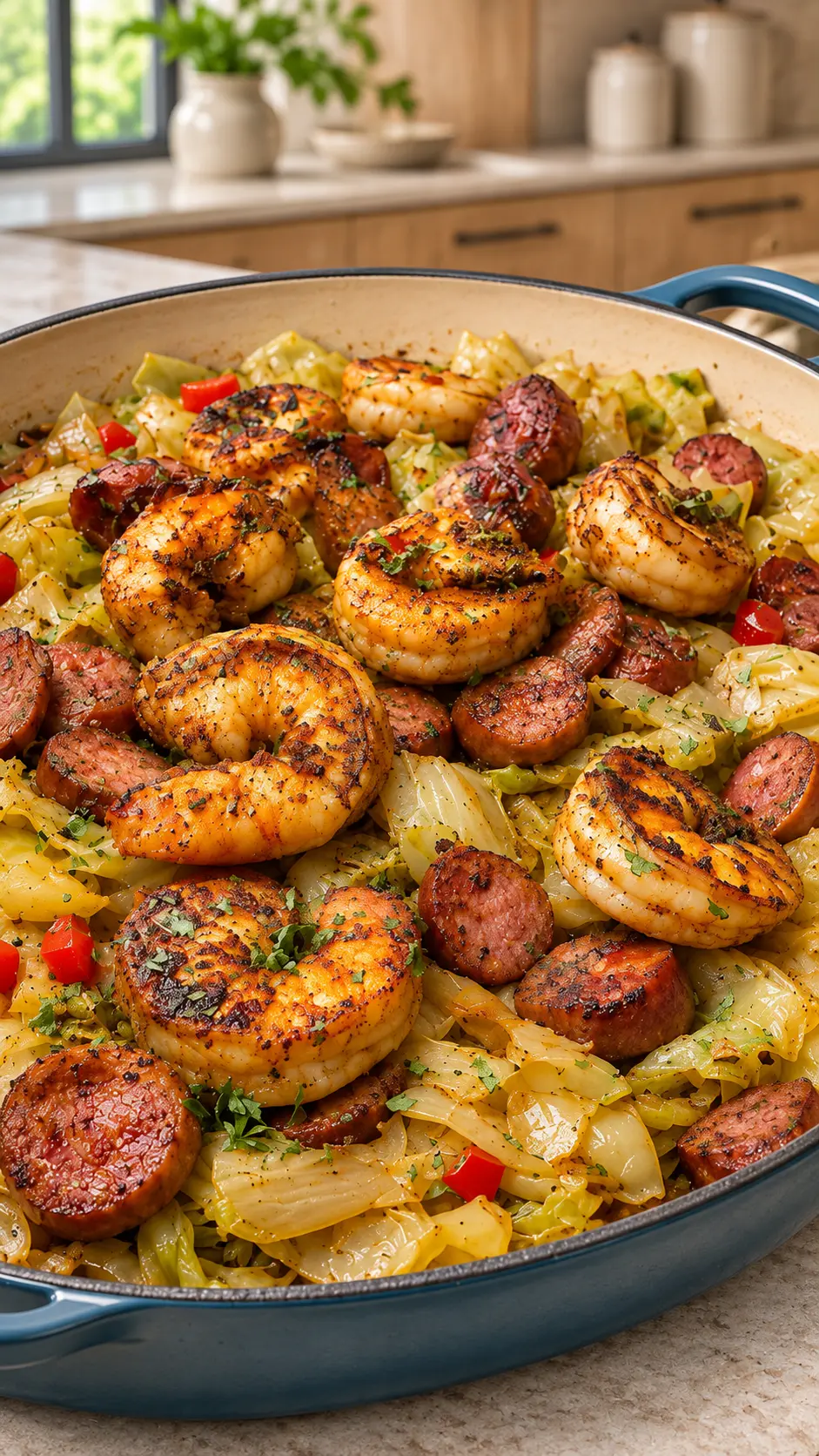
For the main mixture
- 1 lb large shrimp, peeled and deveined
- 12 oz smoked andouille sausage, sliced
- ½ medium green cabbage, chopped
- 1 red bell pepper, diced
- 1 yellow onion, sliced
- 3 garlic cloves, minced
- 2 tbsp olive oil
- 2 tbsp butter
- 1½ tsp Cajun seasoning
- ½ tsp smoked paprika
- ¼ tsp black pepper
- 2 tbsp lemon juice
- 2 tbsp chopped parsley
- salt, if needed
A step-by-step guide to a successful recipe
Step 1: Preparing and seasoning the shrimp
Begin by rinsing your large shrimp under cold running water and patting them thoroughly dry with clean paper towels to ensure optimal seasoning adhesion. Place the dried shrimp in a medium mixing bowl and sprinkle them with one teaspoon of the Cajun seasoning, tossing gently until every shrimp is evenly coated. Letting the shrimp sit with the spices for a few minutes at room temperature allows the flavors to penetrate the delicate flesh.
It is crucial not to skip the drying step, as excess surface moisture will cause the shrimp to steam rather than sear when they hit the hot pan. You want a dry exterior so that the spices create a wonderful, flavorful crust the moment they touch the hot oil. Take your time during this initial prep phase to ensure your workspace is organized and ready for fast-moving cooking steps.
Watch out for overly wet shrimp purchased from frozen blocks that have not been drained correctly. If your shrimp release too much liquid in the bowl, dab them once more with a paper towel before cooking. Proper preparation at this stage sets the foundation for the wonderful textures you will achieve later.
Step 2: Searing the shrimp to perfection
Place a large, heavy-bottomed skillet over medium-high heat and add one tablespoon of olive oil, allowing it to shimmer and heat until just starting to smoke lightly. Carefully lay the seasoned shrimp into the hot skillet in a single layer, ensuring they do not crowd the pan too tightly. Listen for an immediate, satisfying sizzle as the shrimp hit the hot metal, signaling that the pan is at the correct temperature.
Cook the shrimp undisturbed for one to two minutes on the first side, watching for the edges to turn opaque and bright pink. Flip each shrimp with tongs or a spatula and cook for another minute on the second side until they are just cooked through and curled into loose C-shapes. Overcooking shrimp at this stage is the most common pitfall, so remove them immediately from the skillet and set them aside on a clean plate.
The delicious spiced residue left behind in the bottom of the skillet should not be cleaned out, as it forms the flavorful base for the next steps. This fond will impart an incredible depth of savory taste to the sausage and vegetables as they cook. Enjoy the wonderful aroma filling your kitchen as you transition to searing the meat.
Step 3: Browning the smoked sausage
Return the same large skillet to medium heat and add the remaining tablespoon of olive oil along with your sliced smoked andouille sausage. Arrange the sausage slices in a flat layer so that their cut surfaces make direct contact with the hot surface of the pan. Let them sizzle undisturbed for two to three minutes to develop a deep, caramelized golden-brown crust.
As the sausage browns, it will render its rich, spiced fat into the skillet, coating the bottom with savory goodness. Toss the slices and cook for another two minutes until both sides are delightfully browned and fragrant. The smoky oils released during this process will act as the primary cooking medium for your aromatic vegetables.
Avoid turning the sausage too frequently, or you will miss out on getting that gorgeous, flavorful crust that defines great Southern cooking. Once the sausage looks perfectly browned and smells wonderfully smoky, leave it in the pan as you move directly into building your aromatic vegetable base.
Step 4: Sautéing the aromatic vegetables
Add the sliced yellow onion and diced red bell pepper directly to the skillet alongside the browned sausage, stirring everything together to coat the vegetables in the rendered oils. Cook the mixture over medium heat for about three minutes, stirring occasionally with a wooden spoon to prevent burning. Watch as the onions begin to turn translucent and the bell peppers soften slightly, releasing their sweet natural juices.
During the final minute of sautéing the onions and peppers, add the minced garlic cloves to the center of the skillet. Stir the garlic constantly for about sixty seconds until its pungent aroma blooms intensely into the air. Be very careful not to let the garlic brown too quickly, as burned garlic turns bitter and can negatively impact the flavor of the entire dish.
The kitchen should now be filled with an incredible combination of smoky sausage, sweet onions, and toasted garlic aromas. This vegetable base forms the flavor bridge that ties the seafood and the hearty cabbage together seamlessly. Keep the heat at a steady medium level to maintain a gentle, consistent sizzle.
Step 5: Incorporating the cabbage and spices
Add the chopped green cabbage to the bustling skillet, which might look like a mountain of greens at first, but remember that cabbage shrinks significantly as it cooks. Drop in the two tablespoons of butter, the remaining half-teaspoon of Cajun seasoning, and the smoked paprika right on top of the cabbage. Stir everything thoroughly, working the warm sausage and vegetables up from the bottom to distribute the spices evenly throughout the greens.
As the butter melts and coats the cabbage leaves, the spices will begin to cling to the damp surfaces. The volume of the cabbage will start to decrease noticeably within the first few minutes of gentle tossing and heat exposure. This is the moment where patience pays off, allowing the sturdy green vegetable to begin absorbing all the complex flavors in the pan.
Do not worry if the pan feels overwhelmingly full at the start of this step. Cabbage has a high water content and will naturally soften and compress as it cooks down. Just keep tossing gently to ensure even distribution of the melted butter and spice blend.
Step 6: Achieving tender caramelization
Allow the cabbage mixture to cook for ten to twelve minutes over medium heat, stirring occasionally to ensure even cooking and prevent sticking. You will notice the cabbage gradually becoming tender and developing lovely, light golden-brown caramelized edges where it touches the hot skillet. This caramelization adds a wonderful nutty sweetness that balances the fiery kick of the Cajun spices.
Keep a close eye on the moisture levels in the pan during this stage. If the skillet looks too dry and the cabbage starts sticking, you can splash a single tablespoon of water or chicken broth into the pan to loosen any clinging bits. The goal is tender, flavorful cabbage that retains a slight, pleasant bite rather than turning into mush.
The aroma at this point should be rich, buttery, and deeply comforting, combining the fragrance of smoked meat with sweet, cooked greens. Take a small taste of the cabbage to check its tenderness and adjust seasoning with a pinch of salt if your particular brand of sausage or seasoning blend requires it.
Step 7: Reintroducing the shrimp and lemon juice
Once the cabbage has reached your desired level of tenderness, gently return the cooked shrimp and any resting juices back into the skillet. Drizzle the two tablespoons of fresh lemon juice evenly over the entire contents of the pan. The bright acidity of the lemon juice cuts through the rich butter and heavy spices, instantly lifting and balancing every flavor in the dish.
Toss everything together very gently with a spatula, ensuring the shrimp are distributed evenly among the cabbage and sausage. Cook for just one additional minute, only long enough to warm the pre-cooked shrimp through without letting them overcook or toughen. This quick final marriage of ingredients ensures that every bite contains a perfect balance of seafood, meat, and vegetables.
Turn off the heat immediately after this brief warming step to halt the cooking process. The shrimp should remain plump, juicy, and tender, while the cabbage stays vibrant and flavorful. You are now ready for the final presentation.
Step 8: Garnishing and serving immediately
Remove the skillet from the heat source and scatter the two tablespoons of freshly chopped parsley across the top for a vibrant pop of green color and herbaceous freshness. Give the skillet one final, gentle toss to incorporate the parsley just before plating. The visual contrast of the bright green herbs against the pink shrimp and red bell peppers creates an instantly appetizing presentation.
Serve the dish immediately while piping hot straight from the skillet, or spoon generous portions onto warm dinner plates. Encourage your family or guests to dig in right away to enjoy the contrasting textures and piping-hot flavors at their absolute peak. Pair it with your favorite sides and enjoy the well-deserved compliments for a meal well made.
What to do when the dish does not turn out as planned
If you taste the finished dish and discover that it is accidentally too salty, do not panic, as there are several easy ways to correct the balance. Adding a splash of fresh lemon juice or an extra pinch of unseasoned chopped cabbage can absorb and dilute excess sodium effectively. Alternatively, serving the dish over a bed of unsalted rice or with unseasoned mashed potatoes will help neutralize the overwhelming saltiness in each bite.
Should the skillet turn out too dry, it is usually because the cabbage cooked on too high of a heat without enough initial moisture or fat. You can easily rescue the texture by stirring in a tablespoon of melted butter or a splash of chicken broth and simmering covered for two minutes. This restores the luxurious mouthfeel and rehydrates any ingredients that may have dried out during cooking.
If the sauce or bottom mixture is too watery, the cabbage likely released its natural juices faster than they could evaporate from the pan. To fix this, simply remove the lid if you were using one, turn the heat up slightly to medium-high, and let the excess moisture cook off for two to three minutes while stirring frequently. The liquid will reduce rapidly, leaving you with a concentrated, glossy coating.
When the dish tastes surprisingly bland, the issue is almost always a lack of sufficient salt or acid to wake up the spices. Taste the mixture and add a small pinch of salt, an extra squeeze of fresh lemon juice, or a tiny dash of cayenne pepper to punch up the flavor profile. Giving the spices a minute to meld into the hot food after adjusting will bring all the vibrant flavors back into sharp focus.
Frequently asked questions about Cajun shrimp and sausage skillet
Can I use frozen shrimp instead of fresh for this recipe?
Yes, frozen shrimp work wonderfully as long as you thaw them completely and pat them thoroughly dry with paper towels before seasoning and cooking. Avoid adding frozen shrimp directly to the hot pan, as the melting ice will flood the skillet and prevent proper searing.
Is andouille sausage too spicy for children?
Authentic andouille sausage has a distinct kick of heat, but you can easily substitute a mild smoked pork sausage or a good quality Polish kielbasa if you are cooking for young children or guests who prefer milder flavors.
Can I substitute another vegetable for the green cabbage?
Green cabbage works best because of its sturdy texture and ability to caramelize, but you can easily substitute Napa cabbage, sliced Brussels sprouts, or even hearty Tuscan kale with delicious results.
How do I prevent the shrimp from becoming rubbery?
The secret to tender shrimp is cooking them for just one to two minutes per side in the beginning, removing them from the pan immediately, and only returning them at the very end for a brief warming minute.
Can I make this dish ahead of time for meal prep?
While the sausage and cabbage base holds up exceptionally well in the refrigerator for meal prep, cooked shrimp can become tough when reheated. For the best texture, prep the sausage and cabbage ahead and cook fresh shrimp right before serving.
What makes this recipe a healthy alternative for weeknight dinners?
This recipe provides plenty of lean protein, fiber-rich vegetables, and heart-healthy fats while remaining naturally low in carbohydrates and calories, offering heavy comfort without feeling heavy on digestion.
Cajun Shrimp and Sausage Cabbage Skillet
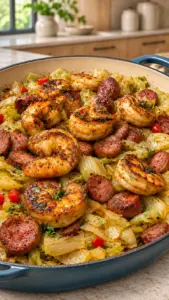
A bold Southern-inspired one-pan meal featuring juicy Cajun shrimp, smoky sausage, tender sautiéed cabbage, sweet onions, and colorful bell peppers.
- 1 lb large shrimp, peeled and deveined
- 12 oz smoked andouille sausage, sliced
- 1 red bell pepper, diced
- 1 yellow onion, sliced
- 3 garlic cloves, minced
- 2 tbsp olive oil
- 2 tbsp butter
- 1½ tsp Cajun seasoning
- 2 tbsp lemon juice
- 2 tbsp chopped parsley
- salt if needed
- 1Pat shrimp dry and season with 1 tsp Cajun seasoning.
- 2Heat 1 tbsp olive oil in a large skillet and cook shrimp for 1–2 minutes per side until opaque. Remove and set aside.
- 3Add the remaining olive oil and sliced sausage. Cook until browned.
- 4Add onion, bell pepper, and garlic and sautié for 3 minutes.
- 5Stir in cabbage, butter, remaining Cajun seasoning, and smoked paprika.
- 6Cook for 10–12 minutes, stirring occasionally, until cabbage becomes tender and lightly caramelized.
- 7Return shrimp to the skillet and toss gently with lemon juice.
- 8Sprinkle with fresh parsley and serve immediately.
Keywords: Cajun shrimp, sausage cabbage skillet, one-pan meal, Southern recipe