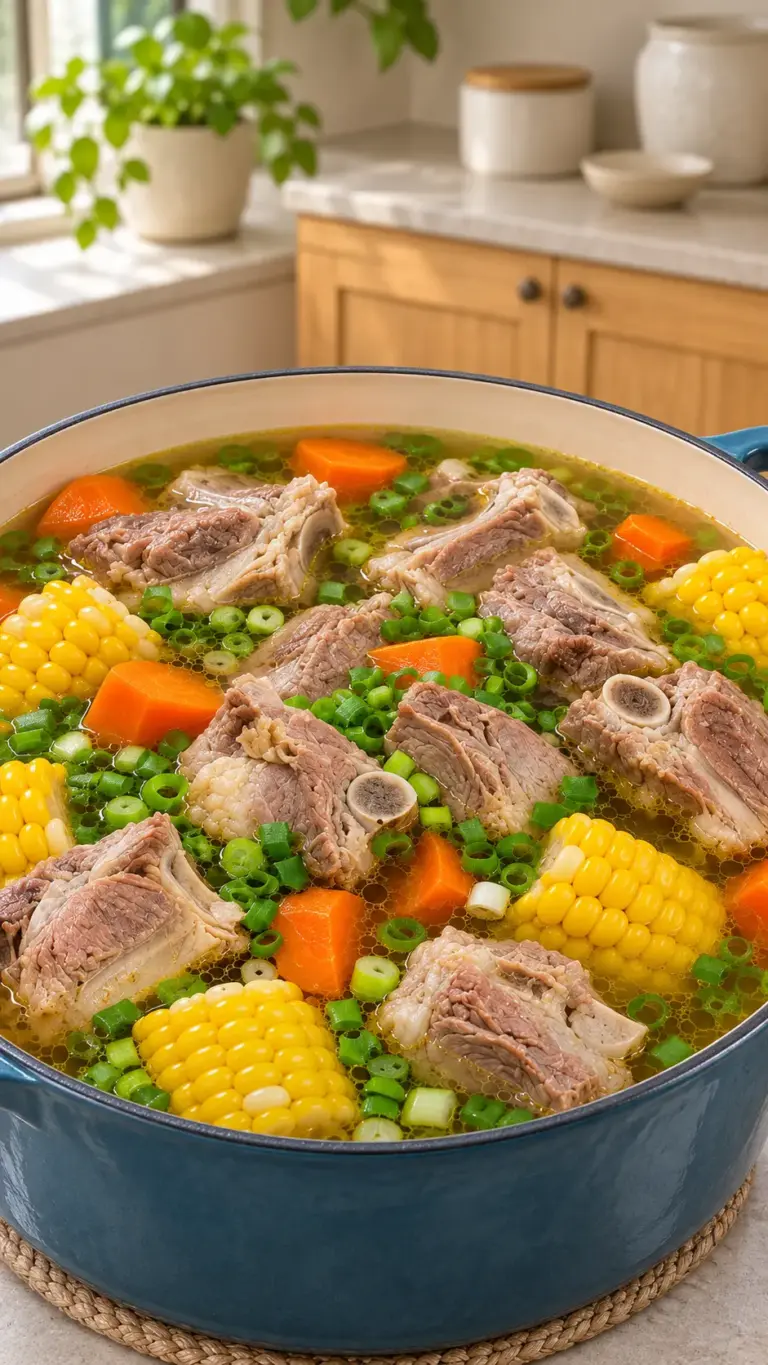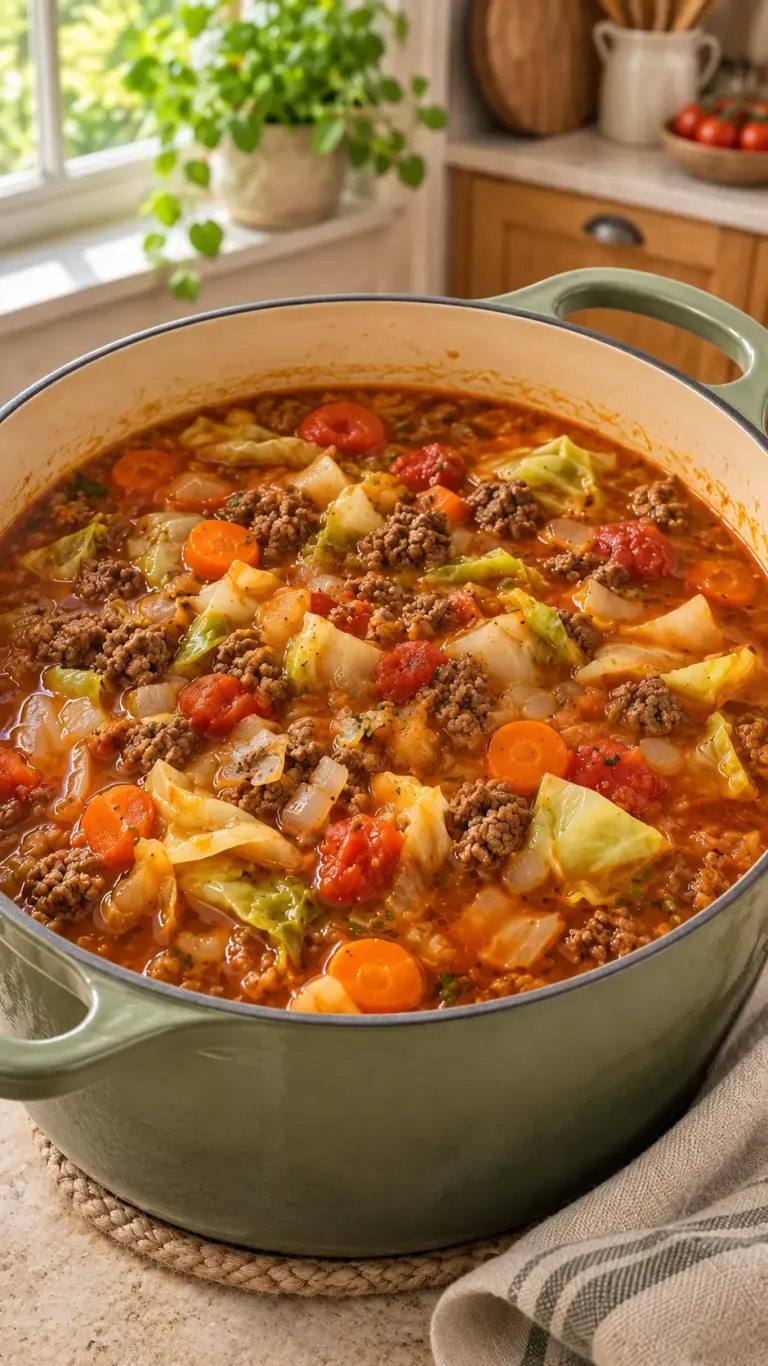
Ground Beef Cabbage and Potato Soup
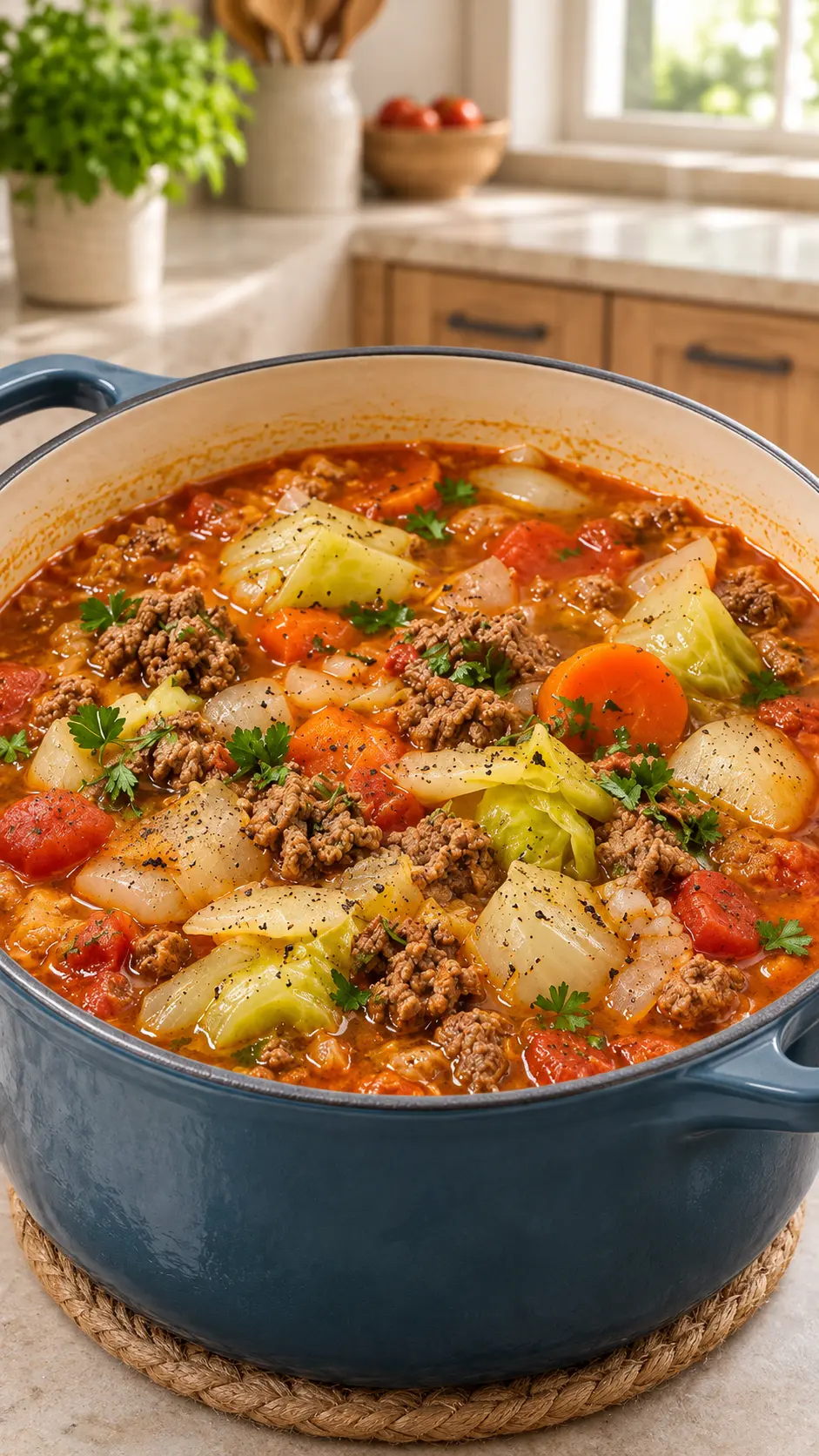
Welcome to my cozy kitchen, where there is nothing more comforting than a steaming bowl of homemade soup waiting on the stove after a long and hectic day. As a passionate home cook, I know how challenging it can be to find a quick preparation meal that satisfies every member of the household while keeping things wholesome and budget-friendly. This classic recipe for Easy Ground Beef Cabbage Soup is my absolute favorite solution when fatigue sets in, but I still want to serve a delicious dish packed with heartiness and warmth.
When weeknight schedules get overwhelming, relying on fresh ingredients to build a nutrient-dense dinner makes all the difference for your family’s overall well-being. This savory ground beef cabbage soup combines seasoned lean beef, sweet root vegetables, and tender green cabbage simmered in a rich tomato-beef broth. It offers a wonderful, healthy alternative to heavy takeout or processed box dinners while maintaining that deeply satisfying, slow-cooked taste that feels like a warm hug.
Whether you are feeding a hungry crowd or planning your meal prep for the week ahead, this versatile soup delivers gourmet quality without any complicated techniques or hard-to-find components. Pull out your favorite heavy-bottomed Dutch oven or stockpot, chop up a few vibrant vegetables, and let us cook up a pot of pure comfort together today. You will be amazed at how simple pantry staples transform into a soul-warming feast in under an hour.
Discover more delicious recipes and everyday cooking tips at MindaPos!
The history and tradition behind Easy Ground Beef Cabbage Soup
Cabbage and beef soups have held a cherished place in European and American culinary heritage for generations. Long before modern grocery chains existed, home cooks relied on hardy winter vegetables like cabbage, carrots, and potatoes to feed their families through cold months. Cabbage was especially valued because it stored exceptionally well in root cellars and provided essential vitamins when fresh summer produce was unavailable.
In Eastern European traditions, heart-warming dishes such as Polish kapuśniak or Ukrainian shchi featured slow-simmered cabbage with various meats, creating rich broths that sustained working families. As immigrants settled across the American Midwest and farm belts, they adapted these traditional recipes to incorporate locally abundant ground beef and canned tomatoes. Over time, these rustic farmhouse stews evolved into the beloved American home-style vegetable beef soup we know today.
During the mid-twentieth century, as speed and convenience became essential in everyday cooking, home cooks streamlined the classic recipe. By substituting larger cuts of stew meat with ground beef, home cooks dramatically shortened the simmering time without losing the satisfying beefy aroma. The inclusion of canned diced tomatoes and canned tomato sauce added a bright acidity that balanced the sweet, earthiness of the cabbage and root vegetables.
Today, Easy Ground Beef Cabbage Soup remains a quintessential staple in modern American kitchens. It bridges the gap between old-world hearth cooking and contemporary, busy lifestyles by focusing on simple whole foods. Returning to this classic dish allows us to honor timeless kitchen traditions while creating a wholesome family dinner that modern home cooks can execute effortlessly on any weeknight.
Why you will love Easy Ground Beef Cabbage Soup
- Incredible Flavor Balance: The natural sweetness of carrots and tender cabbage harmonizes beautifully with savory ground beef and bright, tangy tomato broth.
- Budget-Friendly Pantry Staple: Made with affordable, accessible ingredients that maximize taste without breaking your weekly grocery budget.
- Nourishing and Satisfying: Packed with dietary fiber, lean protein, and essential micronutrients, making it a naturally healthy alternative to heavy comfort foods.
- Effortless Weeknight Preparation: Takes only fifty minutes from start to finish, requiring basic chopping and standard pot simmering techniques.
- Ideal for Meal Prep: The rich savory broth tastes even better the next day as the herbs and meat flavors continue to fuse together in the refrigerator.
- Low Calorie and Nutrient Dense: Offers a light yet incredibly filling profile that supports your wellness goals without sacrificing rich farmhouse texture.
- Highly Customizable: Easily accommodates extra garden vegetables, alternative proteins, or low-carb modifications to fit your family’s personal preferences.
- One-Pot Clean Convenience: Keeps kitchen cleanup minimal by building all the layers of flavor within a single heavy stockpot or Dutch oven.
The kitchen secrets behind perfect flavor and texture
Creating a truly memorable soup relies heavily on proper temperature control and the Maillard reaction. When you brown the ground beef alongside diced onions over medium-high heat, the meat proteins and natural sugars in the onion undergo a chemical transformation that creates hundreds of new flavor compounds. Skipping this step or crowding the pan causes the beef to steam rather than brown, resulting in a dull broth lacking depth.
Another essential scientific secret is blooming the dry herbs and garlic in warm fat before adding liquids. Fat acts as a powerful solvent for aromatic compounds found in paprika and dry Italian seasoning. By frying these spices in the residual beef fat and olive oil for just one minute, you unlock fat-soluble essential oils that would otherwise remain trapped if thrown straight into cold beef broth.
Managing the simmering process for distinct vegetable textures is equally crucial for culinary success. Potatoes and carrots require a higher heat level and longer cook time to break down tough starches into tender, fork-tender bites. Adding the chopped green cabbage during the final fifteen to twenty minutes ensures it becomes soft and silky without dissolving into an unappealing mush.
Finally, balancing acidity and starch creates a mouthwatering harmony across your palate. The natural starches released by the diced potatoes work alongside the concentrated tomato paste notes in the broth to give the soup body and substance. Meanwhile, the bright acidity from the diced tomatoes cuts through the rich fat of the ground beef, maintaining a clean finish with every spoonful.
How to choose the best ingredients for gourmet results
Achieving gourmet quality results in your home kitchen begins with selecting pristine, fresh ingredients at your local market. When shopping at store locations like Kroger, Walmart, or regional supermarkets, look for ground beef with an 85/15 or 90/10 lean-to-fat ratio. This proportion provides enough fat to flavor the onions during browning without leaving an greasy sheen atop your finished broth.
For the produce, visit your neighborhood farmers market whenever possible to pick up crisp local produce. Choose a head of green cabbage that feels solid, dense, and heavy for its size, with bright lime-green outer leaves free from yellowing or soft spots. Fresh carrots should be firm with smooth skin, and your potatoes—preferably yellow YuKon Gold or classic Russets—should be taut without sprouts or green tinges.
Pay close attention to liquid foundation elements, as they form the heart of your soup broth. Select low-sodium beef broth so you retain full control over the ultimate saltiness of your dish. When purchasing canned diced tomatoes, look for fire-roasted varieties if available, as they introduce an extra layer of subtle smokiness that complements the paprika exceptionally well.
Using sustainably sourced ingredients and organic herbs whenever accessible elevated this simple meal into something truly special. Fresh garlic cloves offer a punchy, sweet sulfurous backbone that pre-minced jarred garlic simply cannot match. Investing time into selecting firm, vibrant ingredients ensures that every bowl delivers clean taste and exceptional nutritional value.
Ingredient variations and dietary adaptations
If you or your family members are following a plant-based or vegan lifestyle, adapting this dish is remarkably straightforward. Substitute the ground beef with cooked brown lentils, plant-based ground crumbles, or chopped brown beech mushrooms to maintain a meaty texture. Replace the beef broth with a robust, roasted vegetable broth and ensure your tomato products carry certified vegan labels.
For those requiring a gluten-free meal, this soup is naturally safe, provided you check a few store-bought labels carefully. Always verify that your pre-packaged beef broth and canned tomato sauce carry certified gluten-free labels, as some commercial brands use wheat-derived thickeners or yeast extracts. No flour or grain thickeners are needed in this recipe, as potato starches naturally body the soup broth.
If you are adhering to a low-carb or keto lifestyle, you can easily alter the vegetable profile without losing comfort appeal. Simply replace the three medium diced potatoes with equal quantities of chopped cauliflower florets or diced white radishes. Radishes lose their sharp bite when simmered in beef broth, perfectly mimicking the soft texture of real potatoes while drastically reducing the overall carbohydrate count.
This recipe is naturally dairy-free as written, using olive oil as the primary cooking fat. However, if you prefer an extra creamy touch without adding dairy, finish each warm bowl with a swirl of unsweetened coconut cream or serve alongside sliced avocado. Those who consume dairy might enjoy topping their soup with a dollop of sour cream or freshly grated Sharp Cheddar cheese.
When you find your spice pantry short on key seasonings, flexible adjustments can save the day. If you run out of Italian seasoning, mix equal parts dried oregano, dried basil, and dried thyme leaves. If sweet paprika is unavailable, a tiny dash of smoked paprika or a pinch of red pepper flakes adds a delicious, cozy kick to the savory ground beef base.
The best sides and drinks to serve with this dish
- Warm Crusty Sourdough Bread: Thick slices of toasted sourdough or garlic French bread are perfect for soaking up every last drop of the rich, savory tomato-beef broth.
- Classic Cast-Iron Cornbread: A sweet, golden slice of warm cornbread balances the savory notes of ground beef and earthy cabbage with cozy southern flare.
- Crisp Garden Green Salad: A refreshing side salad featuring crisp Romaine, English cucumbers, and a bright lemon vinaigrette provides a light contrast to the warm soup.
- Creamy Garlic Mashed Potatoes: Serve a ladleful of hot soup directly over a mound of buttery mashed potatoes for the ultimate comfort food experience.
- Medium-Bodied Red Wine (Pinot Noir): A glass of Pinot Noir or light-bodied Merlot offers gentle fruitiness and soft tannins that harmonize beautifully with beef and tomatoes.
- Crisp Iced Black Tea or Herbal Infusions: Unsweetened lemon iced tea or warm chamomile tea provides a clean, refreshing palate cleanser alongside a hearty bowl.
Refrigerating, freezing, and reheating correctly
- Refrigerator Storage Guidelines: Allow the leftover soup to cool completely to room temperature before transferring it into airtight glass storage containers. Store in the refrigerator for up to four to five days without losing quality.
- Proper Freezer Preparation: Because potatoes can become slightly grainy when frozen, you can either undercook them slightly or freeze the soup without potatoes. Store cooled soup in heavy-duty freezer bags or freezer-safe containers, leaving one inch of headspace for liquid expansion, for up to three months.
- Understanding Optimal Shelf Life: Flavors enhance over the first forty-eight hours of storage as ingredients marinate together. For peak taste and texture consistency, enjoy stored portions within three days from the refrigerator.
- Step-by-Step Reheating Instructions: To keep vegetables moist and tender during reheating, warm individual portions in a saucepan over medium-low heat on the stove, stirring occasionally. If using a microwave, cover the bowl loosely with a paper towel and heat in ninety-second intervals at medium power, adding a splash of beef broth if the liquid has reduced.
Nutrition information and preparation times
- Calories: 285 kcal per serving
- Protein: 21 g
- Fat: 12 g
- Carbohydrates: 24 g
| Parameter | Value |
|---|---|
| Prep time | 15 min |
| Cook time | 35 min |
| Total time | 50 min |
| Difficulty | Easy |
| Servings | 6 servings |
Ingredients
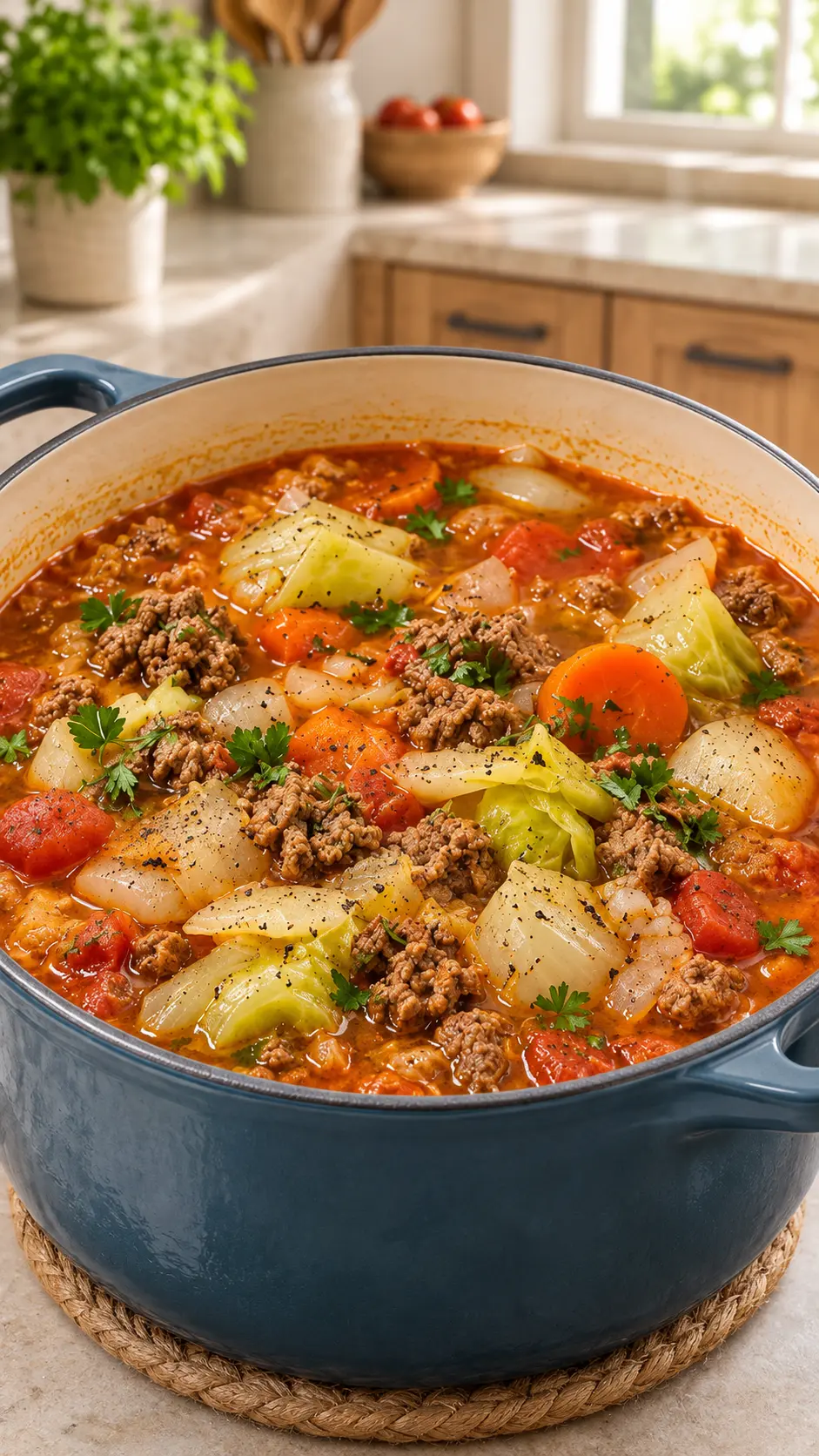
For the main mixture
- 1 lb ground beef
- ½ medium green cabbage, chopped
- 3 medium potatoes, diced
- 2 carrots, sliced
- 1 onion, chopped
- 3 garlic cloves, minced
- 1 can (14.5 oz) diced tomatoes
- 4 cups beef broth
- 1 cup tomato sauce
- 1 tbsp olive oil
- 1 tsp paprika
- 1 tsp Italian seasoning
- ½ tsp black pepper
- Salt to taste
A step-by-step guide to a successful recipe
Step 1: Browning the lean ground beef and sweet onions
Place your heavy-bottomed Dutch oven or large soup pot over medium-high heat on your stovetop burner. Drizzle in one tablespoon of quality extra virgin olive oil, allowing it to shimmer across the bottom of the pot for about thirty seconds. Add the one pound of ground beef into the hot oil along with one medium chopped yellow onion.
Use a wooden spoon or durable meat chopper to break the ground beef apart into small, uniform crumbles as it cooks. Stir the meat and onion mixture continuously as the pan sizzles, allowing the onions to become translucent while the beef loses its pink color. This browning process should take approximately six to eight minutes of consistent cooking.
Once the beef is fully browned and the onions are soft and fragrant, carefully tilt your pot to assess the rendered liquid. If you are using ground beef with higher fat content, drain away all but one tablespoon of the excess fat from the pot. Retaining a small amount of rendered fat ensures your aromatics sizzle properly in the upcoming step without creating a greasy final broth.
Take a brief moment to admire the rich, savory aromas filling your kitchen as the browned meat and softened onions caramelize along the bottom of the vessel. This fundamental step creates the crucial savory base note upon which the rest of your soup flavors will rely.
Step 2: Blooming the garlic and warm aromatics
Turn your stovetop heat down slightly to medium power to prevent delicate spices from scorching. Add the three minced garlic cloves, one teaspoon of sweet paprika, and one teaspoon of dry Italian seasoning directly into the browned meat mixture. Sprinkle in one-half teaspoon of freshly ground black pepper to complete the initial spice blend.
Stir the ingredients together vigorously for exactly one minute, ensuring every crumble of ground beef gets coated in the red paprika and green herbs. As the garlic hits the hot pan residual fat, it releases a rich aroma without burning or turning bitter. Blooming spices in warm fat unlocks essential aromatic oils that cold liquids simply cannot draw out.
Observe how the color of the beef deepens into a warm, reddish-brown hue as the paprika toasts slightly. Watch carefully to ensure the minced garlic does not turn dark brown, as burnt garlic introduces harsh bitter notes into broth.
As soon as the garlic becomes intoxicatingly fragrant, you are ready to pour in your liquid components. Keeping your spoon moving quickly across the bottom of the pot guarantees an even distribution of herbs throughout the entire meat base.
Step 3: Building the rich savory broth foundation
Pour in the fourteen-and-a-half-ounce can of diced tomatoes, including all of their natural juices, into the seasoned beef base. Follow immediately by pouring in one cup of smooth canned tomato sauce and four cups of high-quality beef broth. These tomato elements bring necessary acidity and vibrant red color to your stockpot.
Using your wooden spoon, firmly scrape along the bottom surface of the Dutch oven to release any caramelized brown bits stuck to the metal. These toasted bits, known in classical cooking as the fond, instantly dissolve into the warm liquid, adding incredible richness and depth to your broth.
Stir the contents thoroughly until the tomato sauce, beef broth, spices, and ground beef are completely integrated into a cohesive, reddish-brown soup base. Increase your stovetop burner setting back up to medium-high heat to encourage the liquid to warm up rapidly.
Keep a close eye on the pot as liquid wisps of steam start rising toward the surface. Preparing this rich liquid foundation correctly sets the stage for cooking your hearty root vegetables to perfection.
Step 4: Adding the root vegetables for initial simmer
Carefully drop your three medium diced potatoes and two sliced carrots straight into the steaming tomato-beef liquid. Stir the pot gently with your spoon to ensure all the root vegetable pieces are fully submerged under the broth surface. Submerging them ensures even cooking and starch release.
Watch the liquid closely until small bubbles begin breaking rapidly across the entire surface of the pot, indicating a gentle boil. As soon as a boil is achieved, immediately reduce your burner temperature down to medium-low heat. Maintaining a gentle simmer prevents the broth from evaporating too quickly.
Cover your stockpot tightly with its fitted lid to trap both steam and heat inside the vessel. This covered environment allows the dense starches within the potatoes and carrots to soften consistently throughout their center.
Set a timer for twelve minutes and let the soup simmer quietly on your stovetop without disturbing the lid. The gentle heat breaks down tough vegetable fibers while infusing them with savory beef and tomato flavors.
Step 5: Simmering the potatoes and carrots to tender perfection
While the soup simmers covered, resist the urge to lift the lid frequently, as escaping steam lowers the internal pot temperature. The enclosed heat allows the potato cubes to release just enough starch into the liquid to naturally body the broth without turning it thick like gravy.
When your twelve-minute timer goes off, carefully lift the pot lid, angling it away from your face to avoid hot rising steam. Insert the tip of a sharp paring knife or fork into a thick potato cube and carrot slice to test their doneness. They should feel partially tender, offering slight resistance in the center.
Give the simmering mixture a gentle stir from the bottom up to ensure no vegetable pieces have settled or stuck to the bottom of the pot. Notice how the bright orange of the carrots and soft yellow of the potatoes stand out against the deep crimson broth.
If the broth appears to have reduced too much during this initial simmer, add a small splash of hot water or extra beef broth. Now that your root vegetables are halfway cooked, it is time to introduce the star of the dish.
Step 6: Folding in the fresh green cabbage
Take your chopped half-head of green cabbage and add it in batches into the simmering stockpot. At first glance, the volume of raw shredded cabbage may look overwhelming and overflow the pot, but do not worry. Cabbage consists largely of water and wilts down dramatically within minutes of contact with steam.
Use long kitchen tongs or a large spoon to fold the raw cabbage down into the hot soup liquid gradually. Work methodically from the edges toward the center, pressing the leafy greens beneath the surface so they absorb the boiling broth.
As the heat hits the cabbage, the stiff pale green leaves instantly begin to soften and become pliable. Within two to three minutes of folding, the entire portion of cabbage will fit comfortably within the liquid level of your Dutch oven.
Ensure the heat setting remains on medium-low so the soup continues to emit gentle, steady bubbles. Replacing the pot lid now will trap the steam required to cook the cabbage leaves through completely.
Step 7: Gentle final simmering and texture integration
Place the lid securely back onto your soup pot and allow the entire mixture to simmer for another fifteen to twenty minutes. During this final stretch, the green cabbage transforms from crisp leaves into silky, melt-in-your-mouth ribbons of vegetable comfort.
Check the pot midway through this final cooking phase to stir the ingredients and monitor the broth level. You will observe how the flavors of sweet cabbage, earthy root vegetables, savory ground beef, and warm paprika meld into a harmonious aroma filling your home.
Test the cabbage by tasting a piece with a spoon once the twenty minutes have elapsed. It should be entirely tender and juicy, having absorbed the rich flavors of the tomato and beef broth without losing its structural shape.
Check the potatoes one final time; they should now be completely fork-tender, yielding effortlessly to light pressure. Once all vegetables have reached perfect tenderness, turn off your stovetop burner entirely.
Step 8: Adjusting seasonings and finishing with fresh herbs
With the heat turned off, carefully taste a spoonful of the hot broth, letting it cool for a second before testing. Assess whether the dish needs additional sea salt or black pepper to suit your personal palate preferences. The amount of salt required often depends on the brand of beef broth used earlier.
Stir in additional salt a quarter-teaspoon at a time if needed, tasting after each addition until the savory flavors pop. If you desire a slightly brighter finish, stir in a teaspoon of fresh lemon juice or red wine vinegar to elevate the overall taste profile.
Ladle the hot, aromatic soup generously into deep soup bowls, ensuring a balanced mix of ground beef, tender potatoes, bright carrots, and silky cabbage in every serving. Garnish each bowl with a sprinkle of freshly chopped parsley for a pop of fresh green color.
Serve immediately while piping hot alongside your favorite warm bread or crisp side dishes. Congratulations on crafting a magnificent pot of homemade soup that will nourish both body and soul!
What to do when the dish does not turn out as planned
If your soup accidentally turns out too salty because of a high-sodium store broth, do not panic or throw out your hard work. You can easily balance excess salt by adding extra unsalted beef broth or plain warm water to dilute the liquid. Alternatively, drop a few extra raw peeled potato cubes into the pot and simmer for ten minutes; the starches will absorb some excess salt naturally.
When a soup turns out too dry or thick—resembling a stew more than a liquid soup—it simply means too much moisture evaporated during simmering. This often happens if the pot lid was not sealed properly or the heat was set too high. To correct this, stir in extra warm beef broth or tomato juice a half-cup at a time until you reach your desired soup consistency.
If your final broth tastes thin or overly watery, it lacks sufficient flavor concentration or starch structure. Uncover your pot completely, raise the burner heat to medium, and let the liquid boil down rapidly for five to ten minutes to evaporate excess water. You can also mash a few of the potato pieces against the side of the pot with a fork to instantly thicken the surrounding broth.
When the soup tastes surprisingly bland despite following the steps, it almost always needs a boost of acid or salt to activate your taste buds. Try stirring in a half-teaspoon of kosher salt along with a splash of apple cider vinegar, lemon juice, or Worcestershire sauce. These bright acidic additions cut through flat flavors and make the rich beefy undertones shine vibrant and clear.
Frequently asked questions about Easy Ground Beef Cabbage Soup
Can I make Easy Ground Beef Cabbage Soup in a slow cooker?
Yes, this recipe adapts wonderfully to a slow cooker or Crock-Pot! Simply brown the ground beef with onions and garlic in a skillet first, then transfer everything into your slow cooker insert along with the remaining ingredients. Cover and cook on Low for six to seven hours or on High for three to four hours until all vegetables are completely tender.
What type of cabbage works best for this soup?
Standard green cabbage is the absolute best choice for this soup because its sturdy leaves hold up exceptionally well during simmering without turning mushy. Savoy cabbage also works great due to its soft texture and mild flavor. Red cabbage is not recommended, as it will bleed dark purple color into the entire broth, making the soup look unappealing.
Can I use ground turkey or ground chicken instead of ground beef?
Absolutely! Ground turkey or ground chicken makes a fantastic, extra-lean alternative to ground beef. If using leaner poultry, add an extra tablespoon of olive oil when browning to prevent the meat from sticking, and consider adding a drop of Worcestershire sauce to boost the savory umami depth of the broth.
How long does ground beef cabbage soup last in the fridge?
When stored properly in airtight glass containers, this soup will stay fresh and delicious in the refrigerator for four to five days. In fact, many home cooks find that the flavors taste even more robust on the second and third days after the ingredients have had time to meld together fully.
Is this soup suitable for low-carb or keto diets?
The base recipe contains potatoes, which add carbohydrates to the dish. However, you can make this soup completely keto-friendly and low-carb by swapping the potatoes for chopped cauliflower florets or diced radishes. The rest of the ingredients, including cabbage, ground beef, and tomatoes, fit seamlessly into a low-carb eating plan.
Can I freeze leftover ground beef cabbage soup?
Yes, you can freeze this soup for up to three months in freezer-safe containers or heavy-duty bags. Keep in mind that cooked potatoes can absorb liquid and become slightly grainy upon thawing; if you plan to freeze the entire batch, undercook the potatoes slightly or replace them with extra cabbage or carrots before freezing.
Ground Beef Cabbage and Potato Soup

A hearty farmhouse-style soup featuring seasoned ground beef, tender cabbage, carrots, potatoes, and juicy tomatoes in a rich savory broth.
- 1 lb ground beef
- 3 medium potatoes, diced
- 2 carrots, sliced
- 1 onion, chopped
- 3 garlic cloves, minced
- 1 can (14.5 oz) diced tomatoes
- 4 cups beef broth
- 1 cup tomato sauce
- 1 tbsp olive oil
- 1 tsp paprika
- 1 tsp Italian seasoning
- Salt to taste
- 1Heat olive oil in a large pot and brown the ground beef with onion. Drain excess fat.
- 2Add garlic, paprika, and Italian seasoning and cook for 1 minute.
- 3Stir in diced tomatoes, tomato sauce, and beef broth.
- 4Add potatoes and carrots and bring to a gentle boil.
- 5Reduce heat and simmer for 12 minutes.
- 6Add chopped cabbage and continue simmering for 15–20 minutes until all vegetables are tender.
- 7Adjust seasoning and garnish with fresh parsley if desired.
Keywords: ground beef soup, cabbage soup, potato soup, hearty beef soup, farmhouse soup