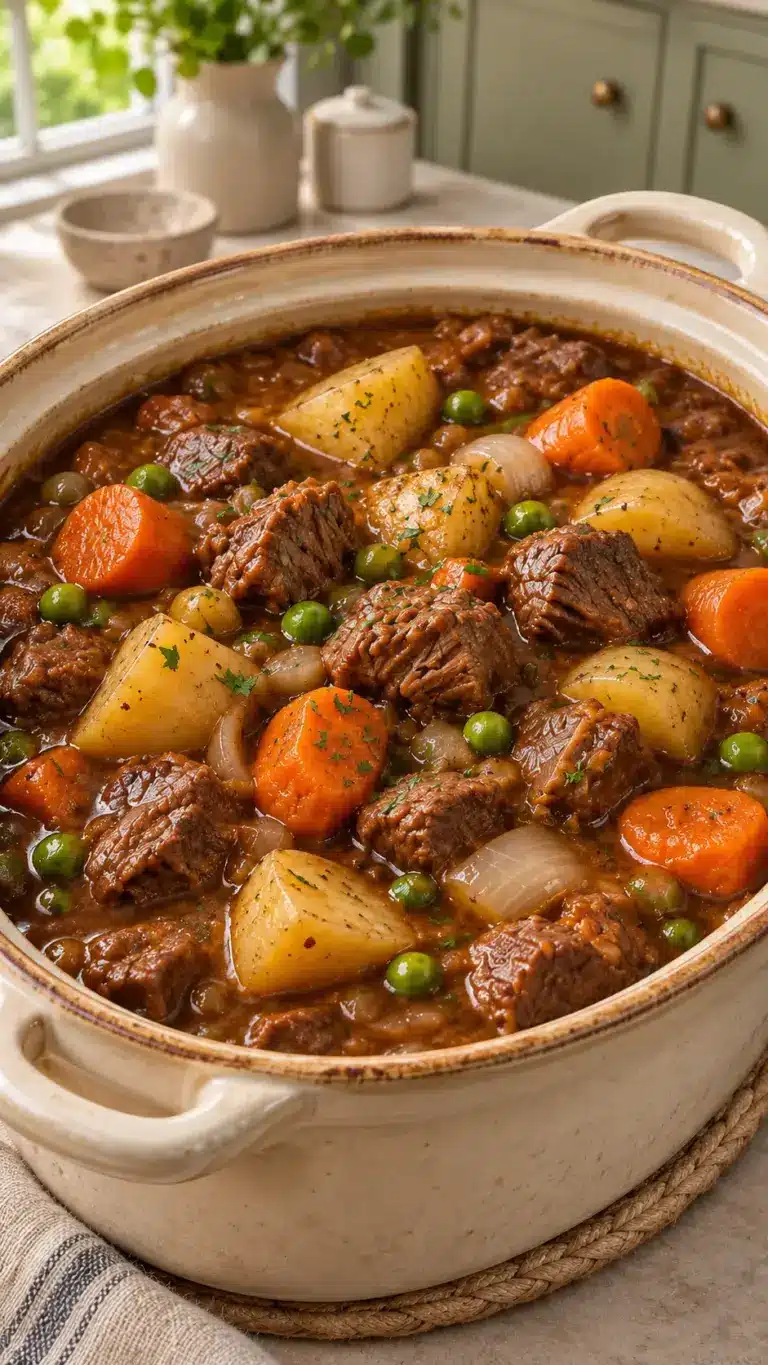
Homestyle Beef and Mixed Vegetable Stew
Hello fellow home cooks! There is nothing quite like coming home to a house filled with the comforting, savory aroma of a rich beef stew simmering slowly on the stove. When weeknight fatigue strikes and your family craves a satisfying meal, finding a dish that balances deep comfort with wholesome nutrition can feel like a daunting task. That is precisely why I turn to this classic recipe for Homestyle Beef and Mixed Vegetable Stew whenever I need to bring everyone together around the table.
As a busy home cook, I understand the challenge of getting a wholesome family dinner on the table without spending hours actively standing over a hot stove. This dish offers the ideal solution by combining budget-friendly cuts of beef with vibrant vegetables in a single, deeply flavorful pot. The magic lies in letting simple components gently simmer together until the meat becomes melt-in-your-mouth tender while creating a rich, velvety gravy.
Whether you are looking for a comforting meal on a chilly winter evening or a reliable recipe for weekend meal prep, this dish never disappoints. It bridges the gap between traditional stick-to-your-ribs comfort food and a modern, vibrant healthy alternative packed with essential nutrients. Grab your favorite Dutch oven and join me as we explore every secret to crafting the ultimate pot of stew right in your own kitchen.
Discover more delicious recipes and everyday cooking tips at MindaPos!
The history and tradition behind Homestyle Beef and Mixed Vegetable Stew
The tradition of simmering meat and vegetables in a heavy communal pot is as old as culinary history itself. Early American settlers brought European braising techniques to North America, adapting their traditional recipes to include native root vegetables and available game or cattle cuts. As hearths evolved into cast-iron stoves, the classic Dutch oven became an indispensable treasure in American home kitchens.
During the nineteenth and early twentieth centuries, stewing served as an economical necessity for hardworking families. Tough cuts of meat were transformed into tender, succulent morsels through low and slow moist-heat cooking, which effectively broke down connective tissues over several hours. Vegetables were added gradually to stretch precious proteins, feeding large farm households with delicious, warming sustenance.
The mid-twentieth century saw a surge in victory gardens across the United States, prompting home cooks to incorporate fresh local produce directly into their daily meals. Sweet carrots, earthy potatoes, green beans, and sweet corn became standard components of the classic American beef stew. This colorful medley transformed dark, heavy gravies into balanced, vibrant dishes that appealed to both children and adults.
Today, the tradition of preparing Homestyle Beef and Mixed Vegetable Stew continues to hold a special place in contemporary American food culture. While modern appliances offer quick preparation options, many home cooks still cherish the ritual of browning beef and tending a bubbling pot over the weekend. It represents a warm connection to culinary heritage, bringing timeless comfort to modern family kitchens.
In our fast-paced world, this humble stew reminds us of the power of slow food to bring families together around the dinner table. It turns inexpensive grocery staples into a feast worthy of celebration, proving that traditional techniques remain unmatched for building deep, comforting flavor. Modern kitchens may change, but the heartfelt appreciation for a steaming bowl of stew remains timeless.
Why you will love Homestyle Beef and Mixed Vegetable Stew
- Unmatched Depth of Flavor: Searing beef chuck roast creates deep caramelization that forms a rich, savory foundation for the tomato and herb-infused broth.
- Budget-Friendly Feast: Converts affordable cuts of meat and everyday vegetable staples into a nourishing, large-batch meal for the whole family.
- Nutritional Balance: Packed with high-quality protein from beef alongside essential vitamins, minerals, and dietary fiber from five distinct vegetables.
- Minimal Active Work: After a brief initial setup of browning meat and sautéing aromatics, your stove does all the heavy lifting while you relax.
- Sensory Comfort: Fills your entire home with an irresistible, mouthwatering fragrance of threshed thyme, garlic, onions, and slow-braised beef broth.
- Tastes Even Better Tomorrow: The complex flavors meld and deepen overnight, making leftovers extraordinarily delicious for easy weekday lunches.
- Extremely Versatile: Easily customizable to accommodate whatever seasonal vegetables or pantry staples you currently have in your kitchen.
- Crowd-Pleasing Meal: Loved by both kids and adults, providing classic home-cooked satisfaction that appeals to even picky eaters.
The kitchen secrets behind perfect flavor and texture
Understanding the fundamental science of braising is the secret to transforming ordinary ingredients into an extraordinary dish. The first key step relies on the Maillard reaction, a chemical interaction between amino acids and reducing sugars that occurs when searing meat at high temperatures. Properly browning your beef chuck roast in hot olive oil creates hundreds of new flavor compounds that enrich the stew broth.
The second scientific key is the thermal conversion of collagen into gelatin. Chuck roast contains tough connective tissue rich in collagen, which gradually breaks down when held at gentle simmering temperatures between 180°F and 200°F. Over ninety minutes, this collagen dissolves into liquid gelatin, giving the beef a melt-in-your-mouth tenderness while imparting a luxurious, silky mouthfeel to the sauce.
Timing your vegetable additions is equally critical to achieving optimal textures in your final bowl. Potatoes and carrots require extended cooking times to soften their dense cellular structure, allowing them to absorb surrounding broth without turning mushy. In contrast, delicate green beans, sweet corn, and frozen peas require only a brief simmer to preserve their crisp texture, bright colors, and naturally sweet flavors.
Acidity and aromatics complete the flavor architecture of this traditional recipe. Tomato paste and canned diced tomatoes contribute natural glutamates and subtle tartness, balancing the rich fat of the beef. Meanwhile, fat-soluble compounds in dried thyme, garlic, and bay leaves release their fragrant essential oils gradually into the fat, building layers of lingering savory aroma throughout the gravy.
Finally, resting the finished stew before serving plays an important role in overall texture and flavor balance. Allowing the pot to sit off the heat for ten minutes lets temperature gradients equalize and allows the meat fibers to reabsorb seasoned liquid. This short pause ensures every bite delivers moist, flavorful meat surrounded by a velvety broth seasoned to perfection.
How to choose the best ingredients for gourmet results
Achieving gourmet quality results begins with selecting prime ingredients at your local supermarket or farmers market. When shopping for beef at stores like Kroger, Walmart, or your local butcher, look for well-marbled beef chuck roast featuring small flecks of white fat distributed throughout lean pink muscle. Avoid overly lean cuts like round steak, as they lack sufficient collagen and will become dry and tough during an extended braise.
Selecting vibrant, fresh ingredients from the produce section makes a noticeable difference in flavor and appearance. Choose firm, heavy potatoes with clean skins, such as Yukon Golds for a buttery texture or Russets for a classic starchy bite. Look for crisp, bright carrots without surface cracks, and seek out local produce whenever possible to ensure maximum natural sweetness and optimal nutritional density.
Your choice of broth and tomato products directly impacts the final flavor balance of the sauce. Opt for low-sodium beef broth to maintain full control over the salt levels of your dish as the liquid reduces. Rich canned diced tomatoes packed in juice and concentrated tomato paste provide balanced acidity, vibrant red color, and natural umami that elevates the stew from simple to sensational.
Do not overlook the small details when picking out aromatics and pantry herbs. Choose firm garlic bulbs with tight, unblemished papery skins and pungent yellow onions free of soft spots or green sprouts. Ensure your dried thyme and bay leaves are fresh and fragrant, as aged spices lose their essential volatile oils and fail to deliver the robust flavor your stew deserves.
Ingredient variations and dietary adaptations
If you prefer a plant-based or vegan dinner option, this recipe easily adapts to suit your dietary preferences. Replace the beef chuck roast with thick, meaty chunks of portobello or cremini mushrooms, and swap the beef broth for a rich, dark vegetable broth infused with soy sauce or tamari for depth. Adding dried shiitake mushrooms to the simmering liquid builds intense savory umami that mimics slow-cooked meat beautifully.
For those maintaining a strict gluten-free diet, this recipe is naturally safe, provided you verify pantry labels carefully. Ensure your purchased beef broth and canned diced tomatoes are certified gluten-free without hidden wheat additives or starch thickeners. If you desire a thicker gravy consistency, stir a quick starch slurry made from equal parts cornstarch and cold water into the simmering broth near the end of cooking.
Low-carb and keto enthusiasts can quickly modify this hearty stew while keeping net carbohydrates low. Simply substitute the diced potatoes with low-carb alternatives like fresh cauliflower florets, peeled turnip cubes, or cut radishes, which soften wonderfully and absorb broth flavors without adding excessive starch. You can also slightly reduce the corn and peas, replacing them with extra sliced green beans or low-calorie green zucchini.
If dairy sensitivities are a concern for your household, you will be happy to know this dish is inherently dairy-free. Searing the beef in high-quality extra virgin olive oil delivers rich flavor without requiring butter. Ensure any optional side dishes, such as accompanying rolls or mashed potatoes, are also prepared using plant-based fats to keep the entire meal completely dairy-free.
When you find your pantry missing key seasonings, simple culinary swaps keep your preparation moving forward seamlessly. Dried rosemary or oregano can readily step in for dried thyme, offering a robust piney or warm herb notes. If you run out of paprika, a dash of smoked paprika adds an alluring wood-smoke depth, while fresh garlic cloves can be temporarily replaced by pure garlic powder without sacrificing aromatic appeal.
The best sides and drinks to serve with this dish
- Crusty French Baguette or Sourdough Bread: Warm, crusty bread with a tender interior is essential for soaking up every drop of rich, velvety beef broth.
- Fluffy Buttermilk Biscuits: Tender, flaky golden biscuits offer a buttery homemade pairing that complements the rustic nature of slow-simmered stew.
- Creamy Garlic Mashed Potatoes: Serve your stew ladled directly over a bed of buttery mashed potatoes for the ultimate stick-to-your-ribs comfort food experience.
- Crisp Seasonal Green Salad: A vibrant salad made with mixed greens, sliced radishes, and a tart lemon vinaigrette provides a refreshing, cleansing contrast to the heavy stew.
- Medium-Bodied Red Wine Pairings: Complement the savory beef with a glass of Pinot Noir, Cabernet Sauvignon, or Merlot to enhance the dark fruit notes of the meal.
- Refreshing Non-Alcoholic Beverages: Crisp iced tea, fresh sparkling apple cider, or warm herbal infusions like rosemary-thyme tea balance the meal wonderfully for all ages.
Refrigerating, freezing, and reheating correctly
- Refrigeration Guidelines: Allow leftover stew to cool completely to room temperature before transferring it into airtight glass or plastic containers. Store in the refrigerator at or below 40°F for up to 4 days, noting that the flavor will continue to mature and improve over the first 24 hours.
- Freezer Preparation: Portion cooled stew into heavy-duty freezer-safe bags or rigid containers, leaving at least one inch of headspace to allow for expansion. Store in the freezer for up to 3 months for optimal taste and texture quality; thaw overnight in the fridge before serving.
- Preserving Ingredient Integrity: When freezing, root vegetables like potatoes may soften slightly upon thawing. To minimize texture changes, refrain from overcooking vegetables during the initial preparation if you intend to freeze the majority of the batch.
- Step-by-Step Reheating: For best results, perform reheating in a saucepan over medium-low heat, stirring gently to prevent scorching. Add a splash of fresh beef broth or water to replenish absorbed moisture, ensuring the beef becomes piping hot and tender without drying out.
Nutrition information and preparation times
- Calories: 410 kcal
- Protein: 32 g
- Fat: 16 g
- Carbohydrates: 34 g
| Parameter | Value |
|---|---|
| Prep time | 30 min |
| Cook time | 105 min |
| Total time | 135 min |
| Difficulty | Easy |
| Servings | 6 servings |
Ingredients
For the stew base
- 1½ lbs beef chuck roast, cut into bite-sized pieces
- 2 tbsp olive oil
- 4 cups beef broth
- 1 can (14.5 oz) diced tomatoes
- 2 tbsp tomato paste
For the fresh vegetables and aromatics
- 3 medium potatoes, diced into 1-inch cubes
- 3 carrots, sliced into ¼-inch rounds
- 1 onion, diced
- 2 garlic cloves, minced
- 1 cup green beans, cut into 1-inch pieces
- 1 cup frozen peas
- 1 cup corn kernels
For the herbs and seasonings
- 1 tsp dried thyme
- 1 tsp paprika
- 1 bay leaf
- Salt and pepper, to taste
A step-by-step guide to a successful recipe
Step 1: Trimming and Searing the Beef Chuck
Begin by preparing your beef chuck roast on a clean cutting board. Pat the beef thoroughly dry with paper towels, as surface moisture creates steam that prevents proper browning. Cut the meat into uniform one-inch bite-sized pieces, trimming away any excessively large pieces of hard white fat while leaving fine intramuscular marbling intact for flavor.
Heat two tablespoons of high-quality olive oil in a large, heavy Dutch oven over medium-high heat. Season your prepared beef pieces generously on all sides with kosher salt and freshly cracked black pepper. When the oil shimmers and begins to show faint wisps of smoke, gently lay half of the beef cubes into the hot pan in a single layer, ensuring they do not touch.
Sear the beef undisturbed for three to four minutes until a deep, dark golden-brown crust forms on the bottom. Flip each piece using tongs and sear the remaining sides, taking roughly six to eight minutes total for the batch. Transfer the browned beef to a clean plate and repeat the process with the remaining meat, taking care not to crowd the pot, which lowers pan temperature.
Step 2: Sautéing the Aromatics and Garlic
After removing the second batch of beef to your plate, turn down the heat beneath your Dutch oven to medium. You should see a rich layer of rendered beef fat and deeply flavorful browned bits stuck to the bottom of the pan. Drop the diced yellow onion directly into the residual fat, using a wooden spoon to stir and loosen some of those tasty fond particles.
Sauté the onions for roughly three minutes until they soften, turn translucent, and begin taking on a golden hue around their edges. The moisture released by the onions will start softening the crisp residual bits on the pan bottom. Keep your heat controlled so the onions soften without burning or turning overly dark.
Add the minced garlic cloves to the softened onions, stirring continuously for about sixty seconds until fragrance fills your kitchen. Garlic burns quickly when exposed to direct heat, so keep it moving through the pan. You will instantly smell the rich, warm pungency of cooked garlic blending into the sweet onion base.
Step 3: Deglazing and Building the Tomato-Broth Foundation
Clear a small circle in the center of your onion and garlic mixture and add two tablespoons of concentrated tomato paste. Cook the tomato paste directly on the bottom of the pot for one to two minutes, stirring constantly until it turns from bright red to a dark rust color. This brief frying step caramelizes the natural sugars in the tomato paste, eliminating harsh raw acidity.
Pour in the fourteen-and-a-half-ounce can of diced tomatoes along with their natural juices, scraping the bottom of the pan vigorously with your wooden spoon. The acidic tomato juices will instantly deglaze the pot, lifting every remaining trace of caramelized beef glaze into the sauce base. Follow this by pouring in four cups of low-sodium beef broth, stirring continuously until completely unified.
Scatter one teaspoon of dried thyme, one teaspoon of sweet paprika, and one bay leaf over the liquid broth. Stir well to integrate the spices thoroughly throughout the liquid mixture. Return the browned beef chunks along with any accumulated meat juices on the plate back into the bubbling pot, submerging the meat fully under the fragrant broth.
Step 4: Slow Simmering the Beef to Tender Perfection
Bring the contents of your Dutch oven up to a full, rolling boil over medium-high heat. As soon as prominent bubbles break across the surface, reduce your heat to low to establish a gentle, steady simmer. Cover the Dutch oven tightly with its heavy lid to trap steam and keep the braising liquid from evaporating away.
Allow the stew to cook undisturbed at a low simmer for seventy-five to ninety minutes. During this period, the internal temperature of the beef slowly rises, encouraging tough collagen fibers to break down into silky gelatin. Check the pot occasionally to confirm the liquid maintains a soft, gentle bubbling action rather than a hard boil.
Test the tenderness of your beef by carefully removing a piece and pressing it with a fork. The meat should yield readily to light pressure without springing back rubbery, signaling that collagen breakdown is well underway. If the beef still feels tough, cover the pot and continue simmering for an additional fifteen minutes before moving to the next stage.
Step 5: Adding the Hearty Root Vegetables
Once the beef has softened noticeably, remove the lid of your Dutch oven, releasing a cloud of aromatic steam. Add the three medium diced potatoes and three sliced carrots directly into the bubbling braising liquid. Press the vegetables down gently with your spoon so they are mostly submerged in the rich tomato broth.
Replace the lid tightly and maintain your heat setting to keep the stew at a gentle, rolling simmer. Cook the root vegetables for approximately twenty minutes. This timeframe gives the potatoes and carrots ample time to absorb savory broth while softening their dense cellular structures to a fork-tender consistency.
Check for doneness by piercing a thick potato cube and a carrot round with the tip of a paring knife. The blade should slide smoothly to the center of the root vegetables with minimal resistance. Take care not to overcook them at this point, as they will simmer for a few additional minutes alongside the remaining vegetables.
Step 6: Incorporating the Tender Green Vegetables and Corn
Uncover your Dutch oven once again to introduce your remaining colorful vegetables. Stir in one cup of cut green beans, one cup of frozen sweet peas, and one cup of corn kernels into the simmering stew. These delicate vegetables require significantly less heat to reach ideal cooking texture and vibrant visual appeal.
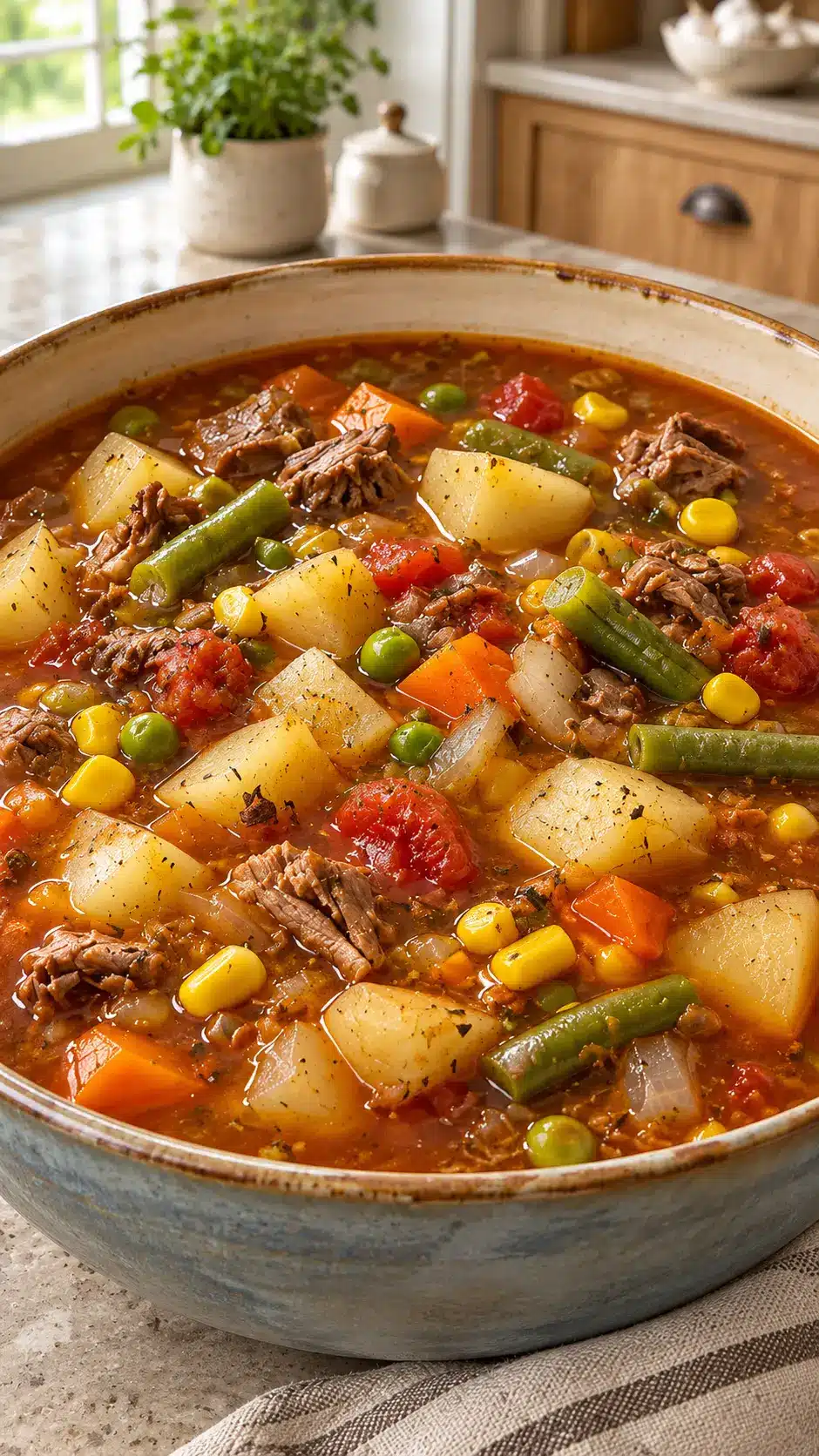
Leave the pot uncovered or partially covered and allow everything to simmer together for another ten to fifteen minutes. During these final minutes, the green beans will turn tender-crisp, while the peas and corn plump up and release their natural sweetness into the broth. The stew broth will also slightly reduce and thicken into a luscious, rich sauce during this step.
Observe the visual transformation of your stew as bright green and yellow colors pop against the dark red gravy. Gently fold the ingredients together using a wide spoon to avoid breaking up the softened potato cubes. Test a green bean piece to ensure it is tender yet retains a pleasant, subtle crunch.
Step 7: Adjusting Seasonings and Final Simmer
Turn off the burner beneath your Dutch oven and carefully hunt for the bay leaf using your spoon. Remove and discard the bay leaf, as its firm leaf structure is unpalatable and has already imparted its warm herbal flavor into the sauce. Dip a clean spoon into the gravy to taste the base flavor profile of your completed stew.
Adjust the seasoning thoughtfully based on your personal taste preferences. Add a final pinch of kosher salt if the flavors need lifting, or crack fresh black pepper over the surface for extra warmth. If you desire a slightly richer sauce, let the pot rest uncovered for five minutes so surface steam dissipates and thickens the gravy naturally.
Stir the finished stew thoroughly from the bottom up to ensure the seasoned gravy coats every chunk of meat and colorful vegetable evenly. You should have a thick, comforting stew where the ingredients are suspended in a glossy, flavorful sauce rather than floating in a thin broth. Take a moment to appreciate the incredible culinary creation you built from simple ingredients.
Step 8: Resting and Serving the Stew
Allow the finished Homestyle Beef and Mixed Vegetable Stew to rest in the covered Dutch oven off the heat for five to ten minutes before serving. This crucial rest period allows the aggressive heat to dissipate slightly, letting subtle herb and vegetable flavors come forward while allowing the beef to reabsorb seasoned juices. It also allows the gravy to settle into its final velvety consistency.
Ladle generous helpings of hot stew into wide, shallow soup bowls, making sure each serving contains a balanced mix of tender beef chunks, golden potatoes, sweet carrots, green beans, peas, and corn. Garnish with a sprinkle of freshly chopped parsley or extra cracked black pepper if desired for a touch of fresh color and aroma.
Serve your warm stew immediately while piping hot alongside warm, buttered rolls, crusty French bread, or over a bed of mashed potatoes. Gather your family around the table to enjoy this wholesome, comforting meal made with love and fresh ingredients right from your heart. Store any remaining portions safely following our storage guidelines for fantastic meals throughout the week.
What to do when the dish does not turn out as planned
If your stew accidentally tastes overly salty due to broth reduction or heavy seasoning, do not panic. You can easily fix a salty stew by dropping two large, peeled, unseasoned raw potato quarters directly into the pot and simmering for fifteen minutes; the starch absorbs excess sodium before you discard the potato pieces. Alternatively, stir in a splash of water, unsalted beef stock, or a small drop of heavy cream or unsalted butter to dilute and soften harsh saltiness.
If your beef turns out dry or chewy, it simply means the connective collagen fibers have not had sufficient time to melt down fully into gelatin. This usually happens when the cooking process is rushed at high heat or stopped prematurely. To remedy dry meat, return the pot to low heat, cover tightly with the lid, and let it simmer gently for an extra twenty to thirty minutes until the beef fibers relax and become tender.
When your finished stew broth looks too watery or thin, achieving a rich, velvety consistency requires only a quick adjustment. Whisk two teaspoons of cornstarch into two tablespoons of cold water to create a smooth slurry, then stir it directly into the bubbling stew liquid for two minutes until thickened. You can also uncover the pot and let it simmer rapidly over medium heat for ten minutes to reduce excess moisture naturally.
If your finished stew tastes flat or bland, it usually lacks either sufficient salt balance or bright acidity to pop the savory flavors. Start by adding a small pinch of kosher salt and a few turns of black pepper to heighten the natural flavors of the beef and vegetables. If it still lacks excitement, stir in half a teaspoon of red wine vinegar, Worcestershire sauce, or fresh lemon juice to instantly brighten the entire pot without overpowering the rustic flavor.
Frequently asked questions about Homestyle Beef and Mixed Vegetable Stew
What is the best cut of beef for making beef stew?
Beef chuck roast is hands-down the best choice for a slow-simmered stew because it contains an ideal ratio of lean muscle meat, rich fat, and collagen-rich connective tissue. As chuck roast cooks low and slow, the collagen breaks down into gelatin, creating juicy, tender meat and a velvety gravy. Avoid extremely lean cuts like eye of round or sirloin, as they dry out and turn rubbery during extended simmer times.
Can I make this Homestyle Beef and Mixed Vegetable Stew in a Slow Cooker?
Yes, this recipe converts wonderfully to a slow cooker or Crock-Pot for hands-off convenience. Simply sear your seasoned beef and sauté the onions and garlic in a skillet first to build deep flavor, then transfer everything except the peas, corn, and green beans into your slow cooker. Cook on Low for 7 to 8 hours (or High for 4 to 5 hours), stirring in the green beans, peas, and corn during the final thirty minutes of cooking.
How do I stop my potatoes from becoming mushy in the stew?
To keep potatoes firm and intact, cut them into uniform, large one-inch cubes and add them only during the final 35 to 40 minutes of total cooking time. Using waxy or medium-starch potato varieties like Yukon Gold or red potatoes also helps them retain their structural integrity better than high-starch Russet potatoes. Avoid overcooking the stew once the potatoes test fork-tender.
Can I freeze beef stew with potatoes in it?
Yes, you can freeze beef stew, though cooked potatoes can sometimes absorb excess moisture and soften slightly upon thawing and reheating. To preserve the best texture, cool the stew rapidly, package it in airtight freezer-safe containers, and freeze for up to three months. Reheat gently on the stovetop over medium-low heat, adding a splash of fresh beef broth to restore original moisture and sauce consistency.
How can I thicken my beef stew gravy naturally without flour?
You can naturally thicken your stew broth by letting the pot simmer uncovered during the final fifteen minutes of cooking to allow steam to escape and reduce liquid volume naturally. Another fantastic trick is to crush a few cooked potato cubes against the side of the pot using a wooden spoon; the released natural potato starches will thicken the surrounding sauce smoothly without needing added flour or cornstarch.
Is this beef stew healthy and suitable for meal prep?
Absoutely, this stew is a highly nutritious healthy alternative packed with lean protein, complex carbohydrates, and vital vitamins from five distinct vegetables. It makes an outstanding choice for weekly meal prep because the cooked ingredients continue to absorb flavors in the refrigerator, tasting even more delicious on the second and third days. Portion it into individual airtight glass containers for quick, satisfying weekday lunches or quick preparation weeknight dinners.
Homestyle Beef and Mixed Vegetable Stew

A hearty, slow-simmered beef stew packed with tender beef, potatoes, carrots, peas, green beans, and corn in a rich tomato-based broth.
- 1 1/2 lbs beef chuck roast, cut into bite-sized pieces
- 3 medium potatoes, diced
- 3 carrots, sliced
- 1 onion, diced
- 2 garlic cloves, minced
- 1 cup green beans, cut into pieces
- 1 cup frozen peas
- 1 cup corn kernels
- 1 can (14.5 oz) diced tomatoes
- 4 cups beef broth
- 2 tbsp tomato paste
- 2 tbsp olive oil
- 1 tsp dried thyme
- 1 tsp paprika
- 1 bay leaf
- Salt and pepper, to taste
- 1Heat olive oil in a large Dutch oven and brown the beef in batches over medium-high heat.
- 2Add onion and garlic to the pot and cook for 3 minutes until fragrant.
- 3Stir in the tomato paste, diced tomatoes, beef broth, thyme, paprika, and bay leaf.
- 4Bring the mixture to a simmer, cover, and cook for 75 to 90 minutes until the beef begins to soften.
- 5Add the potatoes and carrots to the pot and simmer for another 20 minutes.
- 6Stir in the green beans, peas, and corn; cook for 10 to 15 minutes until all vegetables and the beef are tender.
- 7Remove the bay leaf, adjust the seasoning with salt and pepper to taste, and serve hot.
Keywords: beef stew, homestyle beef stew, vegetable beef stew, easy beef stew recipe