Smoked Sausage, Green Beans, Cabbage and Potatoes
Every home cook knows the familiar rush of the evening hours when a comforting meal needs to appear on the table without demanding hours of active labor. Between balancing work schedules, family activities, and the desire for wholesome food, finding a dish that satisfies everyone can feel like a nightly puzzle. That is precisely why mastering a classic one-pot wonder transforms the chaos of a busy weeknight into a calm, aromatic gathering around the dining table.
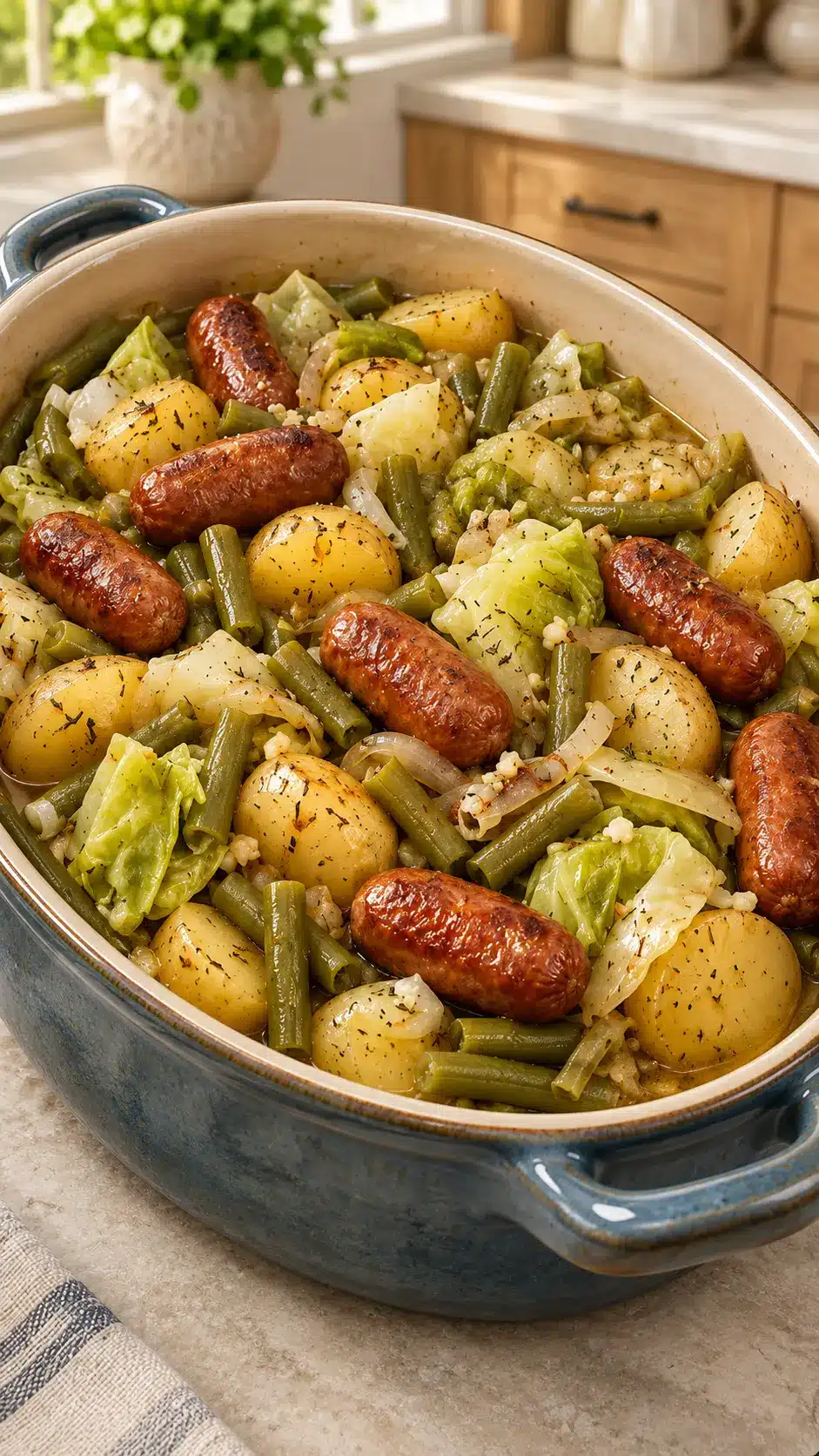
Smoked sausage green beans potatoes brings together the rustic charm of country cooking and the practical convenience that modern American households desperately need. With a harmonious blend of smoky meats, tender root vegetables, and crisp garden produce, this dish acts as the ultimate comforting solution when you want a hearty meal with minimal cleanup. It provides a healthy alternative to heavy takeout while delivering the deep, satisfying flavors that make a family dinner genuinely memorable.
By relying on straightforward culinary techniques and readily available supermarket ingredients, you can recreate this comforting classic in your own kitchen tonight. Whether you are cooking for a hungry household after a long day or meal-prepping for the upcoming week, this foolproof recipe promises consistent, delicious results every single time. Let us dive into the wonderful world of this rustic skillet favorite and discover how simple ingredients can create extraordinary flavor.
Discover more delicious recipes and everyday cooking tips at MindaPos!
The history and tradition behind Smoked sausage green beans potatoes
The culinary roots of Smoked sausage green beans potatoes trace back to the resourceful traditions of early American homesteaders and European immigrants who valued hearty, filling meals. In rural communities across the American South and Midwest, home cooks relied on preservation methods like smoking meats to ensure a steady supply of protein through the colder months. Pairing these flavorful sausages with whatever vegetables were currently in season became a reliable way to stretch resources and feed a large family efficiently.
As generations passed, this combination of smoked meats, starchy potatoes, and green vegetables evolved from a survival necessity into a beloved comfort food tradition. Families would gather around large cast-iron skillets or heavy-bottomed pots, sharing stories while the enticing aromas of garlic, onions, and simmering broth drifted through the home. This style of cooking emphasized communal dining, where a single pot served as the centerpiece of warmth and hospitality during gathering times.
In modern American kitchens, this traditional favorite has adapted to fit contemporary lifestyles without losing its soulful character. Busy parents and cooking enthusiasts appreciate how the recipe bridges the gap between heritage cooking and quick preparation needs. By utilizing local produce and sustainably sourced ingredients when available, today home cooks keep the spirit of resourceful, comforting farmhouse cooking alive.
The enduring popularity of Smoked sausage green beans potatoes speaks to the universal human desire for uncomplicated, honest food that nourishes both body and spirit. It reminds us that exceptional meals do not require complex culinary degrees or dozens of specialized pans. Instead, true culinary magic often happens when simple, quality ingredients are treated with care and allowed to meld together in a single vessel over gentle heat.
Why you will love Smoked sausage green beans potatoes
- Incredibly easy preparation: The entire meal comes together in a single Dutch oven or heavy pot, which drastically cuts down on active cooking time and makes after-dinner cleanup remarkably fast.
- Balanced flavor profile: The smoky intensity of the sausage cuts through the earthy richness of the potatoes and cabbage, while fresh green beans add a vibrant pop of sweetness and texture.
- Wholesome nutrition: This dish delivers a satisfying balance of lean proteins, complex carbohydrates, and essential fiber-rich vegetables, making it a healthy alternative to processed convenience foods.
- Budget-friendly ingredients: Every component can be easily sourced on any budget at standard supermarkets like Kroger or Walmart, ensuring you can feed a crowd without breaking the bank.
- Naturally gluten-free: Without the need for heavy flour thickeners or processed fillers, this naturally gluten-free meal accommodates common dietary restrictions effortlessly.
- Fantastic leftovers: The flavors actually deepen overnight in the refrigerator, meaning lunch the next day tastes even more remarkable than the original dinner.
- Customizable versatility: You can easily swap out vegetables based on seasonal availability or what you happen to have lingering in your crisper drawer.
The kitchen secrets behind perfect flavor and texture
Achieving restaurant-quality results with Smoked sausage green beans potatoes starts with mastering foundational heat control and ingredient layering. When you first place the sliced smoked sausage into the hot Dutch oven with a touch of butter and olive oil, you are initiating the Maillard reaction. This crucial browning process creates delicious caramelized compounds on the surface of the meat, which subsequently release flavorful fond into the bottom of the pot to enrich the entire cooking liquid.
Once the sausage is removed, cooking the onions and garlic in that leftover rendered fat builds an aromatic flavor foundation that commercial flavorings simply cannot replicate. The natural sugars in the onions caramelize gently, balancing the savory, smoky notes of the meat. Adding the minced garlic toward the end of this onion-softening phase ensures it toasts just enough to release its sweet essential oils without burning into a bitter taste.
The timing of adding your vegetables is another critical secret to culinary success in this recipe. Starchy baby potatoes require a longer simmer in the seasoned chicken broth to become fork-tender and creamy on the inside. Meanwhile, delicate green cabbage and fresh green beans require a shorter cooking window to retain their bright colors, pleasant crunch, and vital nutrients.
Finally, allowing the dish to finish covered lets the steam work its magic, gently mingling all the diverse flavors into a cohesive, comforting broth. When you finally ladle the contents into bowls and spoon that seasoned cooking liquid over the top, every single element contributes its distinct texture and aroma. It is this thoughtful orchestration of heat, timing, and ingredient order that elevates a simple weeknight supper into a gourmet quality experience.
How to choose the best ingredients for gourmet results
Selecting top-tier ingredients is the secret to transforming a simple home-cooked meal into an extraordinary dining experience. When shopping for smoked sausage, look for artisan varieties crafted with high-quality pork or beef, natural casings, and traditional smoking methods using real hardwood smoke. Avoid overly processed sausages loaded with excessive sodium or artificial fillers, as the quality of your protein dictates the flavor depth of the entire broth.
For the produce, visiting your neighborhood farmers market or the fresh produce aisle at your local grocery store makes a noticeable difference in the final dish. Seek out firm, vibrant green beans that snap cleanly when bent, indicating peak freshness and crisp moisture content. When purchasing potatoes, choose uniform baby potatoes or waxy varieties like Yukon Golds that hold their shape during simmering rather than dissolving into mush.
Cabbage selection is equally important for achieving the right balance of texture and mild sweetness in your finished meal. Look for heavy, compact heads of green cabbage with crisp outer leaves free from bruising or yellowing discoloration. Incorporating fresh herbs, like the dried thyme and black pepper specified in the recipe, elevates the aroma and provides that gourmet quality touch that impresses family and guests alike.
Emphasizing fresh ingredients and supporting local produce whenever possible not only boosts the nutritional profile of your meal but also connects you to the rhythms of the seasons. By building your recipe on a foundation of wholesome, sustainably sourced ingredients, you ensure that every bite bursts with authentic garden flavor and honest comfort. Good cooking is, after all, simply an act of respecting the ingredients you bring into your kitchen.
Ingredient variations and dietary adaptations
Adapting Smoked sausage green beans potatoes to suit various dietary needs is remarkably simple thanks to the forgiving nature of one-pot cooking. If you are preparing a plant-based fasting or vegan version for meatless days, substitute the smoked sausage with robust plant-based smoked sausages or seasoned seitan links. Swap the chicken broth for a rich, aromatic vegetable stock, and use plant-based butter or extra-virgin olive oil to achieve that same savory depth.
For those following a gluten-free lifestyle, you will be delighted to know that the core recipe is naturally free of wheat and gluten-containing thickeners. However, always double-check the packaging labels on your smoked sausage and chicken broth to ensure no hidden gluten derivatives or cross-contamination occurred during commercial processing. This simple verification keeps sensitive diners completely safe while enjoying a comforting meal.
If you are aiming for a low-carb or keto version, you can easily modify the carbohydrate load by reducing the quantity of baby potatoes or replacing them entirely with nutrient-dense turnips or radishes. Radishes mellow out significantly when simmered in seasoned broth, mimicking the texture of potatoes while keeping your net carbohydrate count exceptionally low. This modification allows keto dieters to enjoy the hearty spirit of the dish without straying from their nutritional goals.
Dairy-free households can easily avoid butter by relying solely on high-quality olive oil or avocado oil for the initial sautéing stages. Olive oil provides a wonderful fruity aroma that complements the smoky sausage and tender vegetables beautifully. Finally, if you happen to be missing a specific dried herb like thyme, you can substitute Italian seasoning, dried oregano, or fresh chopped rosemary to maintain a complex, savory flavor profile.
The best sides and drinks to serve with this dish
- Crispy garden side salad: A light, refreshing salad tossed with a sharp vinaigrette cuts through the rich, smoky flavors of the sausage and cleanses the palate between bites.
- Rustic crusty sourdough bread: A warm loaf of artisan sourdough bread is ideal for soaking up every last drop of the seasoned chicken broth left at the bottom of your bowl.
- Traditional dill pickles: Serving crisp, tangy dill pickles or fermented vegetables on the side adds a vibrant acidic contrast that brightens the entire meal.
- Chilled Chardonnay: A crisp, lightly oaked Chardonnay offers balanced acidity and buttery notes that complement the smoky profile of the sausage and potatoes.
- Earthy Pinot Noir: A fruit-forward Pinot Noir with soft tannins provides a wonderful red wine pairing that harmonizes with the savory meats and earthy root vegetables.
- Refreshing iced sweet tea: A tall glass of classic Southern-style iced tea with a lemon wedge offers a refreshing, non-alcoholic beverage option that feels right at home with country-style cooking.
Refrigerating, freezing, and reheating correctly
- Storage in airtight containers in the refrigerator: Allow the cooked dish to cool slightly before transferring it into shallow, airtight glass or BPA-free plastic containers to preserve freshness.
- Proper preparation for the freezer: While potatoes can sometimes change texture slightly upon freezing, the dish freezes well for up to two months if stored in heavy-duty freezer-safe bags or sealed containers with minimal trapped air.
- Optimal shelf life: When properly sealed and kept at a consistent refrigerator temperature, the leftovers remain safe and delicious for up to three to four days.
- Step-by-step reheating to keep the dish moist: Reheat leftovers gently in a covered skillet or saucepan over medium-low heat, adding a splash of chicken broth or water to restore the original moisture balance without overcooking the vegetables.
Nutrition information and preparation times
- Calories: 420 kcal
- Protein: 18 g
- Fat: 26 g
- Carbohydrates: 32 g
| Parameter | Value |
|---|---|
| Prep time | 15 min |
| Cook time | 35 min |
| Total time | 50 min |
| Difficulty | Easy |
| Servings | 6 servings |
Ingredients
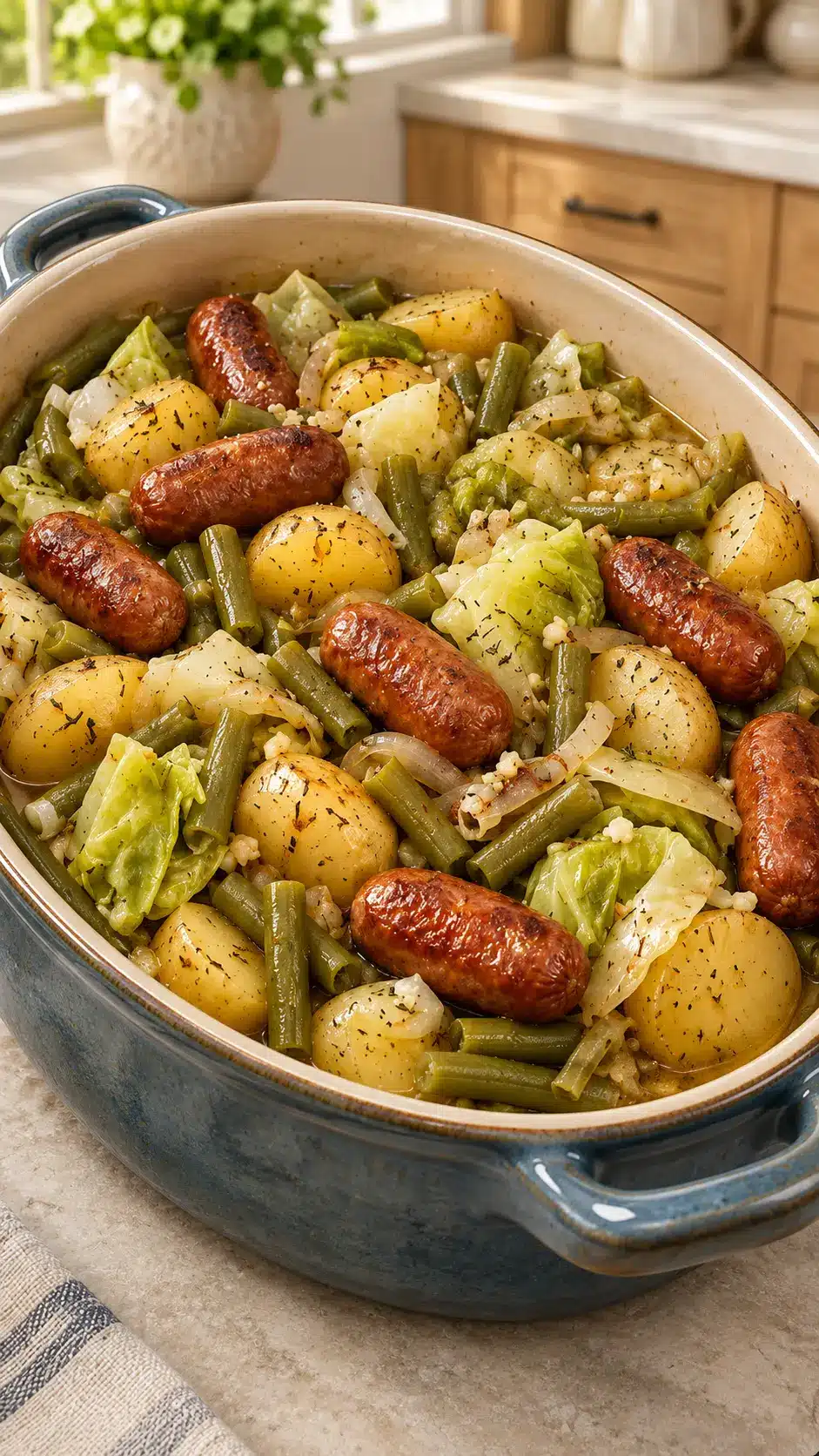
For the main mixture
- 1 lb smoked sausage links, sliced into rounds
- 1½ lbs baby potatoes, halved
- 3 cups fresh green beans, trimmed and halved
- ½ head green cabbage, chopped
- 1 onion, sliced
- 3 garlic cloves, minced
- 2 tbsp butter, at room temperature
- 1 tbsp olive oil
- 1½ cups chicken broth
- 1 tsp dried thyme
- ½ tsp onion powder
- ½ tsp black pepper
- salt to taste
A step-by-step guide to a successful recipe
Step 1: Preparing and warming the cooking vessel
Begin your culinary journey by placing a large, heavy-bottomed Dutch oven over medium heat on your stovetop. Allow the heavy cast iron or enameled metal to heat up gradually for a couple of minutes so it distributes thermal energy evenly across the base. This foundational step ensures that whatever touches the bottom of the pot later will sear consistently rather than sticking to cold spots.
Next, measure out your extra-virgin olive oil and butter, adding both fats directly into the warm Dutch oven. As the solid butter melts into the shimmering olive oil, you will notice a gentle foaming action and a rich, nutty aroma filling your kitchen airspace. Swirl the pot gently to coat the bottom and lower sides completely with this flavorful cooking medium.
Do not rush this initial heating phase, as getting the fat to the right temperature is vital for the upcoming meat-browning stage. If the pan is too cold, your sausage will steam rather than sear; if it is smoking hot, the butter solids might burn prematurely. Aim for a balanced, shimmering state where the fats smell fragrant and ready to work their magic.
Step 2: Searing the smoked sausage to golden perfection
Carefully add your sliced smoked sausage links into the bubbling butter and oil mixture in a single, uncrowded layer. You should immediately hear a satisfying sizzle as moisture on the surface of the meat hits the hot fat, signaling that the searing process has begun. Let the slices sit undisturbed for about three to four minutes so they can develop a deep, caramelized crust.
Use a pair of kitchen tongs to flip each sausage round, revealing a gorgeous golden-brown surface underneath that is rich with smoky essence. Allow the second side to brown for another two to three minutes until both faces boast an appetizing, crisp exterior. This crucial step renders out some of the rich fats from the meat, filling the pot with savory fond.
Once the sausage is beautifully browned on all sides, use your tongs or a slotted spoon to transfer the pieces onto a clean plate. Leave the flavorful rendered drippings behind in the Dutch oven, as they will serve as the aromatic flavor base for your onions and garlic. Set the plate of sausage aside to rest while you build the next layer of flavor.
Step 3: Softening aromatics and building flavor foundations
Drop your freshly sliced onions directly into the hot, flavorful sausage drippings remaining in the Dutch oven. Stir them frequently with a wooden spoon, scraping up any browned bits stuck to the bottom of the pot to incorporate them into the vegetables. Watch as the translucent layers of onion begin to soften and turn a translucent, golden hue.
After the onions have cooked down for about four minutes, add your minced garlic cloves directly into the center of the pan. Stir the garlic continuously for roughly sixty seconds, taking care to keep the heat at a moderate level so it does not scorch. The kitchen will instantly fill with an intoxicating, savory aroma as the garlic releases its essential oils into the onions and remaining fats.
This simple combination of onions and garlic acts as the flavor backbone for the entire meal, bridging the gap between the smoky meat and earthy vegetables. If the bottom of the pot starts getting too dark, turn the heat down slightly to maintain control. You want soft, sweet aromatics ready to welcome the starchy potatoes.
Step 4: Introducing potatoes, broth, and seasonings
Add your halved baby potatoes directly into the pot with the softened onions and garlic, stirring gently to coat them in the flavorful fats. Next, pour in the chicken broth, making sure it reaches around the potatoes without completely submerging every single piece. The broth will act as the braising liquid that softens the root vegetables while absorbing all the delicious pan drippings.
Sprinkle your dried thyme, onion powder, freshly ground black pepper, and an initial pinch of salt evenly across the contents of the pot. Stir everything thoroughly so the seasonings distribute through the broth and coat the potato skins. This careful seasoning ensures that every bite of potato will be flavorful right down to its creamy center.
Bring the liquid in the Dutch oven up to a gentle simmer over medium-high heat, listening for the soft bubbling sound of the broth heating up. Once consistent bubbles appear across the surface, you are ready to move on to the covered simmering phase. Keep your eye on the pot to ensure it does not boil too violently.
Step 5: Simmering the potatoes to tender softness
Secure the heavy matching lid firmly onto your Dutch oven to trap the heat and circulating steam inside. Immediately reduce your stovetop burner heat down to a gentle medium-low setting to maintain a soft, steady simmer. Let the potatoes cook undisturbed in this aromatic environment for approximately twelve to fifteen minutes.
During this covered phase, the steam softens the tough exterior of the baby potatoes while the starchy interior turns meltingly tender. You may occasionally hear a gentle bubbling sound from beneath the lid, which is a sign that the braising process is working correctly. Avoid opening the lid too frequently, as letting the steam escape will lower the cooking temperature inside.
As the timer approaches the twelve-minute mark, carefully lift the lid away from your face to check on the progress. Pierce a larger potato half with the tip of a sharp knife or a fork; it should slide into the center with very little resistance. If the potatoes are still firm in the middle, cover the pot and let them simmer for another two or three minutes.
Step 6: Folding in crisp green beans and fresh cabbage
Once your potatoes have achieved that tender stage, remove the lid and prepare to add the vibrant green elements. Scatter your chopped green cabbage and trimmed fresh green beans evenly across the top of the simmering potato mixture. The vibrant green and pale white colors will create a gorgeous, farm-fresh visual contrast in the pot.
Using a large wooden spoon or spatula, gently fold the green beans and cabbage down into the warm broth and potatoes. You do not need to stir aggressively; just incorporate the vegetables enough so they make contact with the cooking liquid. This ensures they steam evenly without bruising or breaking apart.
As the crisp vegetables hit the hot liquid, they will immediately begin to absorb the savory flavors of the seasoned broth. The cabbage will start to wilt slightly, while the green beans turn a brighter, more vivid shade of green. This integration of textures is what makes the final dish so exciting to eat.
Step 7: Returning the sausage and final simmering
Carefully nestle your reserved smoked sausage slices and any accumulated juices back into the Dutch oven among the vegetables. Push the sausage pieces down slightly so they submerge partially into the simmering broth and mingle with the cabbage and beans. This step allows the meat to heat through completely while imparting its smoky goodness directly into the surrounding vegetables.
Cover the Dutch oven with its lid once again and let the entire mixture cook on low heat for another fifteen to twenty minutes. During this final simmer, the cabbage becomes meltingly soft, the green beans reach a tender-crisp perfection, and the sausage infuses the entire dish with deep flavor. The aromas wafting from your stove will be nothing short of mouthwatering.
Remove the lid near the end of the cooking time and check the tenderness of both the cabbage and beans to your personal preference. If there is excess liquid remaining, you can turn the heat up slightly without the lid for a couple of minutes to reduce the broth. Taste the broth and adjust the seasoning with additional salt and pepper if needed.
Step 8: Serving with warm broth and enjoyment
Turn off the heat source and let the covered pot rest off the burner for about three to five minutes before serving. This brief resting period allows the internal temperatures to stabilize and the flavors to settle harmoniously throughout the pot. Grab a deep soup bowl or wide dinner plate for each person at your table.
Use a large ladle or slotted spoon to scoop generous portions of the smoked sausage, tender potatoes, cabbage, and green beans into each bowl. Make sure every serving gets a balanced mix of the smoky meat and the wholesome garden vegetables. Finally, spoon a generous amount of that seasoned chicken broth right over the top of each serving to keep everything moist and flavorful.
Serve immediately while piping hot, perhaps alongside some warm crusty bread or a crisp side salad. Encourage your family or guests to enjoy every comforting spoonful of this rustic masterpiece. You have successfully created a restaurant-quality meal right in your own kitchen with minimal fuss.
What to do when the dish does not turn out as planned
If you taste your finished meal and realize the dish is too salty, do not panic, as there are simple ways to correct it. The most effective fix is to dilute the concentration by tossing in an extra handful of fresh chopped cabbage, unseasoned green beans, or extra potato chunks and simmering for a few minutes. Alternatively, adding a splash of unsalted chicken broth or a squeeze of fresh lemon juice can balance out excessive sodium levels quickly.
Should you find that your dish turns out too dry because the liquid evaporated too quickly during simmering, the remedy is straightforward. Simply pour in a half cup of warm chicken broth or water, stir gently, and let it warm through over low heat for three to five minutes. Ensuring your heat is kept at a gentle simmer rather than a rolling boil during the potato-cooking phase prevents this moisture loss from happening in the first place.
If the sauce or cooking liquid is too watery and you prefer a richer, more coating consistency, you can easily adjust it right at the end of cooking. Remove the lid entirely, turn the burner up to medium-high heat, and let the excess liquid simmer away rapidly for five minutes. As the steam escapes, the starchy potatoes will naturally help thicken the remaining broth into a savory, cohesive sauce.
When the meal tastes a bit bland or lacks depth, the issue is usually a lack of proper seasoning or under-rendered sausage fat. You can easily rescue a bland batch by stirring in a pinch of garlic powder, an extra dash of black pepper, or a small pat of butter right before serving. A tiny splash of apple cider vinegar or Worcestershire sauce can also brighten up the flavor profile and make all the savory notes sing.
Frequently asked questions about Smoked sausage green beans potatoes
Can I use frozen green beans instead of fresh ones?
Yes, you can substitute frozen green beans if fresh ones are unavailable at your local supermarket. Keep in mind that frozen green beans are already partially blanched, so you should add them during the final ten minutes of cooking rather than at the beginning to prevent them from becoming mushy.
What type of smoked sausage works best for this recipe?
Traditional pork or beef smoked sausage links, such as kielbasa or a hearty country-style smoked sausage, work wonderfully in this dish. You can also use turkey or chicken smoked sausage if you prefer a leaner protein option without sacrificing that essential smoky flavor.
Can I make this recipe ahead of time in a slow cooker?
You can easily adapt this recipe for a slow cooker by browning the sausage on the stove first, then transferring everything except the cabbage into the slow cooker. Cook on low for six hours or high for three hours, adding the cabbage and green beans during the last hour of cooking.
How do I prevent the potatoes from turning into mush?
Choosing waxy potato varieties like baby red potatoes or Yukon Golds prevents mushiness because they hold their structural integrity during long simmers. Also, checking them with a fork at the twelve-minute mark ensures you do not overcook them before the other vegetables are added.
Can I freeze the leftovers for meal prep?
You can freeze the leftovers in airtight containers for up to two months, though potatoes can sometimes experience a slight textural change upon thawing. Reheat the thawed meal gently on the stovetop over low heat with a splash of broth to restore its original moisture and texture.
Smoked Sausage, Green Beans, Cabbage and Potatoes

A satisfying country-style dinner filled with smoky sausage, fresh green beans, soft cabbage, and buttery potatoes in a seasoned broth.
- 1 lb smoked sausage links
- 1½ lbs baby potatoes
- 3 cups fresh green beans, trimmed and halved
- 1 onion, sliced
- 3 garlic cloves, minced
- 2 tbsp butter
- 1 tbsp olive oil
- 1½ cups chicken broth
- 1 tsp dried thyme
- salt to taste
- 1Heat olive oil and butter in a large Dutch oven.
- 2Brown sausage links on all sides and transfer to a plate.
- 3Add sliced onion and garlic and cook until softened.
- 4Add potatoes, chicken broth, thyme, onion powder, salt, and pepper.
- 5Cover and simmer for 12–15 minutes.
- 6Stir in cabbage and green beans.
- 7Return sausage to the pot and continue cooking for 15–20 minutes until the vegetables are tender and the sausage is heated through.
- 8Serve with a little broth spooned over the top.
Keywords: smoked sausage, green beans and potatoes, cabbage recipe, country dinner, one-pot meal